
Dental practices across Greater Phoenix are under growing pressure to do more with less. Patients expect faster turnaround. Dentists want fewer remakes. Staff need smoother processes. Workflow efficiency has become one of the most important goals in modern dental practice management.
Fortunately, digital dentistry makes it easier than ever to streamline your lab process. From digital impressions to CAD/CAM fabrication, today’s tools remove many of the slowdowns that traditional workflows create. The result is a faster, more predictable path from case start to final restoration.
At Dentek Digital, we work alongside dental practices throughout Phoenix, Scottsdale, Mesa, Chandler, and Gilbert to help them get there. In this post, we’ll walk through how digital workflows work and why they matter for your practice’s growth.
What Is a Digital Dental Workflow?
A digital dental workflow replaces traditional analog steps with digital technology at every stage. Instead of physical impressions and hand-poured models, you use intraoral scanners and digital files. Instead of manual wax-ups, you use CAD/CAM dentistry software to design restorations with precision.
Each step connects to the next without gaps or miscommunications. The digital file flows directly from the dentist’s office to the lab. This removes delays and reduces the chance of errors along the way.
Key Components of a Digital Workflow
- Intraoral scanning: Replaces traditional impressions with accurate 3D digital scans.
- Digital case submission: Files are sent electronically, instantly, and securely.
- CAD design: Lab technicians design restorations digitally using specialized software.
- CAM milling or 3D printing: Restorations are fabricated from high-quality materials with precision.
- Digital quality review: Cases are checked digitally before shipping to the dentist.
Together, these steps form a connected system. Moreover, each component supports the others, making the entire process faster and more reliable.
How Digital Workflows Improve Workflow Efficiency
Traditional lab workflows involve many manual handoffs. Each handoff is a chance for delays, breakage, or miscommunication. Digital workflows reduce those handoffs significantly. As a result, cases move faster from prescription to delivery.
For dental practices in areas like Tempe or Gilbert, faster turnaround times mean more patients served per week. That directly supports practice growth without requiring you to add more chair time.
Fewer Remakes and Adjustments
One of the biggest drains on efficiency is the remake. When a restoration doesn’t fit, everyone loses time. The patient returns. The dentist spends more chair time. The lab starts over. However, digital impressions and CAD/CAM fabrication dramatically reduce fit issues from the start.
Digital scans capture fine anatomical detail more accurately than traditional impressions. Because of this, the restoration fits better on the first try. Fewer remakes mean fewer interruptions to your schedule.
Faster Case Turnaround
Traditional impressions require physical shipping. That alone can add one or two days to your timeline. In contrast, digital files arrive at the lab instantly. As soon as the scan is submitted, the lab technician can begin reviewing and designing the case.
At Dentek Digital, we prioritize fast turnaround without sacrificing quality. Therefore, practices in Chandler or Mesa can expect consistent, timely delivery on their cases.
Streamlined Communication Between Practice and Lab
Digital workflows also improve communication. Prescription notes, shade information, and design preferences all travel with the digital file. Additionally, photos and digital models can be reviewed together remotely when needed. This eliminates the back-and-forth phone calls that slow down traditional workflows.
Clear communication means fewer surprises. Furthermore, it means the final restoration aligns with exactly what the dentist had in mind for the patient.
The Role of CAD/CAM Technology in Practice Efficiency
CAD/CAM technology sits at the heart of the digital lab workflow. CAD stands for computer-aided design. CAM stands for computer-aided manufacturing. Together, they allow lab technicians to design and fabricate restorations with a level of precision that manual methods cannot consistently match.
At Dentek Digital, we were among the earliest adopters of the digital CAD/CAM workflow in the country. We have refined our process over many years. Therefore, our results are consistently precise and reliable for every case we handle.
Types of Restorations We Fabricate Digitally
Our digital workflow supports a wide range of restoration types. First, we fabricate fixed restorations such as crowns, bridges, veneers, and inlays. Next, we produce removables including dentures and partial frameworks. We also create splints and nightguards using digital design for better fit and comfort.
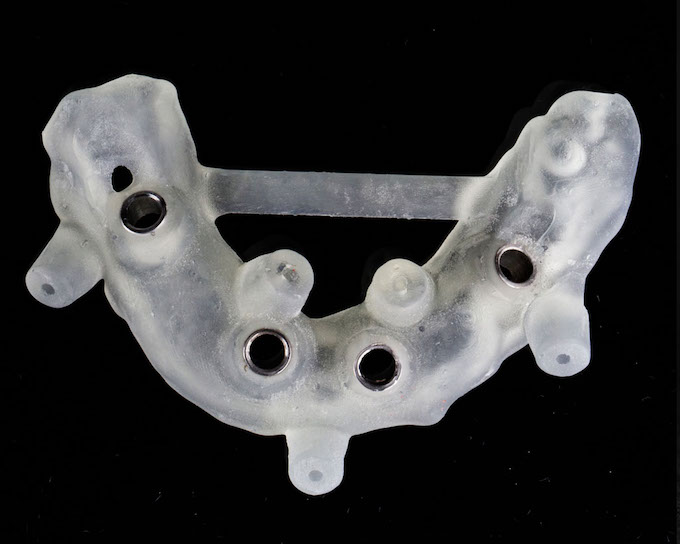
In addition, we support dental implant cases, including full digital implant planning services. Finally, we offer TattooTH, an advanced personalization option for implant restorations. Each of these case types benefits from the speed and precision of our digital workflow.
Material Quality in CAD/CAM Fabrication
Digital fabrication also improves material consistency. Milled or printed restorations come from pre-vetted, high-quality material blocks. This means fewer variations in strength or appearance from case to case. Meanwhile, hand-layered restorations can vary depending on technique and conditions.
For practices in Scottsdale or Phoenix looking to deliver premium results, consistent material quality matters. It supports better patient outcomes and reduces the likelihood of early restoration failure.
How to Transition Your Practice to a Digital Workflow
Making the switch to a digital workflow doesn’t have to be overwhelming. Many practices start with one or two changes and build from there. On the other hand, some practices prefer to transition fully at once. Either approach works, depending on your team’s comfort level and resources.
Here are some practical steps to get started:
- Invest in an intraoral scanner: This is often the first and most impactful step. Many scanner brands integrate directly with digital lab submission portals.
- Partner with a digital lab: Working with a lab that fully supports digital workflows is essential. Not all labs are equipped for it.
- Train your team: Staff training ensures the new technology is used correctly from day one.
- Start with simpler cases: Single-unit crowns are a great starting point. As confidence grows, expand to more complex cases.
- Review your results: Track remake rates and turnaround times. Use the data to keep improving.
Additionally, lean on your lab partner for support. At Dentek Digital, we help practices across Greater Phoenix make this transition smoothly and confidently.
Why Phoenix-Area Practices Are Embracing Digital Dentistry
Greater Phoenix is a fast-growing region. Communities like Mesa, Gilbert, and Chandler are adding new residents every year. That growth creates a competitive environment for dental practices. Therefore, efficiency isn’t just a convenience — it’s a competitive advantage.
Practices that can offer faster appointments, fewer returns, and more predictable results tend to build stronger patient relationships. Digital workflows support all of those outcomes. Moreover, they free up your time and your team’s time to focus on patient care rather than administrative friction.
Dentek Digital is proud to serve as a trusted digital lab partner for practices throughout the Phoenix metro area. We understand the pace of this market. Because of this, we’ve built our workflow to match it.
Frequently Asked Questions About Digital Dental Workflows
Do I need to invest in new equipment to use a digital workflow?
An intraoral scanner is the main equipment investment required on the practice side. However, many practices already have one or can lease one affordably. Your digital lab handles the CAD/CAM fabrication equipment on their end.
How much faster is a digital workflow compared to traditional?
Turnaround times vary by case type. Generally, digital workflows reduce total case time by eliminating physical shipping and reducing remakes. Many single-unit cases can be completed in fewer total days compared to traditional methods.
Will digital restorations fit my patients as well as traditional ones?
In most cases, digital restorations fit better. Digital scans capture more detail than physical impressions. Additionally, CAD/CAM fabrication produces precise margins and contours consistently across every case.
Can Dentek Digital handle complex cases like implants digitally?
Yes. We offer full digital implant planning in addition to CAD/CAM fabrication of implant restorations. Our team has extensive experience with complex implant cases for practices across Greater Phoenix.
What if my team isn’t comfortable with new technology?
That’s very common. We recommend starting with simple case types to build confidence. Furthermore, your scanner manufacturer and lab partner should both offer training and support resources to help your team get comfortable quickly.
Partner With Dentek Digital to Improve Your Workflow
Improving workflow efficiency doesn’t happen overnight. However, every step toward a digital process is a step toward a faster, more reliable, and more profitable practice. The technology is proven. The results speak for themselves. The question is simply when you’re ready to start.
Dentek Digital has been a national leader in digital dentistry since the early days of CAD/CAM adoption. We bring that experience to every case we handle for practices in Phoenix, Scottsdale, Mesa, Chandler, Gilbert, and beyond. We combine cutting-edge technology with skilled craftsmanship to deliver restorations you and your patients can count on.
Ready to take the next step? Contact Dentek Digital today to send us a case or explore how our digital workflow can support your practice’s growth.