
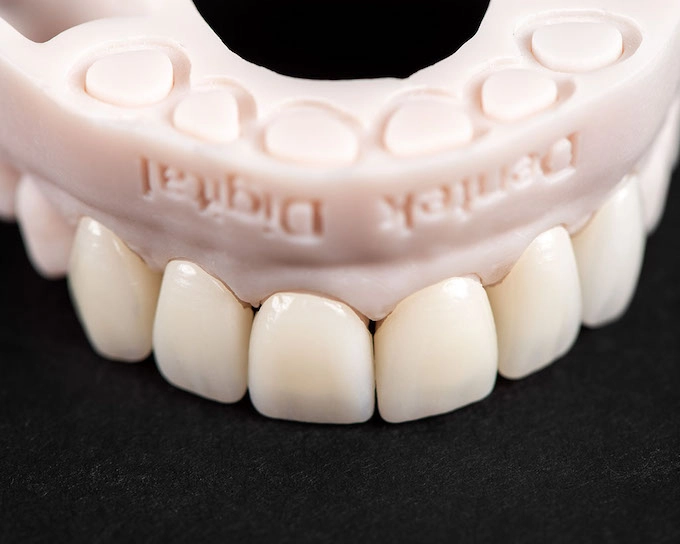
Choosing the right implant materials is one of the most important decisions a dentist makes. The material affects aesthetics, durability, patient comfort, and long-term success. Therefore, understanding your options is essential before you place a single restoration.
At Dentek Digital, we work with dentists and dental practices across the Greater Phoenix area every day. We fabricate high-quality implant restorations using advanced CAD/CAM dentistry workflows. As a result, we see firsthand how material selection shapes outcomes for patients in Phoenix, Scottsdale, Mesa, Chandler, and beyond.
This guide breaks down the most common implant material options. Additionally, it explains what each material does well and where its limitations lie. Use it as a practical reference when planning implant cases with your lab.
Why Implant Material Selection Matters
Every implant restoration involves multiple components. The crown or bridge that sits on the implant is where material selection becomes critical. Moreover, the choice directly affects how the restoration looks, feels, and performs over time.
Patients today expect restorations that look natural and last long. Meanwhile, dentists need materials that are predictable and easy to work with. Striking the right balance requires knowledge of each material’s properties.
At Dentek Digital, our team combines years of digital lab experience with the latest CAD/CAM fabrication technology. Because of this, we can help you match the right material to each patient case with confidence.
Key Factors to Consider
- Aesthetics: How natural does the material look under various lighting conditions?
- Strength: Can it handle occlusal forces in the posterior or anterior region?
- Biocompatibility: Does the patient have sensitivities or allergies?
- Workflow compatibility: Does it integrate smoothly with your digital workflow?
- Case complexity: Is this a single unit, a bridge, or a full-arch restoration?
However, no single material checks every box for every case. Therefore, a working knowledge of each option is your best tool.
Zirconia: The Workhorse of Implant Restorations
Zirconia has become one of the most widely used implant materials in modern dentistry. It offers an excellent combination of strength and aesthetics. Furthermore, it is metal-free, which makes it a strong choice for patients with sensitivities.
Modern zirconia comes in several formulations. Each offers a different balance of translucency and flexural strength. As a result, you can select the right grade based on where the restoration will sit in the mouth.
High-Strength Zirconia
High-strength zirconia is ideal for posterior implant crowns and bridges. It withstands heavy chewing forces very well. However, its opacity can make it less ideal for highly visible anterior cases where translucency is critical.
In areas like full-arch implant restorations, high-strength zirconia is often the go-to choice. Additionally, it mills cleanly and accurately in a CAD/CAM workflow. Practices in Mesa and Chandler with high volumes of full-arch cases frequently rely on this option.
Multilayer Zirconia
Multilayer zirconia mimics the natural gradient of a real tooth. It transitions from a more opaque base to a translucent incisal edge. Therefore, it performs exceptionally well in the anterior zone.
This material offers a noticeable aesthetic upgrade over standard zirconia. Furthermore, it still delivers solid strength for most single-unit implant cases. It is a popular choice among dentists in Scottsdale who serve aesthetically driven patient populations.
Porcelain-Fused-to-Metal: A Reliable Classic
Porcelain-fused-to-metal, or PFM, has been a staple of implant restorations for decades. It combines a metal substructure with a layered porcelain exterior. As a result, it offers dependable strength with reasonable aesthetics.
However, PFM restorations can show a dark line at the gingival margin over time. Additionally, porcelain chipping remains a known risk with this material. For many practices, newer all-ceramic options have largely replaced PFM for implant cases.
On the other hand, PFM still has a role in specific clinical scenarios. For example, it performs well in cases where occlusal clearance is limited. It also works in situations where a metal alloy is preferred for biocompatibility reasons.
Metal Alloy Options for PFM
The metal substructure in a PFM can be fabricated from several alloys. These include noble metals, high-noble metals, and base metal alloys. Each carries different biocompatibility profiles and cost considerations.
Noble and high-noble alloys generally offer better corrosion resistance. Moreover, they tend to be better tolerated by patients with sensitivities. Base metal alloys are stronger but may cause reactions in some patients.
Full-Cast Metal Restorations
Full-cast metal restorations are rarely used for visible teeth today. However, they remain a practical option for posterior implant restorations in select cases. Furthermore, they are extremely durable and resistant to wear.
Some dentists in Gilbert and Tempe still use cast metal for second molar implant crowns. This is especially true when a patient has a very heavy bite or bruxism. In these cases, the strength of metal often outperforms ceramic alternatives.
Additionally, full-cast metal restorations are thin and require minimal tooth reduction in traditional crown cases. Because of this, they can be useful when occlusal space is limited. However, aesthetics remain a significant drawback for most patients.
PEEK and Hybrid Materials
PEEK, or polyether ether ketone, is gaining traction as a provisional and long-term implant material. It is lightweight, biocompatible, and shock-absorbing. Therefore, it is especially useful during implant healing phases.
PEEK does not conduct temperature or electricity, which patients often find comfortable. Moreover, it integrates well with CAD/CAM milling technology. At Dentek Digital, we can mill PEEK-based restorations as part of a streamlined digital workflow.
However, PEEK lacks the natural appearance of ceramic options. Additionally, it is not ideal as a final anterior restoration for most patients. It is best viewed as a specialized tool rather than a universal solution.
Composite Resin for Implant Crowns
High-performance composite resin has also entered the implant restoration space. CAD/CAM-milled composite offers consistent quality and a degree of shock absorption. Furthermore, it is easier to repair chairside than ceramic options.
Composite resin is often used for provisional restorations during the osseointegration period. Additionally, it can serve as a longer-term solution in specific clinical situations. However, it is generally less durable than zirconia or porcelain over the long term.
Matching Material to the Clinical Case
No material is universally superior. Instead, the right choice depends on the patient’s specific needs and the clinical situation. Therefore, a case-by-case approach always produces better results than a one-size-fits-all protocol.
For anterior single-unit implant crowns, multilayer zirconia or high-translucency ceramic is typically preferred. For posterior full-arch cases, high-strength zirconia or hybrid materials often make more sense. Meanwhile, patients with bruxism may need materials with greater fracture resistance.
We encourage dentists throughout the Phoenix metro area to contact Dentek Digital early in the treatment planning process. Our team can review the case details and recommend the most appropriate material for your patient’s situation.
Anterior vs. Posterior Considerations
Anterior implant restorations demand high aesthetics. Translucency, shade matching, and surface texture all matter significantly. Additionally, the material must integrate seamlessly with the surrounding natural teeth.
Posterior restorations face much greater occlusal stress. Therefore, strength takes priority over translucency in most molar and premolar cases. However, aesthetics still matter, especially for patients who show lower teeth when speaking or smiling.
How Dentek Digital Supports Your Material Decisions
At Dentek Digital, we are one of the earliest adopters of digital CAD/CAM workflows in the country. We bring that experience to every case we fabricate. Furthermore, we stay current with evolving material science so your patients benefit from the latest options available.
Our lab serves dental practices across Phoenix, Scottsdale, Mesa, Chandler, Gilbert, and Tempe. We understand the diverse clinical needs of patients in this region. Additionally, we offer personalized support to help you make confident material choices for complex cases.
We also offer advanced services like digital implant planning and TattooTH to complement your implant restorations. Moreover, our fixed restoration solutions cover everything from single-unit crowns to complex implant-supported bridges. Every case benefits from our precision CAD/CAM fabrication process.
Frequently Asked Questions About Implant Materials
What is the most durable material for implant crowns?
High-strength zirconia is generally considered among the most durable options for implant crowns. It handles heavy occlusal forces well. However, the best choice always depends on the specific case and patient needs.
Is zirconia better than porcelain for implants?
Zirconia is typically stronger and more fracture-resistant than traditional porcelain. Additionally, it is metal-free, which appeals to many patients. On the other hand, layered porcelain can offer superior aesthetics in highly detailed anterior cases.
Can implant material cause allergic reactions?
Some patients have sensitivities to certain metal alloys used in PFM restorations. Therefore, metal-free options like zirconia or PEEK are often recommended for sensitive patients. Always review the patient’s allergy and medical history before material selection.
How does CAD/CAM technology affect material quality?
CAD/CAM milling produces highly precise restorations from pre-fabricated material blocks. As a result, the final restoration has consistent density and structural integrity. This eliminates many of the inconsistencies associated with traditional hand-fabrication methods.
Can Dentek Digital help me choose the right material for a complex case?
Yes. Our team reviews case details and collaborates with dentists throughout the Greater Phoenix area. We provide material recommendations based on clinical needs, aesthetics, and workflow requirements. Send us your case and we will help you plan effectively.
Take the Next Step With Dentek Digital
Selecting the right implant materials does not have to be complicated. With the right lab partner, you can make confident, well-informed choices for every patient. Furthermore, your outcomes improve when your lab and clinical team are aligned from the start.
Dentek Digital combines advanced CAD/CAM technology with deep implant restoration expertise. We serve dentists and dental practices across the Greater Phoenix area with precision and care. Additionally, we are ready to support your most complex implant cases from planning through final delivery.
Explore your options and partner with a lab that brings national-level digital dentistry expertise to your local practice. Send us a case today and experience the Dentek Digital difference.