
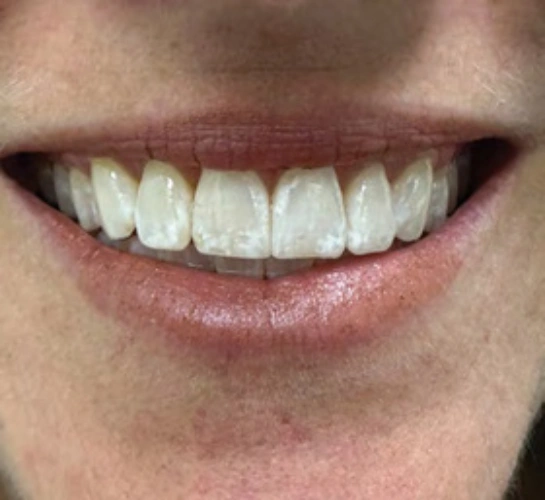
Patients who lose most or all of their teeth want a solution that works fast. Immediate load full arch restorations answer that need by delivering a functional, aesthetically pleasing prosthesis on the same day as implant placement. For dentists across the Greater Phoenix area, this protocol has become one of the most requested full arch treatment options available.
However, success with same-day full arch cases depends on more than chairside skill. It also depends on a dental lab that understands the workflow from start to finish. At Dentek Digital, we specialize in precisely this kind of high-demand, high-precision fabrication.
In this guide, we break down how immediate load full arch restorations work, what makes them clinically demanding, and how a digital lab partnership can make your cases more predictable.
What Is an Immediate Load Full Arch Restoration?
An immediate load full arch restoration is a full-arch prosthesis placed on dental implants on the same day they are surgically inserted. Traditionally, patients waited months for implants to osseointegrate before receiving a permanent restoration. Today, that timeline has been dramatically shortened.
This approach is often referred to as “teeth in a day.” However, that phrase can oversimplify a complex, highly coordinated clinical and laboratory process. Because of this, dentists who offer this service need experienced lab partners who understand the full scope of the workflow.
How It Differs from Conventional Implant Timelines
In a conventional protocol, implants are placed and then left to heal for several months. A temporary restoration may be worn during that period. Finally, the permanent prosthesis is fabricated and delivered.
With an immediate load protocol, the prosthesis is placed the same day. Therefore, it must be designed with careful consideration of occlusal load, implant position, and material strength. The lab plays a critical role in making this timeline possible.
Why This Protocol Is Growing in the Phoenix Area
Patient demand for faster, more convenient treatment is rising throughout the Greater Phoenix metro. Practices in Scottsdale, Chandler, Mesa, and Tempe are increasingly offering full arch implant solutions. Additionally, improved digital workflows have made same-day delivery more achievable than ever before.
Phoenix-area dentists are also seeing more patients who have delayed care due to cost or fear. Many of these patients present with advanced tooth loss or failing dentitions. For them, an immediate load full arch solution offers a life-changing result in a single surgical appointment.
The Role of Digital Technology in Same-Day Cases
Digital dentistry has transformed how immediate load full arch cases are planned and executed. CAD/CAM dentistry allows labs to design and mill restorations with a level of precision that was simply not achievable with traditional methods.
At Dentek Digital, we use advanced CAD/CAM technology to fabricate milled interim and final prostheses that fit accurately and function reliably. Moreover, our digital workflow integrates seamlessly with the scan data and planning files your practice generates chairside.
Because of this, your team spends less time managing fit issues and more time delivering excellent patient outcomes.
Materials Used in Immediate Load Full Arch Restorations
Material selection is one of the most important decisions in an immediate load full arch case. The provisional restoration placed on the day of surgery must be strong enough to withstand occlusal forces without overloading healing implants.
Meanwhile, the final restoration must offer long-term durability, aesthetics, and biocompatibility. Common material options include:
- Milled PMMA (acrylic): Widely used for immediate provisionals. It is cost-effective, easy to adjust, and kind to opposing dentition.
- Zirconia: A popular choice for final restorations. It offers excellent strength and natural-looking aesthetics.
- Hybrid ceramic: Combines resin and ceramic properties for a balance of strength and aesthetics.
- Titanium frameworks with acrylic or ceramic overlay: Often used for implant-supported bars, especially in high-stress cases.
Your lab partner should help you select the right material based on the patient’s bite, implant position, and long-term treatment goals. At Dentek Digital, we work closely with Phoenix-area dentists to guide these decisions on a case-by-case basis.
Provisional vs. Final Prosthesis
In many immediate load protocols, the day-of-surgery prosthesis is a provisional. It serves the patient during the osseointegration period. Then, once the implants have fully integrated, a definitive restoration is fabricated.
This two-phase approach gives the clinician time to evaluate the occlusion, make adjustments, and confirm the patient’s satisfaction before committing to the final design. As a result, the final prosthesis is more predictable and better refined.
Furthermore, a well-fabricated provisional provides important diagnostic information that improves the final outcome for the patient.
The Importance of Accurate Records and Digital Scanning
Accurate records are essential for any immediate load full arch case. The lab cannot fabricate a precise restoration without high-quality input data. Therefore, your scanning, bite registration, and implant position documentation must all be accurate before the case is submitted.
Intraoral scans, CBCT data, and analog impressions of the implant positions all play a role depending on your workflow. Additionally, clear photographs and occlusal references help the lab match the restoration to the patient’s anatomy and desired outcome.
Tips for Submitting a Strong Immediate Load Case
For dentists submitting their first or second full arch case, here are a few practical suggestions:
- Confirm implant positions with a verification jig before scanning or taking impressions.
- Capture accurate vertical dimension of occlusion records before surgery when possible.
- Communicate the desired tooth form, shade, and lip support clearly in your case notes.
- Share any pre-extraction photos, diagnostic wax-ups, or smile design references with the lab.
- Indicate whether the prosthesis is a provisional or the intended final restoration.
At Dentek Digital, we welcome communication throughout the case. Contact our team before you submit your case if you have questions about records, materials, or timelines.
How Dentek Digital Supports Full Arch Cases
Dentek Digital was one of the earliest adopters of the digital CAD/CAM workflow in the country. Today, we are recognized as a national leader in digital dentistry. Our Phoenix lab fabricates full arch restorations for practices throughout the Greater Phoenix metro, including Gilbert, Tempe, Mesa, Scottsdale, and Chandler.
We understand that full arch cases carry high expectations — for both the dentist and the patient. Therefore, we approach every case with careful attention to fit, aesthetics, and function.
Our Full Arch Capabilities
Our lab offers a full range of full arch implant solutions, including:
- Milled PMMA immediate provisionals
- Monolithic and layered zirconia full arch bridges
- Titanium-reinforced hybrid prostheses
- Implant-supported fixed detachable restorations
- Digital implant planning support
In addition, we offer TattooTH, our proprietary digital denture solution, for patients who may transition between removable and fixed options during treatment.
Turnaround and Communication
We know that immediate load cases operate on tight timelines. Because of this, we prioritize clear communication and efficient production. Our team works with your practice to align on delivery expectations before fabrication begins.
Moreover, we are available to answer clinical and technical questions throughout the case. We see ourselves as a true extension of your practice — not just a fabrication facility.
Common Challenges with Immediate Load Full Arch Cases
Even experienced implant surgeons encounter challenges with immediate load full arch cases. Understanding these challenges in advance helps reduce complications and improve outcomes.
Occlusal Overload
One of the most common risks in immediate load protocols is occlusal overload. If too much bite force is applied to implants before they fully integrate, the implants may fail. Therefore, the immediate prosthesis must be designed with light, even occlusal contacts in mind.
The lab can help by designing the provisional with appropriate relief and by using materials that absorb rather than transmit excessive force.
Fit and Passivity Issues
A poorly fitting prosthesis can stress implants and compromise integration. Passive fit — meaning the restoration seats without applying lateral force to the implants — is critical. Additionally, even small inaccuracies in impression-taking can result in a restoration that doesn’t seat properly.
This is one reason why digital scanning workflows and verification jigs are so valuable. They improve the accuracy of the data sent to the lab, which in turn improves the fit of the final product.
Patient Compliance During Healing
Patients must follow dietary and hygiene instructions closely during the osseointegration period. However, managing patient compliance is largely a chairside and communication challenge rather than a lab challenge. Nevertheless, educating patients on what to expect helps protect the prosthesis and the implants.
Frequently Asked Questions
What is the difference between an immediate load and a delayed load full arch restoration?
An immediate load full arch restoration is placed on the day of implant surgery. A delayed load restoration is placed after a healing period — typically several months. Immediate load protocols require more precise planning but offer the benefit of immediate function and aesthetics.
Can any patient receive an immediate load full arch restoration?
Not every patient is a candidate. Bone quality and quantity, systemic health, and implant stability all affect candidacy. The treating clinician performs a thorough evaluation to determine whether an immediate load protocol is appropriate for each individual patient.
How long does a full arch provisional last before the final restoration is placed?
Most provisionals are designed to last through the osseointegration period. This typically ranges from a few months to about six months, depending on the protocol and the patient’s healing. The treating clinician determines when the patient is ready for the final restoration.
What materials does Dentek Digital use for full arch restorations?
We work with a range of materials including milled PMMA, monolithic zirconia, layered zirconia, and titanium frameworks. Material selection depends on whether the restoration is a provisional or final prosthesis, the patient’s bite, and the dentist’s clinical preferences.
How do I submit a full arch case to Dentek Digital?
You can submit your case through our online case submission portal. We also encourage you to reach out before you begin so we can discuss your case requirements, material options, and timeline. Our team is here to support you throughout the process.
Partner with Dentek Digital for Your Full Arch Cases
Immediate load full arch restorations are among the most technically demanding cases in modern implant dentistry. They require precise surgical execution, accurate records, and a lab partner who understands the workflow at a high level.
At Dentek Digital, we bring together advanced CAD/CAM technology, skilled craftsmanship, and deep experience with full arch implant cases. We proudly serve dentists and dental practices throughout Phoenix, Scottsdale, Mesa, Chandler, Tempe, Gilbert, and the surrounding Greater Phoenix area.
Whether you are planning your first immediate load full arch case or looking to refine your existing protocol, we are ready to help. Explore your options and contact Dentek Digital today to discuss your case with our team.