
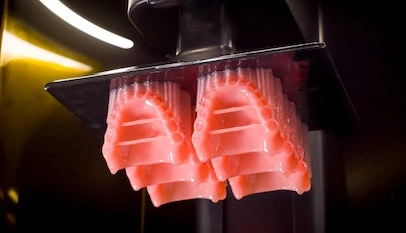
Hybrid prosthetics have changed the way dental labs approach full arch restorations. They combine the stability of dental implants with the natural look of a fixed prosthesis. As a result, more patients and dentists are turning to this solution for complex cases.
At Dentek Digital, we design hybrid prosthetics using an advanced digital workflow that prioritizes precision and fit. Our team serves dental practices across Phoenix, Mesa, Scottsdale, Chandler, and the greater Arizona region. Furthermore, our experience as an early CAD/CAM adopter gives us a deep understanding of what makes these restorations work.
In this post, we walk through how dental labs actually design hybrid prosthetics. Whether you are a dentist exploring implant options or simply curious about the process, this guide gives you a clear picture.
What Are Hybrid Prosthetics?
A hybrid prosthetic is a fixed, implant-supported restoration. It replaces an entire arch of teeth and is secured to dental implants. Therefore, it does not rest on the gum tissue like a traditional denture.
The term “hybrid” refers to the combination of materials used. Most hybrid prosthetics feature a rigid substructure — often milled from titanium or zirconia — combined with acrylic or composite teeth. This blend gives the restoration both strength and a lifelike appearance.
Because of this design, hybrid prosthetics offer patients a solution that feels and functions like natural teeth. Additionally, they eliminate the instability that many patients experience with removable dentures.
How Hybrid Prosthetics Differ from Other Full Arch Options
Traditional dentures sit on top of the gums and rely on suction or adhesive. On the other hand, hybrid prosthetics are screw-retained directly to implants. This makes them fixed in the mouth, though a dentist can remove them for maintenance.
Implant-supported overdentures also attach to implants, but they are still removable by the patient. In contrast, hybrid prosthetics are not patient-removable. Moreover, they typically offer greater stability and a more permanent feel.
The Digital Design Process: Step by Step
Modern dental labs use a fully digital workflow to design hybrid prosthetics. This approach improves accuracy and reduces the chance of errors. Furthermore, it allows for better communication between the lab and the treating dentist.
Step 1 — Collecting Digital Records
The process begins with detailed digital records from the dentist’s office. These typically include intraoral scans, CBCT (cone beam CT) imaging, and implant position data. Additionally, photographs and bite records help the lab understand the full clinical picture.
Labs in the Phoenix area, including those serving Gilbert and Tempe practices, increasingly receive these records digitally. This eliminates the need for physical impressions and speeds up the workflow. As a result, case turnaround improves significantly.
Step 2 — Importing Data into CAD Software
Once the lab receives the digital files, technicians import them into CAD (computer-aided design) software. This is where the design of the hybrid prosthetic truly begins. The software renders a three-dimensional model of the patient’s anatomy.
Technicians then map out the implant positions precisely within the software. They also evaluate occlusion, lip support, and tooth positioning at this stage. Because of this thorough review, the final design is tailored to each patient’s unique anatomy.
Step 3 — Designing the Substructure
The substructure is the backbone of any hybrid prosthetic. It must align perfectly with the implant positions and support the overlying teeth. Therefore, this is one of the most critical steps in the entire design process.
Technicians use CAD/CAM dentistry tools to design the framework digitally before any material is cut. The software allows the technician to evaluate wall thickness, connector widths, and screw access channels. Additionally, they can make adjustments virtually before committing to milling.
Most substructures are milled from either milled titanium bars or high-strength zirconia. Titanium offers exceptional strength and biocompatibility. Meanwhile, zirconia provides excellent aesthetics when used in certain hybrid designs.
Step 4 — Designing the Prosthetic Teeth
With the substructure designed, the lab moves on to the visible portion of the restoration. Technicians position individual tooth forms within the CAD software. They consider factors like arch form, midline, tooth size, and lip support.
The teeth in a hybrid prosthetic are typically fabricated from acrylic, composite, or milled PMMA (polymethyl methacrylate). Some designs use individual zirconia teeth bonded to the framework. However, acrylic and PMMA remain the most common materials because of their repairability.
This stage also involves careful attention to the gingival (gum-colored) portion of the prosthetic. Because patients are missing natural gum tissue, the prosthetic must replace that tissue realistically. As a result, the lab blends pink materials carefully to achieve a natural appearance.
Milling and Fabrication
After the design is finalized, the files move into the CAM (computer-aided manufacturing) phase. The milling machine reads the design file and carves the substructure from a solid block of material. This process is highly precise and repeatable.
At Dentek Digital, our milling equipment handles both titanium and zirconia frameworks with accuracy. Once milled, the substructure undergoes a series of finishing steps. These include polishing, surface treatment, and quality inspection.
Assembly and Finishing
After milling, skilled technicians assemble the prosthetic by hand. They bond or process the tooth and gingival materials to the finished substructure. Furthermore, they carefully refine the occlusion and surface texture to ensure a natural result.
This combination of digital precision and skilled craftsmanship is what sets high-quality labs apart. The digital design ensures accuracy. Additionally, the handwork adds the finishing detail that gives the restoration its lifelike character.
Dental practices across Chandler and Scottsdale often remark on the quality of fit when restorations come from a fully digital workflow. Fewer adjustments at chairside mean better efficiency and happier patients. Therefore, the investment in digital design pays off at every step.
Quality Control in Hybrid Prosthetic Design
Before any hybrid prosthetic leaves the lab, it goes through thorough quality checks. Technicians verify that screw access channels are properly positioned. They also confirm that the occlusal contacts meet the dentist’s specifications.
Additionally, the lab checks for any voids, cracks, or irregularities in the materials. The fit of the prosthetic against the implant analog model is also verified. Because of these checks, cases arrive at the dental office ready for delivery with minimal adjustments.
Communication Between Lab and Dentist
Successful hybrid prosthetics depend on strong lab-to-dentist communication. Labs rely on detailed prescriptions and clinical photos to make informed design decisions. Moreover, open communication during the case helps avoid costly remakes.
At Dentek Digital, we welcome collaboration at every stage of the case. If you have questions about a hybrid case, contact Dentek Digital and our team will walk through the details with you. We serve dental practices throughout Phoenix, Mesa, Tempe, and beyond.
Why Digital Design Improves Hybrid Prosthetic Outcomes
Digital design brings several meaningful advantages to hybrid prosthetic fabrication. First, it eliminates many of the variables that come with traditional analog workflows. Therefore, results are more consistent from case to case.
Next, the ability to visualize the design in 3D before milling allows technicians to catch problems early. Additionally, design files can be stored and referenced if the prosthetic ever needs to be remade. This long-term record is a significant benefit for both labs and dental offices.
Finally, digital workflows reduce overall production time. This means faster turnaround for the dentist and a shorter wait for the patient. As a result, practices that partner with digital labs can offer a more efficient patient experience.
Frequently Asked Questions About Hybrid Prosthetics
What materials are commonly used in hybrid prosthetics?
Most hybrid prosthetics use a titanium or zirconia substructure combined with acrylic, PMMA, or composite teeth. The choice of materials depends on the patient’s bite, aesthetic goals, and the dentist’s clinical preference. Additionally, some designs incorporate individual zirconia teeth for enhanced aesthetics.
How long does it take to design and fabricate a hybrid prosthetic?
Turnaround time varies depending on the complexity of the case and the quality of records provided. However, a fully digital workflow typically shortens production time compared to traditional methods. Your dental lab can give you a more specific timeline once they review your case details.
Can a hybrid prosthetic be repaired if it chips or breaks?
Yes, in many cases repairs are possible, especially when acrylic or PMMA teeth are used. Because the substructure is separate from the tooth material, teeth can often be replaced without remaking the entire prosthetic. However, the repair process depends on the extent of the damage and the design of the original restoration.
What information does a dentist need to send to the lab for a hybrid case?
Labs typically need intraoral scans or verified implant scan bodies, CBCT data, bite records, photographs, and a detailed prescription. Additionally, information about the implant system and implant positions is essential. The more complete the records, the more accurately the lab can design the prosthetic.
Does Dentek Digital work with all implant systems?
Dentek Digital works with a wide range of implant systems and maintains an extensive library of implant components in our software. If you are unsure whether your system is supported, reach out to our team before submitting the case. We are happy to confirm compatibility before you begin.
Partner with Dentek Digital for Your Full Arch Cases
Designing hybrid prosthetics requires the right technology, skilled technicians, and a commitment to quality. At Dentek Digital, we bring all three to every case we fabricate. Furthermore, our experience as one of the country’s earliest digital labs means we have refined our process over many years.
We proudly serve dental practices across the Greater Phoenix area, including Mesa, Gilbert, Chandler, Tempe, and Scottsdale. Whether you are placing your first full arch case or managing a high volume of implant restorations, we are here to support you. Our team is ready to help you deliver outstanding outcomes for your patients.
Ready to get started? Explore your options and send us your next hybrid case today. Our team is available to answer questions, review case details, and guide you through the process from start to finish.