
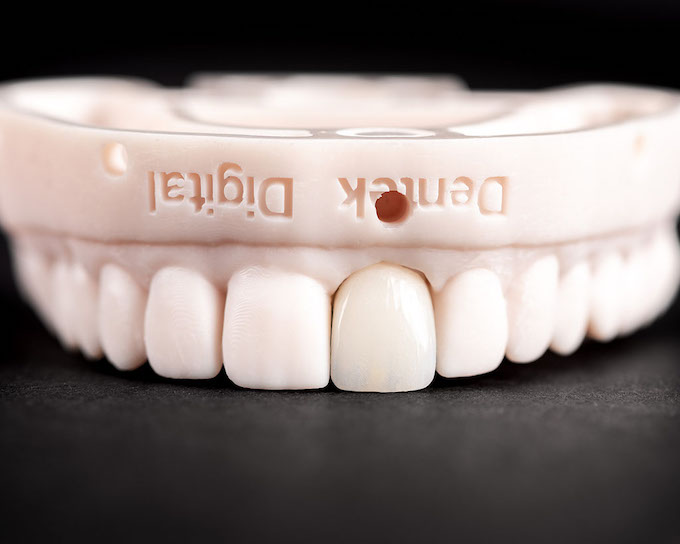
A crown that fits well changes everything. It seats comfortably, functions naturally, and lasts for years. On the other hand, a poorly fitting crown can cause discomfort, bite problems, and costly remakes. That is why engineering crown fit is one of the most critical responsibilities a dental lab carries.
At Dentek Digital, we apply advanced CAD/CAM technology and skilled craftsmanship to produce restorations with exceptional fit. Our team serves dentists and dental practices across the Greater Phoenix area, including Mesa, Tempe, Chandler, and Scottsdale. We combine digital precision with hands-on expertise to get it right the first time.
In this post, we walk through exactly how dental lab engineers approach crown fit. Additionally, we explain why that process matters for your patients and your practice.
Why Crown Fit Is the Foundation of a Successful Restoration
Crown fit affects almost every clinical outcome. A crown must seat fully on the prepared tooth. It must also close the margin tightly to prevent microleakage. Furthermore, it must contact adjacent teeth correctly and meet the opposing arch without causing occlusal interference.
When any of these elements is off, problems follow. Patients may feel pain, sensitivity, or discomfort when biting. Moreover, open margins invite bacteria and eventual decay beneath the restoration. Getting fit right from the start protects the patient and saves the dentist time.
The Three Dimensions of Crown Fit
Engineers think about crown fit in three distinct ways. First, there is marginal fit — how precisely the crown edge meets the finish line of the prep. Next, there is internal fit — how well the inner surface of the crown rests against the prepared tooth structure. Finally, there is occlusal fit — how the crown contacts the opposing teeth during function.
Each dimension requires separate attention during design and milling. Therefore, a skilled dental CAD engineer addresses all three systematically before a crown ever leaves the lab.
How CAD/CAM Technology Transforms Crown Engineering
CAD/CAM dentistry has fundamentally changed how labs engineer crowns. Traditional wax-and-cast workflows relied heavily on manual judgment. Digital workflows, by contrast, use precise 3D scan data and design software to control every dimension of a restoration.
Because of this, labs like Dentek Digital can design crowns with sub-millimeter accuracy. Our engineers work directly from digital impressions submitted by dentists in Phoenix, Gilbert, and surrounding communities. The result is a design grounded in exact anatomy rather than approximation.
From Scan to Design: The Digital Workflow
The process starts with a high-quality intraoral or model scan. Our engineers import that scan into CAD software and begin analyzing the preparation. They assess the margin line, evaluate undercuts, and measure available space for the restoration material.
Next, the engineer designs the crown using a library of tooth anatomy as a reference. However, they do not simply apply a template. They adjust the design to match the patient’s specific occlusion, adjacent tooth contours, and clinical needs. This level of customization is what separates a precision-engineered crown from a generic one.
Margin Detection and Design Accuracy
Margin detection is one of the most demanding steps in crown design. The engineer must identify the exact boundary where the crown should end. Even a small error in margin placement can lead to open margins or overextension.
Our team uses high-resolution scan data and software tools to mark margins with precision. Additionally, we review the margin design against the original scan before finalizing. This verification step reduces the chance of fit issues before the case ever reaches milling.
Engineering Internal Clearance for a Passive Seat
Internal fit determines how a crown seats on the prepared tooth. Too tight, and the crown will not fully seat. Too loose, and there is excess cement space that can compromise retention and long-term stability.
Engineers adjust internal clearance settings in the CAD software to dial in the correct spacing. This setting, often called cement gap or spacer, controls how much room exists between the crown’s inner surface and the tooth. Furthermore, engineers factor in the specific cement type the dentist plans to use, since different cements require slightly different spacing.
Material Selection Affects Internal Fit Engineering
The crown material also plays a role in how engineers approach internal fit. Zirconia, for example, behaves differently during sintering than lithium disilicate does during crystallization. Both materials undergo some dimensional change after milling.
Therefore, engineers apply material-specific compensation values during design. These values account for expected shrinkage or expansion so the final crown fits as intended. At Dentek Digital, our team understands each material’s behavior and designs accordingly for consistent results.
Occlusal Engineering: Balancing the Bite
A crown that fits the prep perfectly can still fail if the occlusion is wrong. High occlusal contacts cause premature wear, sensitivity, and patient discomfort. As a result, engineers spend significant time analyzing and refining the crown’s biting surface.
CAD software allows engineers to simulate contact points against a digital model of the opposing arch. This simulation highlights areas of heavy contact before milling begins. The engineer then adjusts the crown anatomy to distribute contacts evenly and naturally.
Designing for Function, Not Just Appearance
Crown anatomy must support chewing function, not just aesthetics. Engineers consider cusp height, fossa depth, and ridge angles when shaping the occlusal surface. Moreover, they review lateral excursive movements to ensure the crown does not interfere during side-to-side chewing.
For dentists in Chandler, Scottsdale, or Tempe, sending a detailed bite registration with your case helps our engineers refine the occlusal design further. The more clinical information we receive, the more precisely we can engineer the crown to fit your patient’s specific bite.
Quality Checks Before the Crown Ships
Engineering does not end at the design stage. After milling and finishing, our team performs thorough quality checks on every restoration. These checks confirm that the crown meets design specifications and is ready for clinical use.
We seat each crown on the model and inspect the margin under magnification. Additionally, we check internal contacts and occlusion before approving the case for shipment. If anything falls short of our standards, we address it before the case leaves our Phoenix lab.
How Dentists Can Support Better Fit From the Start
Labs can only work with the data they receive. Therefore, a high-quality digital impression is the single most important factor a dentist controls. A clean, well-captured scan of the preparation, opposing arch, and bite registration gives our engineers everything they need.
Here are a few ways dentists can help ensure the best possible crown fit:
- Capture a clear margin: Make sure the finish line is fully visible and unobstructed in the scan.
- Include the full opposing arch: A complete opposing scan allows accurate occlusal engineering.
- Submit an accurate bite registration: This helps engineers align the arches correctly in software.
- Note the planned cement type: This allows us to set appropriate internal clearance for your material.
- Flag unusual anatomy: If the patient has a deep bite, crossbite, or wear patterns, let us know up front.
When dentists and lab engineers collaborate closely, outcomes improve significantly. We welcome communication from practices in Mesa, Gilbert, Scottsdale, and across the Phoenix metro area. Contact Dentek Digital to discuss your next case or explore how our digital workflow can support your practice.
Frequently Asked Questions About Engineering Crown Fit
What does “engineering crown fit” actually mean?
Engineering crown fit refers to the deliberate, technical process of designing a crown to match the prepared tooth precisely. It involves controlling marginal fit, internal clearance, and occlusal contacts using CAD software and milling technology.
How does a digital lab achieve better fit than a traditional lab?
Digital labs work from exact 3D scan data rather than physical impressions that can distort. Additionally, CAD software allows engineers to measure and adjust fit parameters precisely before the crown is ever milled. This reduces human error and improves consistency.
What causes a crown not to fit after delivery?
Poor fit can result from an incomplete or distorted scan, inaccurate margin detection, material shrinkage that was not compensated for, or occlusal interference. Furthermore, if the opposing or bite scan is missing, engineers cannot fully optimize the occlusal surface.
Can the lab adjust the design if a crown does not fit?
Yes. If a crown needs adjustment, contact us with feedback about the fit issue. We can review the digital design and remill the restoration when necessary. However, accurate clinical feedback helps us identify the root cause and improve future cases.
How do I send a case to Dentek Digital?
Sending a case is straightforward. You can submit digital files directly through our case submission process. Our team serves dentists across the Greater Phoenix area, including practices in Chandler, Tempe, Mesa, and Scottsdale.
Work With a Lab That Engineers Crown Fit Precisely
Crown fit is not an accident. It is the result of careful engineering, advanced technology, and experienced craftsmanship working together at every stage of fabrication. At Dentek Digital, we take that responsibility seriously for every case we produce.
We are proud to be one of the earliest adopters of the digital CAD/CAM workflow in the country. Our lab in Phoenix serves dental professionals who expect consistent, high-quality restorations that seat well and serve patients long-term. Whether your practice is in Scottsdale, Gilbert, or anywhere across the Phoenix metro, we are ready to support you.
Explore your options and send us a case today. Our team is here to help you deliver better outcomes for your patients through precision digital dentistry.