
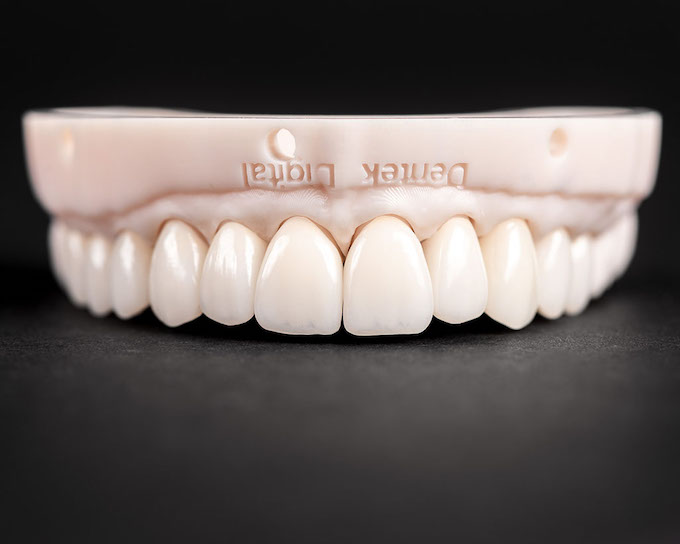
Dentistry has changed dramatically over the past few decades. One of the biggest drivers of that change is dental CAD — computer-aided design software built specifically for creating precise dental restorations. Today, dental labs and dental practices across Greater Phoenix rely on this technology to deliver better results for patients.
Before digital tools, every crown, bridge, or implant restoration was designed entirely by hand. That process was skilled work, but it left room for variability. CAD software changed the equation entirely. It gave dental lab technicians a powerful, precise, and repeatable way to design restorations.
At Dentek Digital, we were among the earliest adopters of the digital CAD/CAM workflow in the country. We’ve seen firsthand how this technology continues to evolve and improve outcomes for dental professionals in Phoenix, Scottsdale, Mesa, Chandler, and beyond.
What Is Dental CAD Software?
CAD/CAM dentistry combines computer-aided design with computer-aided manufacturing. The CAD portion is where the restoration is digitally designed, shaped, and refined before any physical fabrication begins. Think of it as the digital blueprint stage.
Dental CAD software allows a skilled technician to work from a 3D digital scan of a patient’s mouth. They use that scan as the foundation for designing a restoration that fits accurately and looks natural. Furthermore, the software provides tools to refine margins, occlusion, and anatomy with a level of detail that manual wax-ups simply cannot match.
How It Differs from Traditional Methods
Traditional dental lab work started with physical impressions and plaster models. Technicians built restorations by hand using wax, porcelain, and metal. That method required exceptional skill and considerable time. However, it also introduced variables that could affect fit and consistency.
Dental CAD software replaced much of that manual process with a digital workflow. As a result, technicians now manipulate a virtual model on screen. They can zoom in, rotate, and adjust every surface of the restoration before any material is ever milled or printed.
Additionally, the digital file can be saved, referenced, and reproduced. That means consistency is built into the process from the very beginning.
How CAD Software Transformed Restoration Design
The impact of dental CAD on restoration design has been profound. First, it introduced a level of precision that was previously very difficult to achieve manually. Second, it dramatically reduced design time for complex restorations. Third, it opened the door to a broader range of restoration types.
Improved Accuracy and Fit
Fit is everything in a dental restoration. A crown that doesn’t seat properly can cause discomfort, bite issues, and long-term problems. Because of this, accuracy in the design phase is critical.
Dental CAD software allows technicians to design restorations to extremely tight tolerances. The software analyzes the digital scan and flags potential issues before fabrication begins. Therefore, problems are caught and corrected in the virtual environment — not after the restoration has already been milled.
For dental practices in areas like Gilbert and Tempe, this means fewer remakes, faster turnaround, and more confident seating appointments.
Greater Design Flexibility
CAD software also gave technicians far more design flexibility. For example, a technician designing a multi-unit bridge can visualize the full span, check connector sizes, and adjust the emergence profile — all on screen. Moreover, they can apply digital libraries of tooth anatomy to ensure each unit looks natural and proportionate.
On the other hand, traditional hand-sculpting was limited by physical dexterity and the technician’s eye. CAD software amplifies the technician’s skill and extends what’s possible. The result is restorations that are both functionally precise and aesthetically refined.
Faster Turnaround for Dental Practices
Speed matters in a busy dental practice. Dental CAD software significantly shortened the design phase of restoration fabrication. Meanwhile, digital file transfer means a dentist in Scottsdale or Chandler can send a scan and receive a completed case faster than ever before.
At Dentek Digital, our digital workflow is built for efficiency without sacrificing quality. We combine advanced CAD tools with experienced technicians who understand both the science and the art of great restorations.
Ready to experience the difference? Contact Dentek Digital to send us your next case and see what a truly digital lab can do for your practice.
CAD Software and the Full Digital Workflow
Dental CAD doesn’t work in isolation. It’s one part of a complete digital workflow that connects the dental chair to the lab. That workflow typically starts with an intraoral scan, moves into CAD design, and finishes with CAM fabrication — milling or 3D printing the final restoration.
From Scan to Design
When a dentist sends a digital impression, the file arrives at the lab ready for design. The technician imports the scan into the CAD software and begins working immediately. There’s no need to pour a model, trim dies, or set up an articulator by hand. Because of this, the process is faster and more consistent from the very start.
In addition, digital scans are far more dimensionally stable than traditional impressions. They don’t distort over time or in transit. Therefore, the design is based on accurate data, which supports a better-fitting restoration.
CAD to CAM: Closing the Loop
Once the design is approved, the CAD file is sent directly to a milling machine or 3D printer. The fabrication device reads the digital blueprint and produces the restoration with minimal human handling. As a result, the precision built into the CAD design carries through to the finished product.
Furthermore, the digital file is archived. If a restoration ever needs to be remade, the lab can reference the original design and reproduce it quickly. This is a major advantage for both the lab and the dental practice.
Types of Restorations Designed with Dental CAD
Dental CAD software is versatile. It supports the design of a wide range of restorations across multiple categories. Here are some of the most common:
- Crowns and Bridges: Single-unit crowns and multi-unit bridges are among the most frequently designed restorations in CAD software.
- Implant Restorations: CAD supports the design of implant crowns, custom abutments, and implant-supported bridges with excellent precision.
- Veneers and Inlays/Onlays: Thin restorations require exacting margins. CAD software makes it possible to design these conservatively and accurately.
- Removable Frameworks: CAD technology now extends to removable partial denture frameworks, improving fit and reducing chair time.
- Splints and Nightguards: Digital design produces splints and nightguards that are consistent in thickness and balanced in occlusion.
At Dentek Digital, we fabricate all of these restoration types using our advanced digital workflow. Our team serves dental professionals throughout the Greater Phoenix area, including Mesa, Tempe, Gilbert, Scottsdale, and Chandler.
The Role of the Skilled Technician in a CAD Workflow
It’s important to understand one key point. Dental CAD software is a tool — not a replacement for expertise. The technician behind the screen drives the outcome. Their knowledge of anatomy, occlusion, and esthetics determines how well they use the software’s capabilities.
At Dentek Digital, our technicians have deep experience in both traditional and digital lab methods. That background matters. They understand why a contact is shaped a certain way, how emergence profiles affect tissue health, and what makes a restoration look natural. Moreover, they use that knowledge every time they open a CAD file.
Technology and craftsmanship work together here. Neither alone is enough to produce the best possible result.
Why Phoenix-Area Dental Practices Benefit from CAD Labs
Greater Phoenix is one of the fastest-growing dental markets in the country. Dental practices in Scottsdale, Mesa, Chandler, Tempe, and Gilbert are seeing increasing patient demand. Therefore, efficiency and quality in the lab have never mattered more.
Partnering with a digital dental lab like Dentek Digital gives dental practices a real competitive advantage. Faster turnaround, fewer remakes, and higher-quality restorations all contribute to a better patient experience. In addition, a streamlined digital workflow reduces stress at the front desk and in the operatory.
We understand the pace of Phoenix-area dental practices. Our team is responsive, communicative, and committed to making every case as easy as possible for the dentist.
Explore your options — reach out to our team today to learn how our digital services can support your practice goals.
Frequently Asked Questions About Dental CAD
What is dental CAD software used for?
Dental CAD software is used to digitally design dental restorations such as crowns, bridges, veneers, implant components, and more. It allows technicians to create precise, customized designs based on 3D scans of a patient’s mouth.
Is CAD-designed dentistry more accurate than traditional lab work?
CAD software supports very high levels of precision and consistency. However, the accuracy of any restoration also depends on the quality of the scan, the skill of the technician, and the calibration of the milling or printing equipment. Digital workflows generally reduce variability compared to traditional methods.
Do dentists need special equipment to work with a digital lab?
Dentists typically need an intraoral scanner to submit digital cases. Many modern scanners are compatible with lab-side CAD software. Additionally, some labs can work with digital files from a wide range of scanner brands, making the transition to digital easier for most practices.
How long does the CAD design process take?
Design time varies depending on the complexity of the case. Single-unit restorations can often be designed quickly. Meanwhile, multi-unit bridges, implant cases, and complex full-arch restorations require more detailed work. Overall, the digital process is faster than traditional hand-crafted methods.
Can Dentek Digital handle complex CAD cases?
Yes. Dentek Digital specializes in complex digital cases, including implant restorations, full-arch cases, and advanced services like digital implant planning and TattooTH. Our team has the experience and technology to handle demanding restorative work at a high level.
Partner with a True Digital Lab in Phoenix
Dental CAD software has genuinely transformed how restorations are designed and delivered. It’s not just a trend — it’s the foundation of modern dental lab practice. As a result, dental practices that embrace digital workflows consistently see improvements in fit, speed, and patient satisfaction.
Dentek Digital has been at the forefront of this shift from the very beginning. We serve dental professionals across the Greater Phoenix area with advanced CAD/CAM fabrication, skilled technicians, and a commitment to quality that never wavers. Furthermore, we’re always ready to discuss your case, answer your questions, and find the best solution for your patients.
Send us a case today and experience the Dentek Digital difference for your practice.