
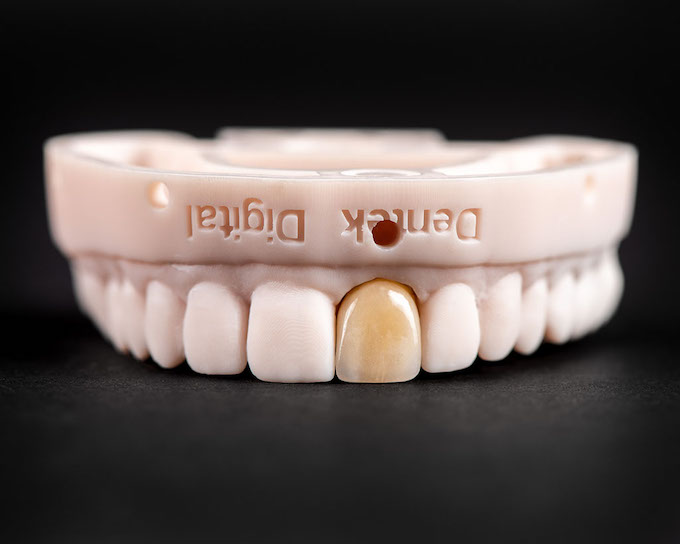
Implant restorations have come a long way in recent years. Today, dental professionals have access to solutions that were simply not possible a decade ago. Angled screw channel implant crowns are one of the most significant advances in modern implant dentistry. They allow clinicians to restore implants that are placed in less-than-ideal angulations — without sacrificing esthetics or function.
At Dentek Digital, we fabricate high-quality angled screw channel implant crowns using advanced CAD/CAM technology. Our digital workflow produces precise, reliable restorations for dentists and dental practices throughout the Greater Phoenix, Arizona area. Furthermore, we work with practices beyond our local region, including those in communities like San Marino, CA.
In this post, we break down what angled screw channel crowns are, why they matter, and how a trusted digital dental lab can help you deliver outstanding results for your patients.
What Are Angled Screw Channel Implant Crowns?
A screw-retained implant crown connects directly to the implant via a screw. This approach avoids the need for dental cement. As a result, it simplifies retrieval and reduces the risk of cement-related complications around the implant.
However, traditional screw-retained crowns require the implant to be angled correctly. If the implant is placed off-axis, the screw access hole can end up in an undesirable position — such as the middle of a front tooth’s facial surface. That creates both esthetic and functional problems.
How the Angled Screw Channel Solves This Problem
An angled screw channel uses a specially designed abutment or restoration component. It redirects the screw access path by a meaningful degree. This means the access hole can be repositioned to a more acceptable location on the crown — typically toward the lingual or occlusal surface.
Because of this, clinicians can offer screw-retained restorations even when implant angulation is not perfect. This is a major advantage in real-world clinical scenarios. Most implant cases involve some degree of anatomical compromise.
Key Benefits of Angled Screw Channel Restorations
- No cement required: Eliminates the risk of excess cement causing peri-implant tissue issues.
- Easy retrievability: The restoration can be removed and replaced if needed.
- Improved esthetics: The access hole is placed away from visible tooth surfaces.
- Broader clinical application: Works well for off-axis implant placements.
- Better long-term outcomes: Supports healthier tissue response and easier maintenance.
Why Digital CAD/CAM Technology Matters for These Restorations
Angled screw channel crowns are not simple restorations. They require precise planning and execution. Therefore, the technology and expertise behind the fabrication process matter enormously.
At Dentek Digital, we use advanced CAD/CAM software and milling equipment to design and fabricate these restorations with exceptional accuracy. Our digital workflow starts with a high-quality scan and ends with a restoration that fits predictably and functions reliably.
The Digital Workflow Advantage
Digital dentistry has transformed how dental labs work. First, we receive digital impressions or scans directly from the dentist. Next, our technicians use specialized software to design the restoration. Then, precision milling or 3D fabrication brings that design to life.
This process reduces human error at every step. Additionally, it speeds up turnaround time without cutting corners on quality. For complex restorations like angled screw channel crowns, this precision is not optional — it is essential.
Material Options for Angled Screw Channel Crowns
Material selection plays a major role in the success of any implant crown. At Dentek Digital, we work with high-quality materials suited to the demands of screw-retained implant restorations. Common options include:
- Zirconia: Strong, esthetic, and biocompatible. An excellent choice for posterior and anterior implant crowns.
- PFM (Porcelain-Fused-to-Metal): A time-tested option with reliable strength and esthetic flexibility.
- Full-contour restorations: Ideal for cases where strength and simplicity are the top priorities.
Our team works closely with each dentist to select the best material for the specific case. Moreover, we consider the patient’s bite, esthetic goals, and the implant position before making a recommendation.
Serving Dentists Across Greater Phoenix and Beyond
Dentek Digital is based in Phoenix, Arizona. We are proud to be a recognized national leader in digital dentistry. Our team was among the earliest adopters of the CAD/CAM workflow in the country. That early commitment to digital excellence has shaped everything we do.
We serve dental practices across the Greater Phoenix area — including Scottsdale, Chandler, Mesa, Gilbert, and Tempe. Additionally, we partner with practices in other regions, including California communities like San Marino. Our digital workflow makes it easy to collaborate with dentists regardless of geography.
Why Dentists Trust Dentek Digital
Dentists choose us for several key reasons. First, our quality standards are uncompromising. Every restoration goes through a thorough review before it leaves our lab. Second, our turnaround times are competitive without sacrificing craftsmanship. Third, we communicate clearly and promptly with every practice we serve.
Furthermore, we stay at the forefront of dental technology. We continuously invest in the latest CAD/CAM systems and materials. As a result, our clients receive restorations that reflect the current best practices in digital dentistry.
Advanced Services Beyond Implant Crowns
Dentek Digital offers a full range of dental lab solutions. In addition to implant crowns, we fabricate fixed restorations, removable prosthetics, splints, and nightguards. We also offer TattooTH and digital implant planning services.
This broad capability means dental practices can rely on us as a single trusted lab partner. On the other hand, practices that currently use multiple labs often find it simpler to consolidate with a full-service digital lab like ours.
Practical Tips for Dentists Ordering Angled Screw Channel Crowns
Getting the best results from angled screw channel implant crowns starts well before the lab receives the case. Here are some practical guidelines to keep in mind.
Scan Quality Is Critical
A high-quality intraoral scan is the foundation of a successful digital restoration. Make sure the scan captures the full implant position, adjacent teeth, and opposing arch clearly. Additionally, verify that the scan body is fully seated before capturing the impression.
Poor scan quality leads to poor fit. Therefore, taking the time to capture a clean, accurate scan is always worth it.
Communicate the Angulation Clearly
When you send a case for an angled screw channel crown, communicate the implant angulation clearly. Note the degree of offset if known. Also, indicate where you would like the access hole positioned on the final restoration.
Our team reviews every case carefully. However, the more information you provide upfront, the smoother the process will be for everyone involved.
Verify Component Compatibility
Angled screw channel systems are often implant-brand specific. Make sure you identify the correct implant system and component when submitting your case. This ensures we select the appropriate design parameters from the start.
Moreover, if you are unsure which system you are working with, our team is happy to help you identify it. We work with a wide range of implant systems and have deep experience matching restorations to the correct components.
Frequently Asked Questions About Angled Screw Channel Implant Crowns
What degree of angulation correction is possible?
Most angled screw channel systems can redirect the access path by up to approximately 25 to 30 degrees. This range covers the majority of off-axis implant placements encountered in clinical practice. Your lab technician can help assess whether your specific case falls within this range.
Are angled screw channel crowns more difficult to fabricate?
They do require more precise planning than standard screw-retained crowns. However, with an experienced digital lab and proper CAD/CAM technology, they are well within reach. Dentek Digital has extensive experience fabricating these restorations with consistent, high-quality results.
Can angled screw channel crowns be used for anterior implants?
Yes. In fact, this is one of the most common applications. Anterior implants are especially prone to angulation challenges. An angled screw channel solution allows the clinician to avoid a facial access hole and maintain excellent esthetics.
How do I send a case to Dentek Digital?
Sending a case is straightforward. You can submit digital scans and case details through our online case submission system. Our team reviews each case promptly and follows up with any questions. We make the process as simple as possible for busy dental practices.
Does Dentek Digital work with practices outside of Arizona?
Absolutely. While we are based in Phoenix and serve the Greater Phoenix area extensively, our digital workflow allows us to collaborate with dental practices across the country. We regularly work with practices in California and other states.
Partner With a Digital Lab That Delivers
Angled screw channel implant crowns represent a meaningful advancement in implant dentistry. They expand the range of cases that qualify for screw-retained restorations. Additionally, they help clinicians achieve better esthetic and functional outcomes for their patients.
Choosing the right lab partner makes all the difference. At Dentek Digital, we combine cutting-edge CAD/CAM technology with skilled craftsmanship and clear communication. Our team is committed to helping dental professionals deliver the best possible care to their patients.
Whether you are in Scottsdale, Mesa, Tempe, Chandler, or a community like San Marino, CA, we are ready to support your practice. Contact Dentek Digital today to send us a case or discuss how we can help you with your next angled screw channel implant crown restoration.