
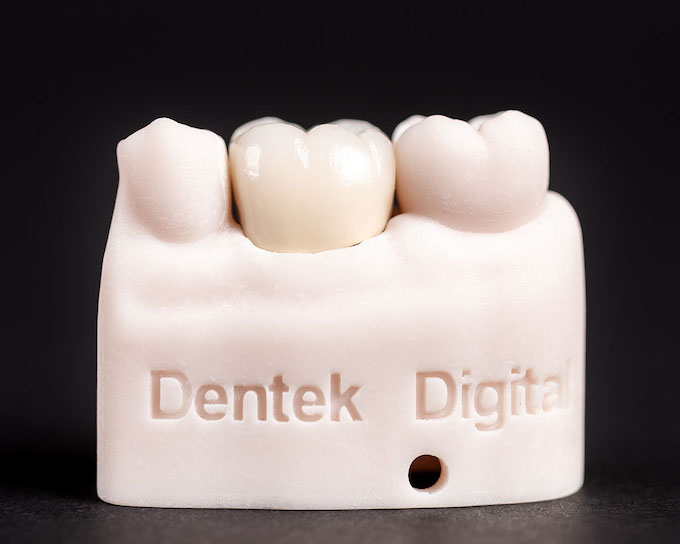
Full mouth dental implants represent one of the most complex and rewarding solutions in modern dentistry. They restore a patient’s entire bite, function, and smile. Because of this, every component must be designed and fabricated with exceptional precision.
At Dentek Digital, we support dentists and dental practices across Greater Phoenix — including Mesa, Tempe, Chandler, and Scottsdale — with advanced CAD/CAM-fabricated restorations. We understand what it takes to deliver implant cases that fit right and last long.
In this post, we cover what full mouth dental implants involve from a lab perspective. We also share how digital dentistry is changing the way these cases are planned, designed, and delivered.
What Are Full Mouth Dental Implants?
Full mouth dental implants replace all or most of a patient’s teeth using implant-supported restorations. They are not a single product. Instead, they are a system of components that must work together seamlessly.
There are several approaches a dental provider might use. The right approach depends on the patient’s bone density, oral health, and functional needs.
Common Full Arch Implant Options
- All-on-4 or All-on-X: A full arch is supported by four or more strategically placed implants.
- Implant-supported dentures: A removable or fixed prosthesis attaches to multiple implants.
- Individual implant crowns: Each missing tooth is replaced with a single implant and crown.
- Hybrid prostheses: These combine fixed and removable elements for complex cases.
Each option places different demands on the dental lab. Therefore, precise fabrication and digital planning are essential at every stage.
Why Digital Dentistry Improves Full Mouth Implant Cases
Traditional implant workflows relied on physical impressions and manual fabrication. Those methods introduced variables that could affect fit and function. Digital dentistry changes that entirely.
CAD/CAM technology — computer-aided design and computer-aided manufacturing — allows labs to design restorations with sub-millimeter accuracy. Furthermore, digital workflows reduce chair time and minimize remakes.
How CAD/CAM Benefits Implant Restorations
Digital design software lets technicians visualize the entire restoration before milling begins. This means issues are caught early. As a result, the final prosthesis fits more predictably from the start.
Milling machines cut restorations from high-quality material blocks. These include zirconia, PMMA, and other proven materials. Each one is selected based on the clinical needs of the case.
At Dentek Digital, we were among the earliest adopters of the full digital CAD/CAM workflow in the country. Our team in Phoenix brings that experience to every implant case we fabricate.
The Role of the Dental Lab in Full Mouth Implant Cases
Many people focus on the surgical side of implants. However, the lab plays an equally critical role. The prosthesis must fit the implant interface precisely and function comfortably under full bite forces.
A well-fabricated full mouth restoration supports proper occlusion. It also protects the implants from excessive stress. Poor lab work can compromise even a perfectly placed implant.
What the Lab Fabricates for Implant Cases
- Implant-supported crowns and bridges: Custom-designed to match bite and aesthetics.
- Screw-retained prostheses: Fixed restorations that attach directly to the implant abutment.
- Surgical and bite guides: Used to support accurate implant placement and occlusal planning.
- Provisional restorations: Temporary prostheses worn during the healing phase.
- Final full arch prostheses: Milled or layered final restorations built for long-term wear.
Additionally, our lab offers digital implant planning support. This service helps dental providers visualize the case before surgery even begins.
Digital Implant Planning: A Game-Changer for Complex Cases
Digital implant planning uses 3D imaging and software to map the surgical and prosthetic workflow together. This approach aligns the implant position with the planned final restoration. Because of this, the prosthetic outcome is considered before the first implant is placed.
For full mouth cases, this level of planning is especially valuable. There are many implants, abutments, and prosthetic components involved. Moreover, the margin for error is much smaller when restoring an entire arch.
Benefits of Digital Planning for Full Arch Cases
First, it gives the dental provider a clear picture of the expected outcome. Next, it helps identify any anatomical challenges before surgery. Finally, it ensures the lab and the provider are aligned on the design from the start.
Dentek Digital offers this advanced service to dental practices throughout the Phoenix metro area. We work with practices in Chandler, Gilbert, Mesa, and Scottsdale who are taking on increasingly complex implant cases.
Materials Used in Full Mouth Implant Restorations
Material selection is critical for full mouth implant cases. These restorations must withstand heavy occlusal forces day after day. Therefore, the material must be strong, durable, and biocompatible.
Zirconia
Zirconia is one of the most popular materials for implant-supported prostheses. It is strong, tooth-colored, and highly biocompatible. Furthermore, it can be milled to very precise tolerances using CAD/CAM systems.
Monolithic zirconia is often used for full arch cases because it is both strong and esthetic. However, layered zirconia may be used when additional color detail is needed.
PMMA for Provisionals
PMMA — polymethyl methacrylate — is commonly used for provisional (temporary) restorations. It is milled to fit precisely and allows the patient to function comfortably during healing. Additionally, it gives both the provider and patient a chance to evaluate the final design before committing to the permanent prosthesis.
Titanium Components
Titanium is used for abutments and frameworks when maximum strength is required. It integrates well with the implant and provides a stable foundation for the prosthetic crown or bridge.
What Dentists Should Know When Sending Full Mouth Implant Cases
Sending a full mouth implant case to the lab requires thoughtful preparation. The more complete and accurate the case information, the better the outcome. Here are some key points to keep in mind.
- Provide a full digital scan: A high-quality intraoral or model scan is the foundation of a precise restoration.
- Include bite records: Accurate occlusal records are essential for full arch cases.
- Document implant specifics: Include the implant system, platform size, and connection type.
- Communicate aesthetic goals: Share shade, shape, and any patient preferences clearly.
- Flag timing needs: Full mouth cases take time. Plan ahead and communicate deadlines early.
Our team at Dentek Digital is experienced in guiding dental providers through the case submission process. We make it straightforward, even for complex implant workflows.
Frequently Asked Questions About Full Mouth Dental Implants and the Lab
How long does it take to fabricate a full mouth implant restoration?
Turnaround time varies based on case complexity and material selection. Provisionals are typically faster. Final full arch prostheses take longer due to design, milling, and finishing requirements. We encourage providers to plan cases well in advance and communicate timing needs upfront.
What digital files does the lab need to get started?
We work with STL files from intraoral scanners or model scans, along with implant scan body data and occlusal records. Additionally, a clear prescription with case notes and shade information helps our team design the restoration accurately.
Can Dentek Digital work with any implant system?
We work with a wide range of implant systems and connections. Therefore, it is important to identify the brand, system, and platform when submitting the case. Our team will confirm compatibility and reach out if clarification is needed.
What is the difference between a screw-retained and cement-retained implant crown?
A screw-retained crown attaches directly to the implant abutment with a screw. It is retrievable, which is a significant advantage for maintenance. A cement-retained crown is bonded over a separate abutment. Each has clinical advantages depending on the case. Our lab can fabricate both.
Does Dentek Digital offer provisional restorations for implant cases?
Yes. We fabricate PMMA provisionals for full arch implant cases. These allow the patient to function and evaluate esthetics during the healing period. They are milled digitally for a consistent, accurate fit.
Partner with Dentek Digital for Implant Restorations
Full mouth dental implants demand precision at every step. From initial planning to final delivery, the lab is a critical partner in the success of these cases. At Dentek Digital, we bring national-level expertise and a fully digital workflow to every restoration we fabricate.
We serve dental practices throughout Greater Phoenix — including Tempe, Mesa, Scottsdale, and Chandler — with CAD/CAM restorations that are built to perform. Our team understands the demands of complex implant cases and the standards that today’s dental providers expect.
If you are ready to take your implant cases to the next level, contact Dentek Digital today. We are here to support you and your patients with restorations that fit, function, and last.