
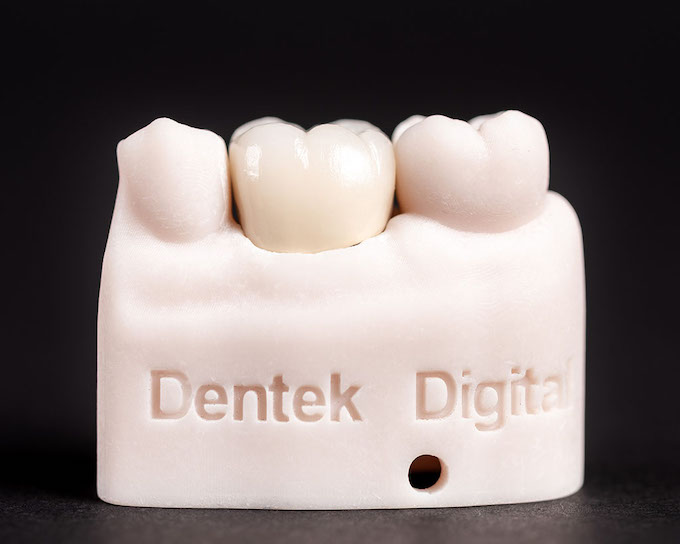
When patients ask about full mouth dental implants, they are seeking more than a cosmetic upgrade. They want a complete, lasting solution for missing or failing teeth. This treatment can restore chewing function, improve speech, and rebuild confidence in everyday life.
For dentists, delivering a successful full-arch implant case depends heavily on precision. The restorations must fit perfectly and perform reliably over time. That is where a high-quality digital dental lab becomes essential to the process.
At Dentek Digital, we support dental professionals across the Greater Phoenix area — including Mesa, Chandler, Scottsdale, and Tempe — with advanced CAD/CAM restorations designed for implant cases of every complexity. In this post, we break down what full mouth dental implants involve and how a digital lab partnership makes a real difference.
What Are Full Mouth Dental Implants?
Full mouth dental implants replace an entire arch — or both arches — of missing or failing teeth. Instead of individual implants for each tooth, this approach uses a series of strategically placed implant posts. Those posts then support a fixed or removable restoration.
This is different from a traditional denture. The implants anchor directly into the jawbone. As a result, the restoration feels and functions much more like natural teeth.
Common Full-Arch Implant Approaches
There are several treatment approaches dentists use for full-arch implant cases. Each one has different requirements for the final restoration.
- All-on-4 or All-on-X: A fixed arch supported by four or more implants placed at specific angles.
- Implant-supported overdentures: A removable prosthesis that snaps onto implant attachments.
- Hybrid prosthetics: A combination of implant posts and a fixed, screw-retained bridge fabricated from high-strength materials.
Additionally, some cases require staged treatment. First, temporary restorations are placed. Then, final restorations are delivered after full osseointegration. Each stage demands careful planning and precise lab work.
Why the Dental Lab Plays a Critical Role
Many patients focus on the surgical side of implant treatment. However, the quality of the final restoration is equally important. A poorly fitting restoration can create complications — no matter how well the implants are placed.
The dental lab is responsible for fabricating the crowns, bridges, or arch prosthetics that sit on top of the implants. Furthermore, the lab must work with exact digital data to ensure the restoration fits the patient’s unique anatomy.
How CAD/CAM Technology Improves Implant Restorations
CAD/CAM stands for Computer-Aided Design and Computer-Aided Manufacturing. This technology allows labs to design and mill restorations with exceptional accuracy. Traditional hand-fabrication methods simply cannot match this level of precision.
At Dentek Digital, we were among the earliest adopters of the digital CAD/CAM workflow in the country. Because of this, our team has deep experience handling complex implant cases with confidence. We use advanced software and milling equipment to create restorations that fit right the first time.
Moreover, digital workflows speed up turnaround times without sacrificing quality. Dentists in Scottsdale, Chandler, Mesa, and across the Phoenix metro can submit cases digitally and receive highly accurate restorations efficiently.
The Digital Workflow: From Scan to Final Restoration
Modern full-arch implant cases benefit greatly from an end-to-end digital workflow. This process connects the dentist’s office to the lab seamlessly. Here is how a typical digital implant workflow looks:
- Intraoral scanning: The dentist captures a precise digital impression of the patient’s mouth.
- Digital case submission: Scan files are sent directly to the lab for review and design.
- CAD design: Lab technicians use advanced software to design the restoration in three dimensions.
- CAM milling or printing: The restoration is milled or printed from high-strength materials such as zirconia or PMMA.
- Quality review and delivery: The finished restoration is inspected, finished, and shipped back to the dental practice.
This workflow reduces errors and eliminates many of the guesswork steps found in traditional analog processes. Therefore, dentists can feel confident presenting cases to their patients with clear timelines.
Digital Implant Planning at Dentek Digital
We also offer advanced digital implant planning services. This allows dentists to plan implant placement virtually before surgery begins. As a result, the surgical guide aligns with the final prosthetic design from day one.
This backwards planning approach — sometimes called prosthetically driven implant placement — leads to better outcomes. Furthermore, it reduces the chance of complications during the restoration phase.
Materials Used in Full-Arch Implant Restorations
Choosing the right material is a key part of every implant case. The material affects strength, aesthetics, and long-term durability. Here are some of the most commonly used materials for full-arch restorations:
- Zirconia: Extremely strong and highly aesthetic. Ideal for permanent fixed restorations.
- PMMA (acrylic): Often used for temporary or transitional restorations during the healing phase.
- Hybrid materials: Combine the strength of a framework with an aesthetic outer layer for a natural appearance.
Each material has its place in the treatment timeline. Meanwhile, the lab team’s skill in working with these materials determines the final result. Our technicians at Dentek Digital are experienced with all major full-arch implant materials and frameworks.
TattooTH: A Unique Dentek Digital Offering
In addition to standard implant restorations, we offer TattooTH — an advanced personalization service for dental restorations. This allows dentists to add unique surface characteristics that make restorations look more lifelike and natural.
For full-arch implant patients who want the most natural-looking result possible, TattooTH provides an option that sets restorations apart. It is one of several ways Dentek Digital goes beyond standard lab services.
Supporting Dentists Across Greater Phoenix
Our lab is based in Phoenix, Arizona, and we proudly serve dental practices throughout the surrounding region. We work with dentists in Mesa, Tempe, Scottsdale, Chandler, Gilbert, and beyond. Our goal is to be a true partner — not just a vendor.
We understand that implant cases are among the most complex and high-stakes cases in dentistry. Therefore, we take every submission seriously. Our team is available to discuss cases, answer questions, and collaborate closely with each practice we serve.
Tips for Dentists Submitting Full-Arch Implant Cases
If you are preparing to send a full-arch implant case to a digital lab, here are some practical tips to ensure the best result:
- Use a high-quality intraoral scanner and verify your scan is complete before submitting.
- Include clear bite records and a full case prescription with all relevant notes.
- Communicate the patient’s aesthetic goals and functional requirements in detail.
- Specify the material preference and shade information clearly.
- Ask the lab about their implant planning capabilities before surgery if possible.
Additionally, open communication between the dentist and lab technician leads to better outcomes. Do not hesitate to reach out to us before or during a complex case.
Frequently Asked Questions About Full Mouth Dental Implants
How long does it take to complete a full-arch implant case?
The timeline varies depending on the treatment approach. Some patients receive same-day temporaries. However, the final restoration is typically delivered after healing is complete. Your lab partner plays a key role in keeping the timeline efficient.
What makes a digital lab better for implant cases?
Digital labs use CAD/CAM technology to design and fabricate restorations with high precision. As a result, fit and accuracy are significantly improved compared to traditional methods. This reduces remakes and chairside adjustments.
Can Dentek Digital handle complex full-arch cases?
Yes. We specialize in complex implant restorations and offer digital implant planning as part of our services. Our team has extensive experience with All-on-X, hybrid prosthetics, and implant-supported overdentures.
What file formats does Dentek Digital accept for digital submissions?
We accept most standard intraoral scan file formats. Contact our team directly to confirm compatibility with your scanner before submitting your first case.
Do you work with dental practices outside of Phoenix?
While our primary focus is the Greater Phoenix area — including Mesa, Tempe, Scottsdale, and Chandler — we also support practices across the country. Reach out to learn more about our submission options.
Partner With Dentek Digital for Your Implant Cases
Full mouth dental implants represent one of the most transformative treatments in modern dentistry. For dentists, these cases require a trusted lab partner who understands precision, technology, and the importance of getting it right.
Dentek Digital combines advanced CAD/CAM technology with skilled craftsmanship to deliver implant restorations that meet the highest standards. We work closely with dental practices throughout Phoenix, Mesa, Scottsdale, Chandler, and the surrounding communities.
Whether you are ready to submit a case or just exploring your options, our team is here to help. Contact Dentek Digital today to discuss your next full-arch implant case and discover how our digital lab services can support better outcomes for your patients.