
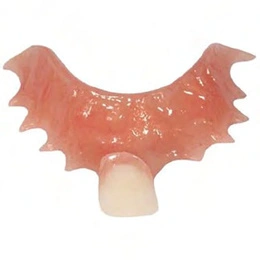
When patients ask about top dental implants, they are really asking about more than just the implant itself. They want a restoration that looks natural, fits precisely, and lasts for years. For dentists and dental practices, delivering that result depends heavily on the quality of the dental lab behind the work.
At Dentek Digital, we partner with dental professionals to fabricate high-quality implant restorations using advanced CAD/CAM dentistry technology. Our digital workflow gives dentists the precision and reliability their patients deserve. Furthermore, our team brings deep expertise to every case we handle.
Whether you practice in Phoenix, Scottsdale, Mesa, Chandler, or Gilbert, understanding what goes into a top-tier implant restoration can help you deliver better outcomes. In this post, we break down what makes implant restorations excellent and how a digital dental lab plays a critical role.
What Makes a Dental Implant Restoration Stand Out?
Not all implant restorations are created equal. Therefore, it is important to understand the components that separate a great result from an average one. The implant fixture itself is only one part of the equation.
The crown, abutment, and overall fit are just as important. Additionally, the materials used and the precision of fabrication directly affect how the restoration performs over time. A poorly fitting crown can lead to complications down the line.
Digital dental labs like Dentek Digital use CAD/CAM technology to mill or print restorations with exceptional accuracy. As a result, dentists receive components that seat correctly the first time. This reduces chair time and improves the patient experience.
The Role of the Abutment
The abutment connects the implant fixture to the final crown. Because of this, its design and fit are absolutely critical. A custom abutment can be engineered digitally to match the patient’s specific anatomy.
Custom abutments offer several advantages over stock options. For example, they allow for better emergence profile shaping and more natural gum tissue support. Moreover, they help create a restoration that blends seamlessly with surrounding teeth.
Crown Material Choices
Material selection also plays a major role in implant success. However, the right choice depends on the location of the implant and the patient’s bite forces. Common options include full-contour zirconia, layered zirconia, and PFM crowns.
Full-contour zirconia is popular for posterior implants because of its strength. On the other hand, layered zirconia may be preferred for anterior cases where esthetics are the priority. Your lab partner should guide you through these decisions.
How CAD/CAM Technology Elevates Implant Restorations
Digital technology has transformed the way dental labs fabricate implant components. First, digital scans eliminate the inaccuracies that can come with traditional impressions. Then, CAD software allows technicians to design restorations with micron-level precision.
Next, the design is sent directly to a milling machine or 3D printer for fabrication. This streamlined process reduces human error at every step. Additionally, it speeds up turnaround times without sacrificing quality.
Dentek Digital was one of the earliest adopters of the digital CAD/CAM workflow in the country. Because of this, we have refined our processes over many years. Our team combines advanced technology with skilled craftsmanship to deliver consistent, reliable results.
Scanning and Digital Impressions
The digital workflow begins with an accurate scan. Therefore, the quality of the intraoral scan or desktop scan sent to the lab matters greatly. We work with a wide range of scan formats to accommodate different practice setups.
Moreover, digital files can be reviewed and adjusted before fabrication begins. This means potential fit issues are caught early. As a result, remakes are rare and cases move forward efficiently.
Milling vs. Printing: Which Is Right for Your Case?
Milling and 3D printing each have their place in modern implant workflows. Milling from solid blocks of zirconia or PMMA produces extremely dense, strong restorations. In addition, milled restorations have a well-established clinical track record.
3D printing, meanwhile, continues to advance rapidly. It is particularly useful for surgical guides, models, and certain provisional restorations. Your lab partner can help you determine the best fabrication method for each specific case.
Implant Planning: A Critical Step Before Fabrication
Successful implant restorations often start long before the implant is placed. In fact, proper planning significantly influences the final outcome. Digital implant planning tools allow dentists to map out implant position with precision.
Dentek Digital offers digital implant planning services to support practices across the Phoenix area. This service helps dentists in communities like Tempe and Gilbert place implants in the ideal position for the planned restoration. Furthermore, guided surgery can reduce complications and improve predictability.
When the implant is placed in the correct position, the restorative phase becomes much simpler. Therefore, investing in planning upfront pays dividends throughout the entire treatment process. It is one of the most valuable steps a dental team can take.
Prosthetically Driven Planning
The best implant cases are planned backward from the final restoration. Additionally, this prosthetically driven approach ensures the implant supports the crown in the most functional and esthetic way. It requires close communication between the dentist and the lab.
At Dentek Digital, we encourage this collaborative approach. Our team is available to consult on cases before treatment begins. Contact Dentek Digital early in the treatment planning process to get the best possible outcome for your patient.
What Dentists Should Look for in a Digital Lab Partner
Choosing the right lab partner is one of the most important decisions a dental practice can make. However, with so many options available, the choice can feel overwhelming. Here are key factors to consider when evaluating a digital dental lab.
- Digital workflow capability: Does the lab use current CAD/CAM technology for all implant cases?
- Material quality: Does the lab use premium-grade zirconia, titanium, and other materials?
- Turnaround time: Can the lab reliably meet your case timelines?
- Communication: Is the team responsive and easy to work with on complex cases?
- Experience: Does the lab have a proven track record with implant-supported restorations?
Dentek Digital meets all of these standards. Moreover, we serve dental practices across the Greater Phoenix area, including Scottsdale, Mesa, Chandler, and beyond. Our team is committed to being a true partner in your clinical success.
Consistency You Can Count On
One of the most common frustrations dentists face is inconsistency from their lab. Therefore, a reliable digital workflow is not just a luxury — it is essential. CAD/CAM fabrication produces consistent results case after case.
Additionally, when your lab uses a digital workflow, every restoration is documented and traceable. This makes it easier to replicate successful cases and troubleshoot any issues. Furthermore, it gives the entire care team confidence in the process.
Frequently Asked Questions About Implant Restorations
What is the difference between a stock abutment and a custom abutment?
A stock abutment is a pre-made component that comes in standard sizes. A custom abutment, however, is digitally designed to match the patient’s unique anatomy. Custom abutments generally provide better esthetics and a more precise fit.
How long does it take to receive an implant crown from a digital lab?
Turnaround times vary depending on case complexity and the lab’s workflow. However, digital labs typically process cases faster than traditional labs. Most implant crowns can be completed within a few business days after receiving an accurate scan.
Can Dentek Digital work with any intraoral scanner?
Yes. Dentek Digital accepts digital files from most major intraoral scanner brands. Additionally, we can work from high-quality conventional impressions when needed. Our team will guide you through the submission process.
What materials does Dentek Digital use for implant crowns?
We offer a range of high-quality materials, including full-contour zirconia, layered zirconia, and PFM options. Moreover, we select materials based on clinical requirements and esthetic goals. Your case notes help us make the best recommendation.
Does Dentek Digital offer implant planning services?
Yes. We offer digital implant planning to help dentists across Phoenix, Tempe, Chandler, and Gilbert plan cases with greater precision. This service supports prosthetically driven placement for more predictable outcomes. Contact our team to learn more.
Partner With Dentek Digital for Top Dental Implant Restorations
Delivering top dental implants to your patients starts with the right lab partner. Therefore, choosing a lab with a fully digital workflow and proven expertise matters more than ever. Dentek Digital is proud to be that partner for practices across the Greater Phoenix area.
We combine cutting-edge CAD/CAM technology with skilled craftsmanship on every case. Additionally, our team is here to support you from the planning stage all the way through final delivery. We make the process simple, reliable, and consistent.
Ready to elevate your implant restorations? Explore your options and contact Dentek Digital today to send us your next case. We look forward to partnering with your practice.