
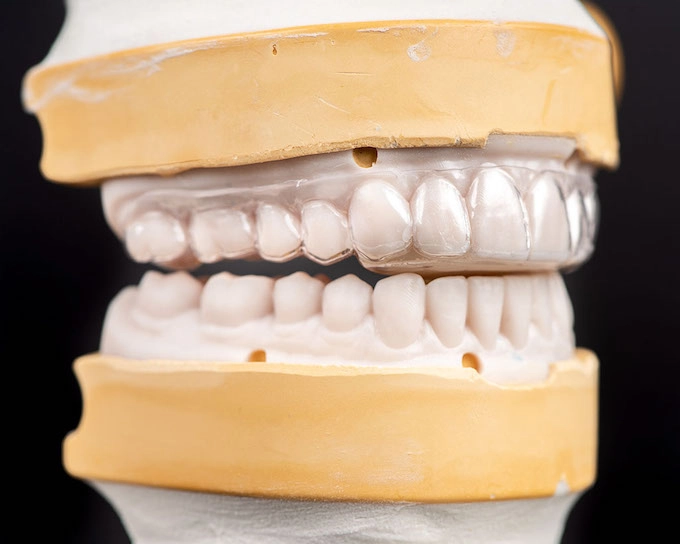
When a patient loses one or more teeth, two options come up almost immediately: dental implants and dentures. Choosing between implants vs dentures is one of the most important decisions a patient will face. Understanding the differences helps dentists guide their patients toward the best outcome.
Both solutions have real advantages. However, they serve different needs, lifestyles, and clinical situations. This guide breaks down both options clearly so you can make an informed recommendation.
At Dentek Digital, we fabricate high-quality implant restorations and removable dentures for dental practices across the Greater Phoenix, Arizona area — including communities like Mesa, Chandler, Scottsdale, and Gilbert. Our digital CAD/CAM workflow ensures precision, fit, and consistency on every case.
What Are Dental Implants?
Dental implants are titanium posts that a surgeon places directly into the jawbone. They act as artificial tooth roots. Once the implant integrates with the bone, a crown or bridge is placed on top to restore the tooth’s function and appearance.
Implants are a long-term solution. They feel and function much like natural teeth. Additionally, they help preserve jawbone density over time, which is a major clinical benefit.
Who Is a Good Candidate for Implants?
Not every patient qualifies for implants right away. First, the patient needs adequate jawbone volume to support the titanium post. Next, their gum health must be stable. Finally, systemic health factors like uncontrolled diabetes may affect candidacy.
Patients who are good candidates tend to experience excellent long-term outcomes. Moreover, advances in implant planning — like the digital implant planning services we offer at Dentek Digital — make the process more predictable than ever before.
Types of Implant Restorations
Implant restorations come in several forms. A single crown replaces one missing tooth. A bridge supported by implants replaces multiple adjacent teeth. Additionally, implant-supported dentures — sometimes called overdentures — offer a more stable alternative to traditional removable dentures.
Each type requires precise fabrication. Therefore, working with a skilled digital dental lab makes a significant difference in the final result.
What Are Dentures?
Dentures are removable prosthetic devices that replace missing teeth. They rest on the gum tissue and are held in place by natural suction, adhesive, or attachments. Traditional dentures have been used for generations and continue to serve many patients well.
There are two main types: full dentures and partial dentures. Full dentures replace all teeth in an arch. On the other hand, partial dentures fill gaps when some natural teeth still remain.
Advantages of Traditional Dentures
Dentures offer several practical benefits. They are generally more accessible for patients who cannot undergo surgery. Furthermore, the treatment timeline is often shorter than the implant process.
Modern dentures fabricated with digital CAD/CAM technology fit more precisely than older conventional methods. As a result, patients experience better comfort and fewer adjustments. At Dentek Digital, our removable solutions use the latest digital workflows to deliver consistent, high-quality results.
Limitations of Traditional Dentures
Traditional dentures do have drawbacks. Because they rest on the gums, they can shift or slip during eating and speaking. Over time, bone loss under the denture can change the fit.
Additionally, patients often need periodic relining or replacement as their jaw anatomy changes. However, implant-supported dentures can address many of these concerns for qualifying patients.
Implants vs Dentures: A Side-by-Side Comparison
Comparing implants vs dentures across several key factors helps both dentists and patients make the right call. Below is a practical breakdown of how the two options differ.
- Stability: Implants are fixed and do not move. Traditional dentures can shift without proper adhesive or support.
- Bone Preservation: Implants stimulate the jawbone and help prevent bone loss. Dentures do not provide this benefit.
- Maintenance: Implant crowns are cleaned like natural teeth. Removable dentures require daily removal and cleaning.
- Longevity: Well-maintained implants can last many years or even decades. Dentures typically require replacement or relining over time.
- Surgical Requirement: Implants require a surgical procedure. Dentures are non-surgical and accessible to a wider range of patients.
- Treatment Timeline: The implant process takes several months. Dentures can often be delivered more quickly.
- Cost Range: Implants generally involve a higher upfront investment. Dentures are often a lower-cost starting point.
Therefore, neither option is universally better. The right choice depends on the patient’s health, bone structure, budget, and personal preferences.
How Digital Technology Is Changing Both Options
Digital dentistry has transformed how both implants and dentures are planned and fabricated. CAD/CAM technology — computer-aided design and computer-aided manufacturing — allows dental labs to create restorations with exceptional precision.
At Dentek Digital, we were among the earliest adopters of the digital CAD/CAM workflow in the country. This experience gives us a distinct advantage in fabricating restorations that fit right the first time. As a result, your patients spend less time in the chair and experience fewer adjustments.
Digital Implant Planning
One of the most powerful tools in modern implant dentistry is digital implant planning. This process uses 3D imaging and software to map the exact placement of each implant before surgery begins. Because of this, surgeons can place implants more accurately and predictably.
We offer advanced digital implant planning services to dental practices in Phoenix and surrounding communities like Tempe and Gilbert. This service helps reduce complications and supports better patient outcomes from the very start.
Digital Dentures
Digital dentures represent a major leap forward in removable prosthetics. Moreover, they are fabricated from high-quality milled or printed materials that offer superior strength and fit compared to traditional methods.
Because digital records are stored, replacement or duplicate dentures can be produced more efficiently. This is a real clinical advantage for patients who break or lose a denture. Additionally, the digital workflow reduces the number of try-in appointments needed, saving time for both the dentist and the patient.
What Dentists in the Phoenix Area Should Know
Dental practices across the Greater Phoenix area — from Scottsdale to Chandler — are increasingly moving toward digital workflows. Patients today are more informed and more demanding. They expect restorations that look natural and function well.
Partnering with a digital dental lab like Dentek Digital means your practice benefits from the latest fabrication technology. Furthermore, our team brings deep expertise in both fixed and removable restorations. We understand the clinical nuances of implant cases and complex denture work.
Whether you are placing a single implant crown or providing a full-arch implant-supported denture, precision matters. Therefore, choosing the right lab partner is just as important as the clinical technique itself.
Frequently Asked Questions: Implants vs Dentures
Can a patient switch from dentures to implants later?
Yes, in many cases a patient can transition from dentures to implants. However, bone loss from long-term denture wear may require a bone grafting procedure first. A thorough clinical evaluation is essential before recommending this path.
Are implant-supported dentures better than traditional dentures?
For qualifying patients, implant-supported dentures offer significantly better stability and comfort. They also help preserve jawbone structure over time. On the other hand, traditional dentures remain a viable option for patients who cannot undergo implant surgery.
How does a dental lab support implant cases?
The dental lab fabricates the crown, abutment, or prosthetic component that attaches to the implant. Additionally, digital labs like Dentek Digital can assist with implant planning services, surgical guide fabrication, and custom abutment design. Accuracy at the lab level directly affects how well the restoration performs clinically.
How long does it take to receive a restoration from a digital lab?
Turnaround times vary depending on the case complexity. However, digital workflows typically allow for faster and more consistent production than traditional lab methods. Contact your lab partner directly to discuss timelines for specific case types.
What materials are used for implant crowns and digital dentures?
Common materials for implant crowns include zirconia and porcelain-fused-to-zirconia. Digital dentures are often fabricated from high-performance acrylic or composite resin materials. Furthermore, material selection should be guided by the patient’s bite, aesthetic goals, and the location of the restoration.
Choosing the Right Lab Partner for Implant and Denture Cases
The quality of any restoration depends heavily on the lab that fabricates it. Therefore, dental practices should carefully evaluate their lab partner’s capabilities, especially for complex implant and denture cases.
At Dentek Digital, we combine advanced CAD/CAM technology with skilled craftsmanship. We serve dental practices across Phoenix, Mesa, Scottsdale, Chandler, Gilbert, and Tempe. Our team brings experience across a full range of restoration types — from single implant crowns to full-arch implant solutions and high-quality digital dentures.
We also offer TattooTH, an advanced surface characterization service that adds lifelike detail to restorations. In addition, our digital implant planning service helps practices approach surgical cases with greater confidence and precision.
Ready to elevate your implant and denture cases? Contact Dentek Digital today to discuss your next case and discover how our digital lab services can support your practice and your patients.