
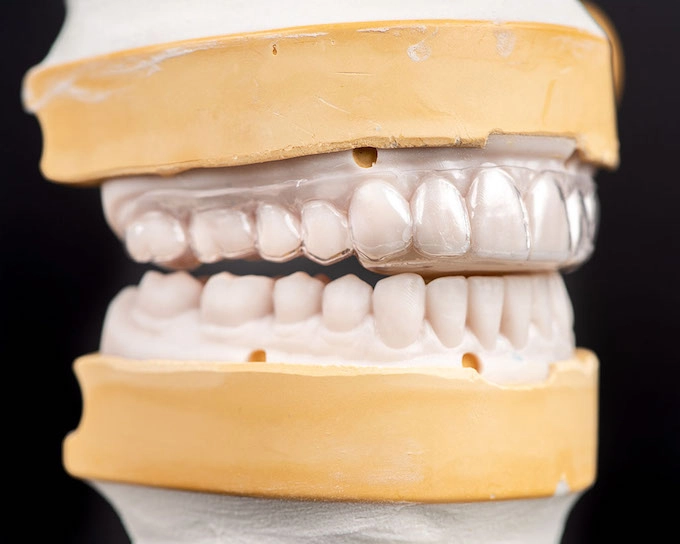
Choosing between implants vs dentures is one of the most important decisions a patient can make about their oral health. Both options restore missing teeth, but they work very differently. Understanding those differences helps dentists guide their patients toward the best possible outcome.
At Dentek Digital, we support dental professionals across the Greater Phoenix area with precision-crafted restorations. Furthermore, our CAD/CAM technology allows us to fabricate both implant-supported and removable restorations at the highest level of quality. Whether your practice is in Scottsdale, Chandler, Mesa, or Gilbert, we are here to help.
This guide breaks down both options clearly. It also explains how digital dental lab technology plays a major role in the quality of the final restoration.
What Are Dental Implants?
Dental implants are titanium posts placed directly into the jawbone. They act as artificial tooth roots. Therefore, they provide a stable, permanent foundation for a crown, bridge, or implant-supported denture.
Because implants fuse with the bone over time, they feel and function like natural teeth. Additionally, they help preserve the jawbone, which can deteriorate after tooth loss. This makes implants a long-term investment in a patient’s oral health.
Types of Implant Restorations
Implants can support several types of restorations. Each serves a different clinical need. Here are the most common options:
- Single-tooth implant crown: Replaces one missing tooth with a crown on a single implant post.
- Implant-supported bridge: Spans a gap of multiple missing teeth using two or more implants.
- Implant-supported denture: A full arch restoration anchored by multiple implants for superior stability.
- All-on-X restorations: A full arch of teeth supported by as few as four implants per arch.
At Dentek Digital, we fabricate all of these restoration types. Moreover, our digital workflow ensures a precise fit every time. Practices in Tempe and Scottsdale trust us to deliver consistent, high-quality implant restorations.
What Are Dentures?
Dentures are removable prosthetic devices that replace missing teeth. They rest on the gums and, in some cases, the remaining teeth. Traditional dentures have served patients for generations. However, modern digital dentures are far more precise and comfortable than older versions.
There are two main types of dentures. Each addresses a different level of tooth loss.
Full Dentures
Full dentures replace an entire arch of missing teeth. They rest directly on the gum tissue. As a result, they rely on suction and sometimes adhesive for retention. For many patients, they are still a practical and affordable solution.
Partial Dentures
Partial dentures fill in gaps when some natural teeth remain. They use clasps or precision attachments to anchor to existing teeth. Additionally, they prevent the remaining teeth from shifting out of position. This protects the overall bite and jaw alignment.
Our lab fabricates both full and partial removable dentures using advanced digital design technology. Because of this, the fit is more accurate and the aesthetics are more natural-looking than traditional methods allow.
Implants vs Dentures: Key Differences
When comparing implants vs dentures, several factors stand out. Each option has real advantages and limitations. Therefore, the right choice depends on the patient’s health, bone density, budget, and lifestyle.
Stability and Comfort
Implants are fixed in place. They do not shift, slip, or require adhesive. On the other hand, traditional dentures can move during eating or speaking. This movement can cause discomfort and reduce confidence for some patients.
Implant-supported dentures offer a middle ground. They snap onto implants for much greater stability. Meanwhile, they can still be removed for cleaning. Many patients in the Greater Phoenix area are choosing this option for its balance of security and convenience.
Bone Preservation
One significant advantage of implants is bone preservation. When a tooth is lost, the surrounding bone begins to resorb over time. However, implants stimulate the bone just like natural tooth roots. As a result, they slow or prevent bone loss.
Dentures do not stimulate the bone. Therefore, bone resorption continues under a traditional denture. Over time, this changes the shape of the jaw and can affect how the denture fits.
Maintenance and Care
Implants are cared for just like natural teeth. Patients brush and floss normally. In addition, they visit their dentist for regular checkups. Dentures require daily removal and cleaning with special solutions. They also need periodic adjustments as the jaw changes shape over time.
Treatment Timeline
Implant treatment takes longer from start to finish. The implant must integrate with the bone before the final restoration is placed. This process can take several months. Dentures, on the other hand, can often be delivered more quickly. For patients who need a faster solution, dentures may be the better short-term choice.
How Digital Technology Improves Both Options
At Dentek Digital, we were among the earliest adopters of digital CAD/CAM workflow in the country. This technology has transformed how we fabricate restorations. Furthermore, it benefits both implant restorations and digital dentures in powerful ways.
Precision Through CAD/CAM Design
CAD/CAM stands for computer-aided design and computer-aided manufacturing. In simple terms, we use digital scans and software to design restorations with extreme precision. Then, milling machines or 3D printers fabricate the final product. Because of this, the fit is more accurate than traditional hand-fabricated methods.
For implant crowns and bridges, this precision is especially critical. A poorly fitting implant restoration can cause complications. Therefore, we take digital accuracy very seriously at every stage of the process.
Digital Dentures
Digital dentures are designed and fabricated using the same CAD/CAM workflow. As a result, they offer better fit, better aesthetics, and greater durability. Additionally, the digital files are saved. This means a replacement denture can be fabricated quickly if one is lost or damaged.
Dental practices in Mesa, Gilbert, and Chandler are increasingly requesting digital dentures for their patients. Moreover, the turnaround time is often faster than traditional lab methods. This benefits both the practice and the patient.
Supporting Dentists Across Greater Phoenix
Dentek Digital partners with dental professionals throughout the Greater Phoenix area. We serve practices in Scottsdale, Tempe, Mesa, Chandler, Gilbert, and surrounding communities. Our goal is to make high-quality restorations accessible and efficient for every practice we work with.
We also offer advanced services like digital implant planning and TattooTH. These tools help dentists achieve more predictable outcomes for complex cases. Furthermore, our team of skilled lab technicians is available to discuss cases and offer technical guidance when needed.
If your practice is exploring implant restorations or upgrading to digital dentures, we are ready to help. Contact Dentek Digital to send us a case or start a conversation about your patients’ needs.
Frequently Asked Questions: Implants vs Dentures
Are dental implants always better than dentures?
Not always. Implants offer significant advantages in stability and bone preservation. However, they require adequate bone density and a surgical procedure. Some patients are better candidates for dentures based on their health history or treatment goals. The best option depends on the individual patient.
Can a patient switch from dentures to implants later?
In many cases, yes. However, long-term denture wear can lead to bone loss. This may affect candidacy for implants. Therefore, early evaluation is always recommended. A dentist or oral surgeon can assess bone volume and determine if implants are still possible.
What is an implant-supported denture?
An implant-supported denture combines features of both options. Multiple implants are placed in the jaw. Then, a specially designed denture snaps or locks onto those implants. As a result, the patient gets far better stability than a traditional denture provides. It is a popular choice for full arch restoration.
How does a digital dental lab improve restoration quality?
Digital labs like Dentek Digital use CAD/CAM software and precision milling or printing equipment. This produces restorations with tighter tolerances and better fit. Additionally, digital records allow for faster remakes and more consistent results. The overall quality and predictability are higher than traditional lab methods.
How do dentists in Phoenix submit cases to Dentek Digital?
Submitting a case is straightforward. Dentists can send digital scans directly through our case submission portal. Our team reviews the case, communicates any questions, and fabricates the restoration to specification. We work with practices throughout the Greater Phoenix area, including Mesa, Tempe, Scottsdale, Chandler, and Gilbert.
Ready to Elevate Your Restorations?
The conversation around implants vs dentures continues to evolve as technology advances. Digital dentistry is raising the standard for both options. As a result, patients today have access to restorations that are more precise, more comfortable, and more natural-looking than ever before.
Dentek Digital is proud to be at the forefront of that progress. We combine cutting-edge CAD/CAM technology with skilled craftsmanship to support dental professionals across Greater Phoenix. Furthermore, our team is committed to helping your practice deliver the best possible outcomes for every patient.
Whether you are placing implants, fitting a digital denture, or exploring implant-supported options, we are ready to be your lab partner. Reach out today and let’s discuss how we can support your next case.