
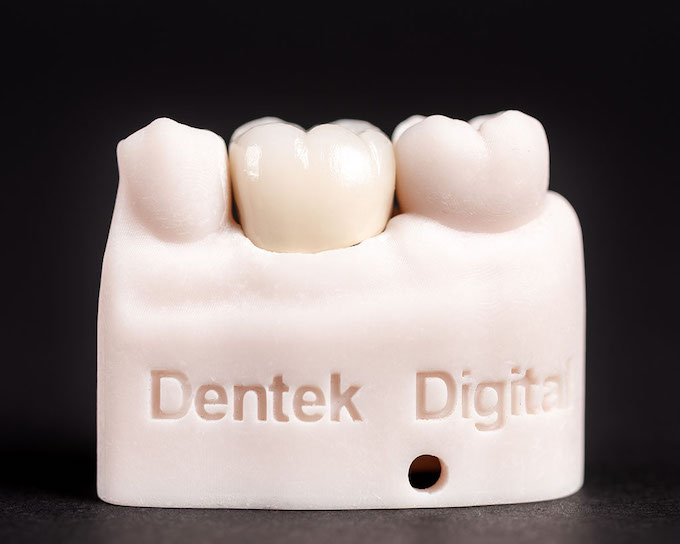
When a patient is missing teeth, the two most common solutions are dental implants and dentures. Choosing between them is one of the most significant decisions a patient and their dentist will make together. Understanding the differences helps everyone involved make the most informed choice possible.
The debate around implants vs dentures is not new, but it has evolved significantly with modern dental technology. Today, digital workflows and CAD/CAM fabrication have raised the quality bar for both options. As a result, patients now have access to restorations that are more precise and longer-lasting than ever before.
At Dentek Digital, we work with dentists and dental practices across the Greater Phoenix, Arizona area to fabricate high-quality restorations for both implant and removable cases. This guide breaks down both options so dental professionals can better educate their patients and choose the right solution for each case.
What Are Dental Implants?
Dental implants are titanium posts placed directly into the jawbone. They act as artificial tooth roots. Once integrated with the bone, they support a crown, bridge, or implant-supported denture on top.
Implants are widely considered the gold standard for tooth replacement. They look, feel, and function very much like natural teeth. Additionally, they help preserve the jawbone by providing the stimulation that natural roots once delivered.
Types of Implant Restorations
Implant restorations come in several forms. A single crown replaces one missing tooth. A bridge can span multiple missing teeth. Furthermore, implant-supported overdentures can replace an entire arch with just a few implants for support.
At Dentek Digital, we fabricate all of these restoration types using advanced CAD/CAM technology. Our digital workflow allows for exceptional accuracy and fit. This means better outcomes for patients and smoother seating appointments for dentists.
What Are Dentures?
Dentures are removable appliances that replace missing teeth and surrounding tissue. They come in two main types: complete dentures and partial dentures. Complete dentures replace all teeth in an arch, while partials fill in gaps alongside remaining natural teeth.
Traditional dentures rest on the gums and rely on suction or adhesive for retention. Meanwhile, implant-supported dentures snap onto implant posts for a much more secure fit. Both options are fabricated to closely match the patient’s natural appearance.
Modern Dentures and Digital Fabrication
Digital denture technology has come a long way. Today, labs like Dentek Digital use digital scans and CAD/CAM design to mill or print denture bases and teeth with exceptional precision. Because of this, fit and aesthetics have improved dramatically compared to older methods.
Dentists in Phoenix, Mesa, Chandler, and Scottsdale are increasingly requesting digitally fabricated removables. The accuracy of a digital workflow reduces the need for multiple adjustments. Additionally, turnaround times are often faster and more predictable.
Implants vs Dentures: A Side-by-Side Comparison
Both options have clear strengths. However, each also comes with trade-offs. Below is a straightforward comparison to help dental professionals guide their patients effectively.
Stability and Function
Implants offer superior stability. Because they are anchored in the bone, they do not shift during eating or speaking. On the other hand, traditional dentures can move, which some patients find uncomfortable or embarrassing.
Implant-supported dentures provide a middle ground. They snap onto implants for added security while still being removable for cleaning. Therefore, they are a popular option for patients who want improved function without full implant reconstruction.
Bone Health and Long-Term Outcomes
One of the most important differences between implants and dentures is their impact on the jawbone. Implants stimulate the bone, which helps prevent bone loss over time. Dentures, on the other hand, do not provide this stimulation.
Over time, bone resorption can cause the shape of the jaw to change. As a result, dentures may require relining or replacement to maintain a proper fit. This is a key consideration for long-term patient planning.
Maintenance and Care
Implants are cared for much like natural teeth. Patients brush and floss normally and attend regular dental visits. Furthermore, with proper care, implant restorations can last for many years.
Dentures require daily removal and cleaning. Patients must also soak them overnight in most cases. Additionally, periodic professional adjustments are often needed as the mouth naturally changes shape over time.
Timeline and Treatment Complexity
Implant treatment takes longer than dentures. The osseointegration process — the period when bone fuses with the implant — can take several months. Therefore, patients must be prepared for a multi-stage process.
Dentures, especially immediate dentures, can be delivered much more quickly. This makes them a practical choice for patients who need a solution right away. However, immediate dentures often require follow-up adjustments as healing progresses.
The Role of CAD/CAM Technology in Both Options
Digital dentistry has transformed both implant and denture workflows. CAD/CAM technology allows labs to design and mill restorations with a level of precision that traditional hand-fabrication simply cannot match. This matters enormously for both fit and longevity.
At Dentek Digital, we were among the earliest adopters of digital CAD/CAM workflows in the country. Our team combines cutting-edge technology with skilled craftsmanship to produce restorations that dentists and their patients can count on. We serve practices across Phoenix, Gilbert, Tempe, and the surrounding Greater Phoenix area.
Digital Implant Planning
One advanced service we offer is digital implant planning. This involves using digital scans and imaging data to map out implant placement with surgical precision before the procedure even begins. As a result, the restorative phase becomes more predictable and efficient.
Digital implant planning reduces guesswork and supports better communication between the surgeon and the restorative dentist. Moreover, it helps ensure the final restoration fits perfectly from the start. This is a significant advantage for complex full-arch cases.
Precision Removables
Our digital removable workflow produces dentures and partial frameworks with exceptional accuracy. We use advanced scanning, design software, and milling or printing technology to create appliances that fit well from the first delivery. Furthermore, our process supports faster turnaround without sacrificing quality.
Dentists across the Phoenix metro area trust Dentek Digital for their removable cases because our digital process reduces chair time and improves patient satisfaction. In addition, digital records make it easier to reproduce or modify appliances when needed in the future.
Which Option Is Right for Your Patient?
There is no single right answer for every patient. The best choice depends on bone density, overall health, budget considerations, patient lifestyle, and long-term goals. However, a thorough clinical evaluation is always the first step.
Patients who have adequate bone volume and are in good general health are often excellent implant candidates. On the other hand, patients who prefer a non-surgical option or who need a faster solution may be better served by dentures — at least initially.
Many patients also benefit from a phased approach. For example, a patient might receive a conventional denture first and transition to an implant-supported overdenture later. This allows treatment to align with both clinical needs and financial readiness.
Frequently Asked Questions
Can dentures be converted to implant-supported dentures later?
Yes, in many cases. If the patient develops adequate bone support and is a good surgical candidate, an existing denture can sometimes be adapted to work with implants. A clinical evaluation is needed to determine feasibility.
How does digital fabrication improve implant crowns and dentures?
Digital fabrication allows for extremely precise fit, consistent quality, and better aesthetics. Because the design process is digital, adjustments are easier to make before the restoration is ever fabricated. This reduces the need for extensive chairside modifications.
What is osseointegration, and why does it matter?
Osseointegration is the process by which the titanium implant post fuses with the surrounding jawbone. It is the foundation of implant stability. Without successful osseointegration, an implant cannot support a restoration long-term.
Are implant-supported dentures the same as regular dentures?
No. Implant-supported dentures snap onto implant posts, which gives them significantly more stability than conventional dentures. They are still removable for cleaning, but they do not rely on suction or adhesive to stay in place during use.
How do dentists in Phoenix access Dentek Digital’s lab services?
Dental practices across the Greater Phoenix area can work directly with Dentek Digital for implant restorations, dentures, and other CAD/CAM fabricated appliances. Our team supports the full restorative workflow from digital planning through final delivery.
Partner With Dentek Digital for Implant and Removable Cases
Whether your patient needs a single implant crown, a full-arch implant restoration, or a precisely fitted set of dentures, Dentek Digital is ready to support your practice. We bring national-level expertise in digital dentistry to every case we produce.
Our lab serves dental professionals throughout Phoenix, Mesa, Chandler, Scottsdale, Gilbert, Tempe, and across the Greater Phoenix area. We are committed to helping dentists deliver the best possible outcomes for their patients through precision, technology, and craftsmanship.
Ready to get started? Contact Dentek Digital today to send us a case or learn more about our full range of digital dental lab services. We look forward to partnering with your practice.