
Choosing between implants vs dentures is one of the most important decisions a patient can face after tooth loss. For dental professionals in Highland Park, TX, and beyond, having a deep understanding of both options helps guide better treatment planning. Therefore, this guide breaks down what each solution offers — and how modern digital lab technology supports both.
At Dentek Digital, we fabricate high-quality dental restorations using advanced CAD/CAM technology. We work with dentists and dental practices to deliver precise, reliable results. Additionally, our experience across the Greater Phoenix, Arizona area — including communities like Mesa, Tempe, Scottsdale, and Chandler — gives us a broad perspective on what dental professionals need most.
Whether you are helping a patient explore their first full-arch restoration or planning a complex implant case, this guide will give you the clarity you need.
Understanding the Basics: Implants and Dentures Defined
Before comparing the two, it helps to define each option clearly. Both implants and dentures replace missing teeth. However, they do so in very different ways.
What Are Dental Implants?
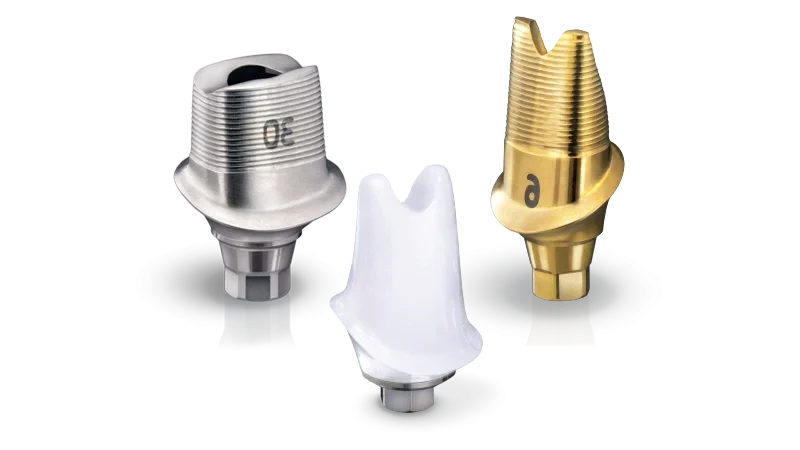
Dental implants are titanium posts surgically placed into the jawbone. They act as artificial tooth roots. Once integrated, they support crowns, bridges, or full-arch restorations. As a result, they feel and function much like natural teeth.
Implants require sufficient bone density and healthy gum tissue. Furthermore, they involve a multi-step process that takes place over several months. The final restoration is typically fabricated by a dental lab using CAD/CAM technology.
What Are Dentures?
Dentures are removable prosthetic appliances that replace missing teeth. They rest on the gum tissue and, in some cases, are supported by the remaining bone structure. Traditional dentures can replace a full arch or a partial set of teeth.
Modern dentures are far more refined than earlier versions. For example, digital dentures fabricated through a CAD/CAM workflow offer a more precise fit and a more natural appearance. On the other hand, they still require adhesives or implant support for the best stability.
Key Differences Between Implants and Dentures
When helping patients decide, dental professionals consider several important factors. These include stability, bone health, longevity, and overall quality of life. Because of this, understanding the core differences is essential.
Stability and Function
Implants are fixed in the jaw. Therefore, they provide superior stability during chewing and speaking. Patients do not need to worry about slipping or shifting. Moreover, they allow patients to eat a wider range of foods with confidence.
Dentures, meanwhile, can shift during use. Implant-supported dentures address this issue significantly. However, traditional removable dentures may still require periodic adjustments as the jawbone changes over time.
Bone Preservation
One of the most important advantages of implants is bone preservation. When a tooth is lost, the jawbone begins to resorb. Implants stimulate the bone, which helps slow this process. As a result, patients retain more of their natural facial structure over time.
Dentures do not stimulate the bone in the same way. In fact, traditional dentures can accelerate bone resorption with extended wear. This is why implant-supported options are often preferred for long-term health outcomes.
Longevity and Maintenance
With proper care, dental implants can last for many years. The restoration on top — such as a crown or bridge — may eventually need replacement. However, the implant itself often remains stable for a very long time.
Dentures typically need relining or replacement within a shorter timeframe. Additionally, they require daily removal and cleaning. Implants, on the other hand, are cared for much like natural teeth with regular brushing and professional cleanings.
Candidacy and Treatment Timeline
Not every patient qualifies for dental implants right away. Sufficient bone volume, healthy gums, and overall systemic health are key factors. Furthermore, the treatment process takes longer due to surgical healing and osseointegration — the process by which bone grows around the implant.
Dentures typically have a faster turnaround. They can often be delivered sooner after extractions. Therefore, they may be the better short-term or interim solution for some patients.
How CAD/CAM Technology Improves Both Options
Digital dentistry has transformed how both implants and dentures are fabricated. At Dentek Digital, we use advanced CAD/CAM workflows to produce restorations with high precision. This benefits dentists and patients across Greater Phoenix, including areas like Gilbert and Scottsdale.
Digital Implant Restorations
CAD/CAM technology allows dental labs to design and mill implant crowns, abutments, and full-arch restorations with exceptional accuracy. First, digital scans are used to capture detailed impressions. Next, the restoration is designed using specialized software. Then, it is milled from high-quality materials like zirconia or PMMA.
The result is a restoration that fits precisely and looks natural. Moreover, digital workflows reduce the margin for error compared to traditional methods. Dentek Digital also offers advanced implant planning services to support more complex cases.
Digital Dentures
Digital dentures represent a significant upgrade over conventional fabrication. Because of this technology, dentures can be designed with a level of precision that was previously difficult to achieve. The fit is more consistent, and the aesthetic result is more predictable.
Additionally, digital files are stored, which means a replacement can be fabricated more efficiently if needed. This is a meaningful benefit for both the dental practice and the patient. Practices in Tempe, Chandler, and Mesa increasingly rely on digital denture fabrication for this reason.
Implant-Supported Dentures: The Best of Both Worlds
For patients who want more stability than traditional dentures but may not be candidates for a full implant-supported fixed restoration, implant-supported dentures offer a strong middle ground. Therefore, this option is worth discussing in detail.
Implant-supported dentures use two or more implants to anchor a removable appliance. This dramatically improves stability during eating and speaking. Furthermore, the implants help preserve bone, which is a long-term benefit that traditional dentures cannot provide.
At Dentek Digital, we fabricate precision overdentures and implant-supported restorations designed to fit the attachments and abutments your practice uses. Our CAD/CAM workflow ensures consistent, high-quality outcomes for these cases.
What Dental Professionals Should Consider
When treatment planning for tooth replacement, dentists evaluate several clinical and practical factors. Understanding how the lab supports each option helps streamline the process.
- Patient bone volume: Adequate bone is essential for implant success. Bone grafting may be needed before placement.
- Patient health history: Certain systemic conditions may affect healing and implant integration.
- Aesthetic goals: Both implants and dentures can achieve excellent esthetics with digital fabrication.
- Budget and timeline: Dentures are often more accessible in the short term, while implants offer greater long-term value.
- Occlusal considerations: Proper bite alignment is critical for both restoration types.
Additionally, working with a reliable dental lab partner makes the process more efficient. Dentek Digital supports dental practices throughout Greater Phoenix and beyond with fast turnarounds and consistent quality.
Frequently Asked Questions: Implants vs Dentures
Are dental implants always better than dentures?
Not necessarily. Implants offer significant advantages, including stability and bone preservation. However, they are not suitable for every patient. Dentures remain an excellent option for patients who are not implant candidates or prefer a non-surgical approach.
Can dentures be converted to implant-supported restorations later?
In many cases, yes. Patients who start with conventional dentures may later transition to implant-supported options. This is a common treatment pathway, especially as bone and tissue stabilize after extractions.
How does a dental lab support implant cases?
A dental lab like Dentek Digital fabricates the restorative components used in implant cases. This includes implant crowns, custom abutments, and full-arch restorations. We work from digital scans to produce precisely fitting restorations using CAD/CAM technology.
What materials are used for implant restorations vs dentures?
Implant crowns and bridges are commonly made from zirconia or lithium disilicate. Digital dentures are often made from high-quality acrylic or PMMA. Furthermore, both options benefit from digital fabrication for a more precise and esthetic result.
How do I send an implant or denture case to Dentek Digital?
Sending a case is straightforward. We accept digital scans and traditional impressions. Our team works closely with dental practices to ensure each case is handled with care and precision. Contact our team to get started and learn about our submission process.
Partner with Dentek Digital for Precision Restorations
Whether your patient is a candidate for dental implants, full dentures, or an implant-supported hybrid solution, the quality of the final restoration matters. At Dentek Digital, we combine CAD/CAM technology with skilled craftsmanship to deliver results you and your patients can count on.
We proudly support dental professionals throughout Greater Phoenix — including Scottsdale, Gilbert, Chandler, and Tempe — with fast, reliable lab services. Moreover, our implant planning services and digital workflows are designed to make complex cases more manageable for your practice.
Ready to elevate the restorations you offer your patients? Contact Dentek Digital today to send us a case or discuss how we can support your practice with high-quality digital dental restorations.