
Choosing between implants vs dentures is one of the most important decisions a patient can make for their oral health. Both options restore missing teeth, but they work very differently. Understanding those differences helps dentists guide patients toward the best long-term solution.
At Dentek Digital, we fabricate high-quality dental restorations for dentists and dental practices across the Greater Phoenix, Arizona area. We work with practices in Mesa, Tempe, Chandler, Gilbert, and Scottsdale every day. Our advanced CAD/CAM technology allows us to deliver precise, reliable results for both implant-supported and removable restorations.
This guide breaks down the key differences between dental implants and dentures. It covers how each option works, who qualifies, and how a digital dental lab supports your clinical outcomes.
What Are Dental Implants?
Dental implants are titanium posts that a surgeon places directly into the jawbone. They act as artificial tooth roots. Once the implant integrates with the bone, a dentist attaches a custom crown, bridge, or implant-supported prosthetic on top.
Implants feel and function very much like natural teeth. They also help preserve jawbone density over time. This is one of the most significant advantages implants offer over other tooth replacement options.
Types of Implant Restorations
Implants support several types of restorations. Each serves a different clinical need.
- Single-tooth implant crown: Replaces one missing tooth with a standalone crown attached to a single implant post.
- Implant-supported bridge: Replaces multiple adjacent teeth without affecting neighboring natural teeth.
- All-on-4 or full-arch prosthetics: Supports a complete arch of teeth using just four strategically placed implants.
- Implant-retained overdenture: A removable denture that snaps onto implants for added stability and retention.
At Dentek Digital, we fabricate implant crowns, bridges, and full-arch prosthetics using advanced CAD/CAM workflows. Additionally, we offer digital implant planning services to help dental practices in the Phoenix area prepare cases with precision before surgery begins.
What Are Dentures?
Dentures are removable prosthetics that replace missing teeth and surrounding gum tissue. They rest on the gums and are held in place by suction, adhesive, or attachments. Dentures have been a reliable tooth replacement solution for generations.
There are two main types: complete dentures and partial dentures. Complete dentures replace all teeth in an arch. Partial dentures fill in gaps when some natural teeth remain.
Modern Dentures vs Traditional Dentures
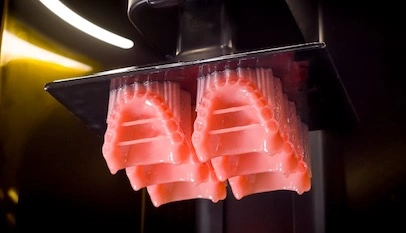
Traditional dentures were often bulky and prone to slipping. However, modern digital dentures are a significant step forward. CAD/CAM-fabricated dentures offer improved fit, comfort, and aesthetics compared to older fabrication methods.
At Dentek Digital, we design and mill dentures digitally. As a result, dental practices in Tempe, Chandler, and across the Valley can offer their patients a higher standard of removable prosthetics. The digital workflow also makes remakes and adjustments faster and more predictable.
Implants vs Dentures: Key Differences
Understanding the differences between these two options helps dentists have more productive conversations with their patients. Therefore, let’s compare them across several important factors.
Stability and Comfort
Implants are fixed in the jawbone. They do not move, slip, or require adhesive. Because of this, patients often report greater confidence when eating and speaking. Dentures, on the other hand, rely on fit and retention. They can shift over time as the gum and bone change shape.
Implant-retained overdentures offer a middle ground. They snap onto implants for improved stability while remaining removable for cleaning.
Bone Preservation
One of the most important clinical differences involves the jawbone. Implants stimulate the bone just like natural tooth roots do. This helps prevent the bone loss that naturally occurs after tooth extraction. Dentures do not provide this stimulation. Furthermore, bone resorption under a denture can cause the fit to change over time, requiring periodic relining or replacement.
Maintenance and Care
Implant crowns and bridges are cleaned just like natural teeth — with regular brushing and flossing. Dentures require daily removal and soaking. Additionally, dentures need periodic adjustments as the mouth changes shape over the years.
Treatment Timeline
Implant treatment takes more time overall. The surgical phase, healing period, and restoration placement can span several months. Dentures, however, can often be delivered in a much shorter timeframe. For patients who need a faster solution, dentures may be the more practical first step.
Long-Term Value
Implants generally last much longer than dentures when properly maintained. They are a long-term investment in oral health. Dentures typically need to be replaced or relined every several years. Moreover, the ongoing cost of adhesives, cleaning solutions, and adjustments adds up over time.
Who Is a Good Candidate for Dental Implants?
Not every patient is an ideal implant candidate right away. Several factors influence candidacy. Dentists should assess each patient individually.
- Sufficient bone volume: Implants require enough jawbone to support the titanium post. Bone grafting may be needed first.
- Good systemic health: Conditions like uncontrolled diabetes can affect healing and integration.
- Non-smoker or willing to quit: Smoking significantly increases the risk of implant failure.
- Commitment to oral hygiene: Implants require consistent home care and regular professional maintenance.
- Realistic expectations: Patients should understand the timeline and the surgical nature of the procedure.
Patients who do not qualify for implants immediately may still benefit from dentures as a starting point. In some cases, implant-retained overdentures become an option after bone grafting or other preparatory procedures.
How Digital Technology Improves Both Options
Digital dentistry has transformed how both implants and dentures are planned and fabricated. At Dentek Digital, we use advanced CAD/CAM technology to design and mill restorations with exceptional precision.
For implant cases, digital workflows allow us to design crowns and full-arch prosthetics that fit accurately from the first seating. Meanwhile, for removable cases, digital dentures eliminate many of the fit issues associated with traditional fabrication methods. The result is a better experience for the patient and fewer adjustments for the dentist.
Digital Implant Planning
We also offer digital implant planning services. This allows surgical teams to plan implant placement virtually before the first incision. Additionally, surgical guides can be fabricated to ensure precise placement that aligns with the planned restoration. Dental practices in Gilbert, Scottsdale, and Mesa are already taking advantage of this service through Dentek Digital.
TattooTH and Advanced Removables
Our TattooTH service brings personalization to removable prosthetics. Furthermore, our digital fabrication capabilities mean that every removable restoration we produce is designed to meet the highest standards of fit and function. We partner with dental practices across the Valley to support better patient outcomes.
Frequently Asked Questions: Implants vs Dentures
Can dentures be converted to implant-supported restorations later?
Yes, in many cases. If sufficient bone volume is present, a dentist can place implants to support or retain an existing or new prosthetic. This is a common pathway for patients who start with traditional dentures.
How long do dental implants last compared to dentures?
With proper care, implants can last a very long time — often decades. The crown on top may need replacement sooner due to normal wear. Dentures typically require relining or replacement every several years as the mouth changes shape.
Are implants always the better choice?
Not necessarily. Every patient’s situation is different. Implants offer significant advantages, but they require surgery, adequate bone, and a longer treatment timeline. Dentures may be the right solution for many patients, especially when combined with implant retention for added stability.
How does a digital dental lab support implant and denture cases?
A digital dental lab like Dentek Digital designs and fabricates restorations using CAD/CAM technology. This improves accuracy, reduces remakes, and speeds up turnaround. We work closely with dentists to ensure every restoration meets the clinical and aesthetic goals of the case.
Do dental practices in Phoenix have access to digital implant planning?
Yes. Dentek Digital offers digital implant planning services to dental practices across the Greater Phoenix area, including Tempe, Chandler, Mesa, Gilbert, and Scottsdale. This service helps ensure implant placement aligns with the final restoration from the very start of treatment.
Partner with Dentek Digital for Implant and Denture Restorations
Whether your patient needs a single implant crown or a full-arch digital denture, Dentek Digital is ready to support your practice. We are one of the earliest adopters of CAD/CAM technology in the country. As a result, dental practices across the Greater Phoenix area trust us to deliver restorations of the highest quality.
We fabricate fixed restorations, removable prosthetics, implant-supported cases, splints, nightguards, and more. Additionally, our digital implant planning and TattooTH services give practices a competitive edge. We combine technology with skilled craftsmanship on every case we produce.
Ready to elevate your implant and denture restorations? Contact Dentek Digital today to discuss your next case and discover how our digital lab services can support better outcomes for your patients.