
When patients face significant tooth loss, one question comes up again and again: implants vs dentures — which is the better choice? It is a question that dentists across the Greater Phoenix, Arizona area hear every day. The answer depends on the patient’s health, goals, and lifestyle.
Both options can restore a patient’s smile and confidence. However, they work very differently and serve different needs. Understanding those differences helps dental professionals guide their patients toward the right solution.
At Dentek Digital, we fabricate high-quality dental restorations for dentists and practices across Phoenix, Mesa, Chandler, Scottsdale, and beyond. In this guide, we break down both options clearly so dental teams can better educate their patients.
What Are Dental Implants?
Dental implants are titanium posts placed surgically into the jawbone. They act as artificial tooth roots. Over time, the bone fuses with the implant in a process called osseointegration.
Once the implant integrates, a dental crown or bridge is attached on top. The result looks, feels, and functions very much like a natural tooth. Because of this, implants are often considered the gold standard for tooth replacement.
How CAD/CAM Technology Improves Implant Restorations
Modern implant restorations rely heavily on digital workflows. At Dentek Digital, we use advanced CAD/CAM (computer-aided design and computer-aided manufacturing) technology to fabricate implant crowns and bridges with exceptional precision.
This technology allows us to mill restorations from high-strength materials like zirconia. As a result, the fit is more accurate and the outcome is more predictable. Dentists in Gilbert, Tempe, and across Phoenix trust our digital process for consistent, reliable results.
Benefits of Dental Implants
- Long-lasting: Implants are designed to be a permanent solution when properly maintained.
- Bone preservation: The implant stimulates the jawbone and helps prevent bone loss.
- Natural feel: Patients report that implants feel and function like natural teeth.
- No slipping: Implants are fixed in place and do not move during eating or speaking.
- Easy care: Patients brush and floss them just like natural teeth.
Considerations for Implants
Implants require surgery and adequate bone density. Not every patient qualifies right away. Additionally, the process takes several months from placement to final restoration.
Furthermore, the upfront investment is higher than dentures. However, many patients and clinicians view implants as a long-term value because of their durability and function.
What Are Dentures?
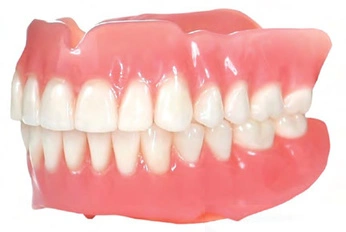
Dentures are removable appliances that replace missing teeth. They rest on the gum tissue and, in the case of full dentures, rely on suction and sometimes adhesive to stay in place. Partial dentures use clasps to attach to remaining natural teeth.
Dentures have been used for generations and have helped millions of patients regain their ability to eat, speak, and smile. They remain a practical and accessible option for many patients today.
Types of Dentures Fabricated at Dentek Digital
At Dentek Digital, our Removables category includes full dentures, partial dentures, and implant-supported overdentures. We apply the same digital precision to removable restorations as we do to fixed ones.
Digital dentures offer several advantages over traditional denture fabrication. For example, they are designed and milled using CAD/CAM technology, which improves fit accuracy and reduces chair time for patients.
Benefits of Dentures
- Non-surgical: Dentures do not require surgery or bone grafting.
- Accessible: They are a viable option for patients who cannot or prefer not to have implants.
- Faster process: Dentures can typically be delivered more quickly than implants.
- Lower upfront cost: The initial investment is generally lower than implants.
- Flexible: Partial dentures can be adjusted as more teeth are lost over time.
Considerations for Dentures
Dentures do not stimulate the jawbone the way implants do. Therefore, bone loss can continue over time, which may affect the fit of the denture. Regular relining or replacement may be needed.
Moreover, some patients find it takes time to adjust to speaking and eating with dentures. In contrast, implant-supported options tend to feel more stable from the start.
Implants vs Dentures: A Side-by-Side Comparison
Choosing between the two options requires looking at several key factors. Here is a straightforward comparison to help dental teams discuss options with their patients.
Stability and Comfort
Implants win on stability. They are anchored in the bone and do not shift. Dentures, on the other hand, can move slightly during use. However, implant-supported dentures offer a middle-ground solution with much better stability than traditional dentures.
Bone Health
Implants actively support bone health by mimicking the stimulation of a natural tooth root. Traditional dentures do not provide this benefit. Because of this, patients with dentures may notice changes in their facial structure over time as bone gradually resorbs.
Maintenance and Care
Implants are maintained just like natural teeth. Dentures require removal for cleaning and soaking overnight. Additionally, denture adhesives may be needed to improve retention for some patients.
Candidacy and Health Factors
Not every patient is a candidate for implants. Conditions such as uncontrolled diabetes, certain medications, or insufficient bone volume may require additional evaluation. Therefore, a thorough clinical assessment is always the first step.
Dentures, on the other hand, are available to most patients regardless of bone density. This makes them an important option for patients who cannot undergo implant surgery.
Long-Term Value
Implants generally require less maintenance over time and are designed to last many years with proper care. Dentures typically need adjustments, relining, or replacement every several years. As a result, the long-term cost difference between the two options may be smaller than it first appears.
How Dentek Digital Supports Phoenix-Area Dentists
Dentek Digital partners with dental professionals across the Greater Phoenix area, including practices in Mesa, Scottsdale, Tempe, Chandler, and Gilbert. We were among the earliest adopters of the digital CAD/CAM workflow in the country.
Our lab fabricates both implant restorations and removable prosthetics using state-of-the-art technology. Furthermore, we offer advanced services such as digital implant planning and TattooTH to help practices deliver better outcomes.
We combine technology with skilled craftsmanship. Therefore, the restorations we deliver are precise, reliable, and consistent — case after case.
Digital Implant Planning
Our digital implant planning service allows dentists to plan implant placement virtually before surgery. This improves accuracy and helps the surgical and restorative teams work together more effectively. As a result, patients benefit from better-fitting restorations and more predictable outcomes.
Implant-Supported Overdentures
For patients who want more stability than traditional dentures but are not candidates for full implant-supported fixed bridges, implant-supported overdentures offer an excellent option. These removable prosthetics snap onto implants for a secure, comfortable fit.
Dentek Digital fabricates these restorations with the same digital precision we apply to all our work. Dentists across the Phoenix metro area rely on us to deliver high-quality overdentures that improve patient satisfaction.
Frequently Asked Questions About Implants vs Dentures
Are implants always better than dentures?
Not necessarily. Implants offer superior stability and bone preservation. However, dentures are the right choice for many patients based on health, bone volume, budget, or personal preference. Each case is unique.
Can a patient switch from dentures to implants later?
In many cases, yes. A dentist will evaluate bone density and overall health to determine candidacy. Sometimes a bone graft is needed first. Therefore, patients who start with dentures are not permanently excluded from implants.
What materials are used for implant crowns?
At Dentek Digital, we commonly fabricate implant crowns from high-strength zirconia or other advanced ceramic materials. These are milled using CAD/CAM technology for exceptional precision and a natural appearance.
How long does the implant process take?
The timeline varies by patient. Generally, the process from implant placement to final restoration spans several months. Digital workflows and proper planning can help streamline the restorative phase.
Do digital dentures fit better than traditional dentures?
Digital dentures are designed using precise digital impressions and milled to accurate specifications. Many patients and clinicians report improved fit and comfort compared to conventionally fabricated dentures. Additionally, digital records make future replacements or repairs much easier.
Partner With Dentek Digital for Your Implant and Removable Cases
Whether your patients need a single implant crown, a full arch implant restoration, or a high-quality digital denture, Dentek Digital is ready to support your practice. We serve dentists and practices throughout Greater Phoenix, including Chandler, Gilbert, Mesa, Scottsdale, and Tempe.
Our digital-first lab combines advanced technology with experienced craftsmanship. As a result, you can count on restorations that fit well, look natural, and stand the test of time. We make it easy for your team to deliver exceptional patient outcomes.
Ready to take the next step? Contact Dentek Digital today to send us a case or learn more about our full range of implant and removable restoration services. We look forward to partnering with your practice.