
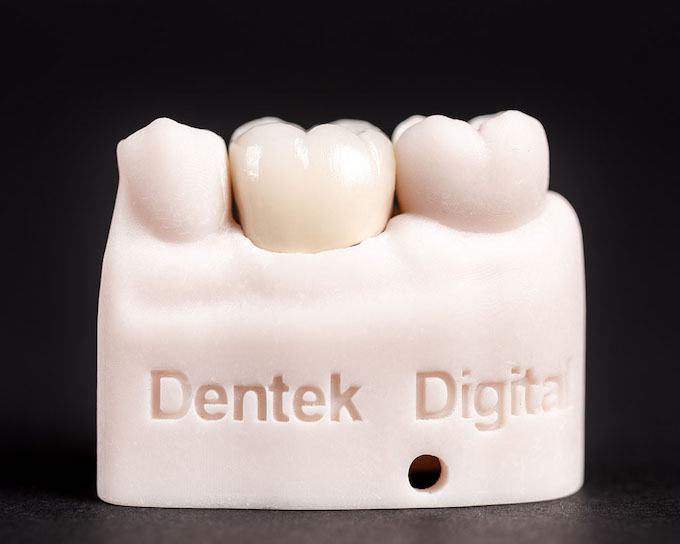
Every dental implant specialist knows that a successful implant case depends on more than surgical skill. The quality of the restoration matters just as much. When the crown, abutment, or full-arch prosthetic is not fabricated with precision, outcomes suffer. Therefore, choosing the right dental lab partner is one of the most important decisions a practitioner can make.
At Dentek Digital, we work with dentists and dental practices across the Greater Phoenix, Arizona area. We bring advanced CAD/CAM technology and skilled craftsmanship together to fabricate dental implant restorations you can trust. Additionally, our team understands the demands of modern implant workflows. We are here to help your practice deliver better results for your patients.
In this post, we explore what separates a great dental implant restoration from a mediocre one. We also cover how a digital dental lab can support your implant cases from start to finish.
What Makes a Dental Implant Restoration Successful?
A successful implant restoration starts with accurate data. First, the implant position, bone anatomy, and bite relationship must all be captured correctly. Then, that information must be translated into a restoration that fits precisely and functions reliably. Because of this, digital workflows have become the standard of care in high-performing dental practices.
Traditional analog methods leave more room for error. On the other hand, digital impressions and CAD/CAM fabrication dramatically reduce inconsistencies. The result is a restoration that seats predictably, occludes properly, and looks natural.
The Role of CAD/CAM Technology in Implant Restorations
CAD/CAM stands for computer-aided design and computer-aided manufacturing. In simple terms, it means we use specialized software to design the restoration digitally. Then, precision milling or printing equipment fabricates it from high-quality materials.
This process gives our lab technicians exact control over every dimension of the restoration. Furthermore, it allows us to work directly from digital scan files. As a result, cases move faster and fit better than traditional lab methods allow.
At Dentek Digital, we were among the earliest adopters of the digital CAD/CAM workflow in the country. That experience gives us a depth of knowledge that newer labs simply cannot match.
Materials That Perform in Implant Cases
Material selection matters greatly in implant restorations. For example, zirconia is a popular choice for implant crowns because of its strength and natural appearance. Moreover, it resists chipping and wear exceptionally well over time.
Our lab works with a range of high-quality materials suited for different implant scenarios. Whether you need a single-unit implant crown, a multi-unit bridge, or a full-arch prosthetic, we match the material to the clinical demands of the case. Additionally, we stay current with evolving material science so your restorations reflect the best available options.
Digital Implant Planning: A Game-Changer for Specialists
Planning is everything in implant dentistry. A well-planned case leads to ideal implant placement, cleaner restorations, and fewer complications. Because of this, Dentek Digital offers advanced digital implant planning services as part of our lab solutions.
Digital implant planning uses cone beam CT (CBCT) data combined with digital scan files to map out the entire case virtually. Therefore, the surgeon knows exactly where to place the implant before the first incision. This level of precision supports better restorative outcomes and reduces chair time for patients.
How Digital Planning Benefits Your Practice
Practices in Phoenix, Scottsdale, Chandler, and Gilbert are increasingly adopting digital planning workflows. The benefits are clear and measurable. First, treatment planning becomes more predictable. Next, communication between the surgeon and restorative dentist improves significantly. Finally, patient education becomes easier because you can show them a visual plan.
Our team at Dentek Digital collaborates closely with dental practices to support these planning workflows. We integrate seamlessly into your process and help ensure the restorative component is designed with the surgical plan in mind.
From Planning to Final Restoration
One of the greatest advantages of working with a fully digital lab is continuity. Furthermore, when planning and fabrication happen within the same digital ecosystem, the chance of errors drops significantly. The digital file flows from planning to design to milling without gaps in communication or data loss.
This end-to-end digital workflow is something Dentek Digital has refined over many years. We serve practices throughout the Phoenix metropolitan area, including communities like Mesa, Tempe, Gilbert, and Scottsdale. Our workflow is built to be smooth, efficient, and reliable for every case we handle.
Implant Restoration Types We Fabricate
Not all implant restorations are the same. Each case type requires specific design considerations, materials, and fabrication techniques. Therefore, it is important to work with a lab that has experience across the full range of implant restoration types.
Single-Unit Implant Crowns
Single-unit implant crowns are among the most common restorations we fabricate. These require a precise fit to the implant abutment and careful attention to occlusion. Additionally, the emergence profile must mimic natural tooth contours for both esthetics and gum health.
Our CAD/CAM process allows us to design the crown with exact specifications from the digital scan. As a result, the crown seats accurately and looks like it belongs naturally in the arch.
Implant-Supported Bridges
Multi-unit implant-supported bridges demand even greater precision. Moreover, the span must be designed to distribute occlusal forces correctly across all supporting implants. Poor design in this area can lead to long-term complications.
At Dentek Digital, we design implant-supported bridges with both function and esthetics in mind. Our technicians carefully evaluate connector dimensions, occlusal contacts, and material selection before fabrication begins.
Full-Arch Implant Prosthetics
Full-arch implant solutions, such as All-on-4 or All-on-X style prosthetics, are among the most complex restorations in dentistry. Therefore, they require a highly experienced lab team and advanced fabrication capabilities.
We fabricate full-arch prosthetics using a range of materials and techniques. In addition, our digital implant planning service helps lay the groundwork for a prosthetic that fits the surgical placement precisely. This coordination between planning and fabrication is one of the key advantages of our digital workflow.
Supporting Dentists Across the Greater Phoenix Area
Dentek Digital proudly serves dental practices throughout the Greater Phoenix, Arizona region. From busy urban practices in Scottsdale and Tempe to growing community practices in Chandler and Mesa, we bring the same level of precision and care to every case.
We understand the unique demands of Arizona dental markets. Additionally, we know that dental professionals in this region expect fast turnaround times without sacrificing quality. Our digital workflow allows us to meet both expectations consistently.
A True Lab Partnership
We do not just fabricate restorations and ship them out. Instead, we act as a genuine partner to the dental practices we work with. Our team is available to discuss case details, troubleshoot challenges, and offer guidance on material selection and design.
Furthermore, we believe that open communication between the lab and the clinical team produces better outcomes for patients. We welcome case discussions before, during, and after fabrication. That collaborative approach is central to how we operate.
TattooTH: Advanced Identification for Prosthetics
One of our most unique offerings is TattooTH, an advanced prosthetic identification service. This technology embeds a unique identifier into the restoration itself. As a result, dental prosthetics can be identified accurately in clinical or emergency settings.
This is particularly valuable for full-arch implant prosthetics. Moreover, it adds a layer of patient safety and accountability that sets Dentek Digital apart from other labs. It reflects our commitment to innovation and to serving dental professionals with tools that go beyond the basics.
Tips for Sending Implant Cases to a Digital Lab
Working with a digital dental lab is straightforward when you know what to prepare. Here are a few practical tips to help your implant cases run smoothly.
- Send clean, accurate digital scans. Scan quality directly impacts restoration accuracy. Take the time to capture a full, clear scan of the implant position and opposing arch.
- Include the implant system and component details. Always specify the implant brand, platform, and abutment type. This allows the lab to design to the correct interface specifications.
- Communicate occlusal goals clearly. Let the lab know if the patient has a heavy bite, bruxism habits, or other occlusal considerations. Additionally, note any esthetic preferences discussed with the patient.
- Use a scan body when scanning implants. A scan body is a small component placed on the implant during scanning. It allows the digital file to capture the implant position accurately for lab design.
- Share photos when possible. Shade photos, smile photos, and close-up images of adjacent teeth help the lab match esthetics more precisely.
Following these steps helps us fabricate your implant restorations faster and with fewer remakes. Moreover, it keeps your cases on schedule and your patients happy.
Frequently Asked Questions About Dental Implant Lab Services
What is a dental implant specialist, and how does a lab support their work?
A dental implant specialist is a dental professional trained to place and restore dental implants. The lab supports their work by fabricating the restorations that complete the implant case. Therefore, the lab-to-clinician relationship is central to a successful outcome.
What digital file formats does Dentek Digital accept?
We accept all major digital scan file formats from leading intraoral scanner brands. Additionally, we work with CBCT data for digital implant planning cases. Contact our team to confirm compatibility with your specific scanner or software.
How does digital implant planning improve outcomes?
Digital implant planning allows the surgeon and restorative dentist to coordinate the case virtually before treatment begins. As a result, implant placement supports the intended restoration. This reduces complications and improves both functional and esthetic outcomes.
What materials are best for implant crowns?
Zirconia is widely used for implant crowns because of its strength, biocompatibility, and natural appearance. However, the best material depends on the specific case. Our lab team can help guide material selection based on clinical and esthetic requirements.
How do I get started sending implant cases to Dentek Digital?
Getting started is simple. First, reach out to our team to discuss your case type and digital workflow. Next, we will walk you through our case submission process. Then, we handle the rest with precision and care.
Partner With Dentek Digital for Your Implant Restorations
Implant dentistry demands precision at every step. Furthermore, it requires a lab partner who understands digital workflows, works with high-quality materials, and communicates clearly. Dentek Digital delivers on all of these fronts.
We are proud to be a recognized leader in digital dentistry serving practices across the Greater Phoenix, Arizona area. Whether you are in Scottsdale, Tempe, Mesa, Chandler, or Gilbert, our team is ready to support your implant cases with the quality and reliability your patients deserve.
Ready to elevate your implant restorations? Contact Dentek Digital today to discuss your next case and discover how our digital lab solutions can support your practice.