
Every dental implant specialist knows that a successful implant case starts long before the patient sits in the chair. It begins with planning, precision, and the right lab partner. Whether a practice is placing a single implant crown or restoring an entire arch, the quality of the restoration matters just as much as the surgical work.
At Dentek Digital, we support dental professionals with advanced CAD/CAM implant restorations. We are a digital dental lab based in Phoenix, Arizona. Our team works with dentists and dental practices throughout the Greater Phoenix area, including Mesa, Tempe, Chandler, and Scottsdale.
In this post, we explore what makes implant restorations so important, how digital dentistry is changing the field, and how a skilled lab partner can help your practice deliver outstanding patient outcomes.
Why Implant Restoration Quality Matters
Dental implants are one of the most demanding restorative cases a dentist can take on. Therefore, the lab work behind each implant restoration must be precise. A poorly fitting crown or abutment can compromise the entire case — and undo even the best surgical work.
Additionally, patients today expect results that look and feel natural. They want restorations that blend seamlessly with their existing teeth. Because of this, the materials and fabrication methods your lab uses directly affect patient satisfaction.
The Role of the Dental Lab in Implant Cases
Many dentists focus on the clinical side of implant placement. However, the lab plays a critical role in the outcome. From custom abutments to implant crowns and full-arch restorations, the lab fabricates everything the patient ultimately sees and feels.
Furthermore, a lab that uses digital workflows can dramatically reduce errors. Digital scans, CAD/CAM design, and milling technology work together to produce restorations with excellent fit and accuracy. As a result, chair time is reduced and adjustments become less frequent.
How CAD/CAM Technology Elevates Implant Restorations
CAD/CAM stands for Computer-Aided Design and Computer-Aided Manufacturing. In simple terms, it means your restoration is designed on a computer and then milled or 3D printed by a machine. This process removes much of the guesswork from traditional lab work.
At Dentek Digital, we were among the earliest adopters of the digital CAD/CAM workflow in the country. Because of this early investment, our team has deep experience producing implant restorations that meet the highest standards of precision and esthetics.
Benefits of Digital Implant Workflows
- Greater accuracy: Digital design reduces human error in fit and margin placement.
- Faster turnaround: Milling and printing are faster than traditional wax-and-cast methods.
- Consistent quality: Each restoration is fabricated to exact digital specifications.
- Better communication: Digital files make it easy to share designs and get approval before fabrication.
- Material versatility: CAD/CAM systems support zirconia, PMMA, titanium, and more.
Moreover, the digital workflow supports better planning. When your lab receives a digital scan instead of a physical impression, the data is cleaner and easier to work with. This leads to restorations that seat more predictably on the first try.
Implant Planning: A Critical Step for Specialists
One of the most important services a digital lab can offer is implant planning support. At Dentek Digital, we offer advanced digital implant planning as part of our service lineup. This service helps dentists visualize implant placement before surgery even begins.
Digital implant planning uses cone beam CT (CBCT) data and digital impressions to map out the ideal position for each implant. Therefore, the surgical guide can be fabricated with precision. This reduces surprises during surgery and improves overall predictability.
Surgical Guides and Their Impact
A surgical guide is a custom-made device that directs the implant drill during placement. It is designed from the digital plan and fabricated in the lab. When the guide is accurate, the implant goes exactly where it was planned.
Additionally, surgical guides reduce surgery time. They also lower the risk of placing an implant in the wrong position. For any dental implant specialist handling complex cases, this level of precision is invaluable.
Full-Arch Implant Restorations and Digital Dentistry
Full-arch implant cases — often known by terms like All-on-4 or implant-supported dentures — are among the most complex restorative procedures in dentistry. These cases require exceptional coordination between the surgeon, the restorative dentist, and the dental lab.
At Dentek Digital, we fabricate full-arch implant restorations using advanced digital processes. First, we work from precise digital scans. Next, our technicians design the restoration in CAD software. Then, the restoration is milled or printed and finished by hand to achieve the best esthetic result.
Materials We Use for Full-Arch Cases
Material selection is key in full-arch implant restorations. We work with several high-performance materials, including:
- Zirconia: Extremely strong and highly esthetic. Ideal for implant-supported bridges and full arches.
- PMMA (acrylic): Often used for provisional restorations during the healing phase.
- Hybrid ceramic: A blend of ceramic and resin that offers strength and shock absorption.
- Titanium frameworks: Used as substructures beneath acrylic or ceramic overlays in certain designs.
Furthermore, material choice depends on the patient’s bite force, esthetics goals, and the overall treatment plan. Our team works closely with dental professionals to recommend the right option for each case.
Serving Greater Phoenix Dental Practices
Dentek Digital is proud to serve dental practices across the Greater Phoenix area. Our clients include general dentists, periodontists, oral surgeons, and prosthodontists in communities like Mesa, Tempe, Chandler, Gilbert, and Scottsdale.
We understand the needs of busy dental practices. Because of this, we offer reliable turnaround times and responsive communication. Our goal is to make the lab side of your implant cases as smooth and predictable as possible.
Why Phoenix-Area Dentists Choose Dentek Digital
Dental professionals throughout the Phoenix metro area trust us because we combine technology with craftsmanship. We are not just a milling center — we are a full-service digital dental lab with experienced technicians who care about the outcome of every case.
Moreover, our team stays current with the latest advances in digital dentistry. We invest in new technology regularly. As a result, our clients always have access to the most current fabrication options available in the field today.
TattooTH: Advanced Marking for Implant Cases
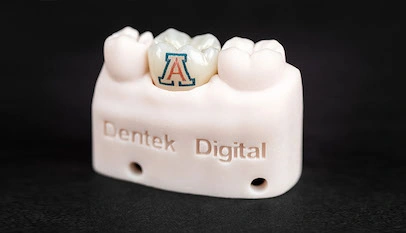
One of our most unique offerings at Dentek Digital is TattooTH. This is an advanced service that allows dental restorations to be permanently marked with identifying information. For implant cases, this can be particularly useful for tracking and patient identification.
TattooTH is applied during the fabrication process. Therefore, it does not affect the surface or esthetics of the restoration. It is a subtle but powerful feature that sets our lab apart from traditional labs.
Frequently Asked Questions About Implant Lab Services
What does a dental lab provide for implant cases?
A dental lab fabricates the restorative components of an implant case. This includes custom abutments, implant crowns, implant bridges, and full-arch prostheses. Additionally, labs that offer digital services can assist with surgical guide fabrication and implant planning.
How does digital scanning improve implant restorations?
Digital scans capture precise data about the patient’s mouth. This data is more accurate than traditional impressions in many cases. As a result, the lab can design and mill a restoration that fits with greater predictability and less need for adjustment.
What materials are best for implant crowns?
Zirconia is one of the most popular materials for implant crowns today. It is strong, biocompatible, and esthetically excellent. However, the best material depends on the location of the implant, the patient’s bite, and the dentist’s preference. We recommend discussing material options with your lab before fabrication begins.
How long does it take to receive an implant restoration from the lab?
Turnaround time varies depending on the complexity of the case and the type of restoration. Digital workflows generally produce faster results than traditional methods. Furthermore, clear communication between the dentist and lab helps avoid delays. Contact your lab directly for specific timelines.
Can Dentek Digital help with full-arch implant cases?
Yes. We specialize in complex full-arch implant restorations. Our team works with digital scans and advanced materials to fabricate complete arch prostheses. We also offer implant planning services to support the surgical phase of treatment. Contact Dentek Digital to discuss your full-arch case today.
Partner With a Digital Lab That Delivers
Every dental implant specialist deserves a lab partner who understands the complexity of implant work. At Dentek Digital, we combine the latest CAD/CAM technology with hands-on expertise to fabricate restorations that meet the highest clinical standards.
We serve dental practices throughout Phoenix, Mesa, Tempe, Chandler, and the surrounding Greater Phoenix region. Our team is ready to support your next implant case — from planning to final delivery.
Whether you are placing your first implant or managing a full-arch reconstruction, we are here to help. Send us your case details and let our team show you the Dentek Digital difference.