
When a patient needs a missing tooth replaced, the right dental implant specialist makes all the difference. Implant dentistry combines surgical skill with high-quality restorative components. The results depend on both the clinician and the dental lab supporting them.
Dentists across the Greater Phoenix area — from Scottsdale to Chandler — understand this partnership well. A reliable digital dental lab helps them deliver consistent, precise implant restorations. At Dentek Digital, we are proud to be that partner for dental practices throughout Arizona.
This post explores what it takes to support implant dentistry at the highest level. We will cover the digital workflow, the lab’s role, and how modern CAD/CAM technology elevates every case.
What Does a Dental Implant Specialist Do?
A dental implant specialist focuses on replacing missing teeth using titanium implant posts. These posts are surgically placed into the jawbone. Over time, they fuse with the bone through a process called osseointegration.
After healing, a custom restoration is attached to the implant. This restoration — often a crown, bridge, or full arch — must fit precisely. Because of this, the dental lab plays a critical role in the final outcome.
The Restorative Side of Implant Dentistry
Many patients focus on the surgical phase. However, the restoration phase is equally important. A poorly fitting crown can lead to discomfort, bite issues, or implant failure over time.
Therefore, specialists rely on dental labs that use advanced technology. CAD/CAM stands for Computer-Aided Design and Computer-Aided Manufacturing. It allows labs to design and mill restorations with exceptional accuracy.
At Dentek Digital, we were among the earliest adopters of CAD/CAM workflows in the country. As a result, our restorations meet the exacting standards that implant cases demand.
How the Digital Workflow Supports Implant Cases
Digital dentistry has transformed the implant process. First, the dentist captures a digital scan of the patient’s mouth. Next, that scan is sent directly to the lab. Then, our technicians design the restoration using specialized software.
This workflow eliminates many traditional sources of error. Furthermore, it speeds up the process for both the practice and the patient. Fewer remakes mean better efficiency and improved outcomes.
Digital Implant Planning
Dentek Digital offers advanced digital implant planning services. This means we can work with clinicians before the surgery even begins. We help map out the ideal implant position for the best restorative result.
In addition, this planning process supports better communication between the surgeon and the restorative dentist. Moreover, it helps the entire care team stay aligned. The patient benefits directly from that coordination.
Practices in Mesa, Gilbert, and Tempe are already using this approach. They find it reduces chair time and improves case predictability. On the other hand, cases without pre-surgical planning can face avoidable complications.
Scanbodies and Implant-Level Accuracy
Digital implant scans use scanbodies — small scan markers — placed on the implant. These allow the intraoral scanner to capture the exact position of the implant. As a result, the lab can design a restoration that fits the implant perfectly.
This level of precision is difficult to achieve with traditional impressions. However, it is routine with a fully digital workflow. At Dentek Digital, we accept digital scan data from all major scanner platforms.
Implant Restoration Options Available at Dentek Digital
We fabricate a wide range of implant restorations. Each one is designed for long-term function and natural aesthetics. Our solutions include single-unit crowns, implant-supported bridges, and full-arch restorations.
Single-Unit Implant Crowns
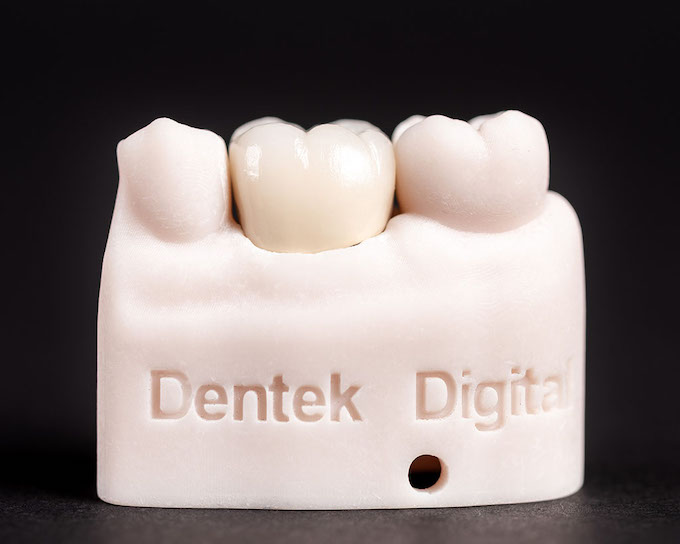
Single implant crowns are among the most common restorations we produce. They are designed to match the shade, shape, and size of surrounding teeth. Additionally, they must seat precisely onto the implant abutment.
We use high-quality materials such as zirconia and lithium disilicate. These materials offer strength and natural-looking esthetics. Because of this, patients and dentists are consistently satisfied with the results.
Implant-Supported Bridges
Sometimes, multiple missing teeth are replaced with a bridge supported by implants. These restorations require even greater precision in design. Furthermore, the occlusion — how the upper and lower teeth meet — must be carefully considered.
Our team designs each bridge with function and longevity in mind. We also work closely with the referring dentist to confirm every detail before milling. This collaboration is central to what we do at Dentek Digital.
Full-Arch Implant Restorations
Full-arch restorations replace an entire upper or lower arch of teeth. These are often called All-on-4 or All-on-X restorations. They require a highly technical lab process to execute correctly.
Dentek Digital has extensive experience with full-arch implant cases. We use digital workflows and skilled craftsmanship to ensure each case meets clinical standards. As a result, patients receive restorations that feel natural and function reliably.
TattooTH: A Unique Offering from Dentek Digital
Dentek Digital offers an innovative service called TattooTH. This advanced technology allows for personalized markings or identifiers to be added to dental restorations. It is a unique option that sets us apart from conventional dental labs.
Additionally, TattooTH can support patient identification in clinical records. It is a subtle but meaningful innovation. Moreover, it reflects our commitment to pushing the boundaries of digital dentistry.
Why the Lab-Dentist Partnership Matters
Implant dentistry is a team effort. The dentist provides clinical expertise and direct patient care. Meanwhile, the dental lab provides the technical precision behind the restoration.
When that partnership works well, patients receive better care. Therefore, choosing the right lab is one of the most important decisions a dental practice can make. At Dentek Digital, we treat every case as a collaboration.
Serving Dental Practices Across Greater Phoenix
We proudly serve dentists throughout the Greater Phoenix area. This includes practices in Scottsdale, Mesa, Chandler, and Tempe. Our digital workflow makes it easy to work with practices anywhere in Arizona.
Digital case submission means no physical impressions to ship. Instead, the dentist sends a scan file directly to our lab. As a result, turnaround times are faster and communication is clearer.
Consistent Quality on Every Case
Consistency is a hallmark of a great dental lab. Every restoration we produce goes through a thorough quality review process. Furthermore, our team of experienced technicians applies skilled craftsmanship to every case.
We combine cutting-edge CAD/CAM milling technology with hands-on finishing and characterization. This means each restoration looks natural and fits accurately. On the other hand, labs without this dual approach may produce inconsistent results.
Tips for Dentists Working with a Digital Implant Lab
Getting the best results from your implant cases starts with strong communication. Here are a few practical tips for dental practices working with a digital lab:
- Send complete scan data. Include the implant scan with the scanbody in place, the opposing arch, and a bite registration scan.
- Provide shade and shape preferences. The more detail you share, the more accurately we can match the restoration to the patient.
- Communicate occlusal goals. Let us know if the patient has parafunctional habits like grinding. This helps us select the right material.
- Review the design before milling. Many cases benefit from a digital design approval step. This adds a layer of quality control before fabrication begins.
- Discuss timing early. If you have a specific seating appointment, let us know upfront. We can plan the case timeline accordingly.
Frequently Asked Questions About Implant Restorations and Digital Labs
What materials does Dentek Digital use for implant crowns?
We work with high-quality materials including zirconia and lithium disilicate. Material selection depends on the location of the implant, esthetic goals, and occlusal forces. We are happy to discuss material options for each specific case.
Do you accept scans from all intraoral scanner brands?
Yes, we accept digital scan files from all major intraoral scanner platforms. Therefore, your practice does not need to change equipment to work with us. Simply send the scan file in the supported format and we handle the rest.
How does digital implant planning work?
Digital implant planning allows us to evaluate the prosthetic outcome before surgery. We review the scan data and help determine the ideal implant position. As a result, the restorative result is considered from the very beginning of treatment.
How long does it take to receive a finished implant crown?
Turnaround times vary depending on the case type and current lab volume. However, our digital workflow is designed to be efficient. We encourage practices to communicate their seating date early so we can plan accordingly.
Can Dentek Digital handle full-arch implant cases?
Absolutely. We have significant experience with full-arch implant restorations. Furthermore, our team is equipped to handle complex multi-unit implant cases with precision and care. Contact us to discuss your full-arch cases in detail.
Partner with Dentek Digital for Your Implant Cases
Working with a trusted digital dental lab is essential for delivering great implant outcomes. At Dentek Digital, we combine advanced CAD/CAM technology with experienced craftsmanship. As a result, dental practices across the Greater Phoenix area trust us with their most demanding cases.
Whether you are in Scottsdale, Chandler, Tempe, or Mesa, our digital workflow makes collaboration simple and efficient. We are committed to supporting your practice and your patients at every step.
Ready to elevate your implant restorations? Contact Dentek Digital today to send us a case or request a consultation with our team. We look forward to partnering with you.