
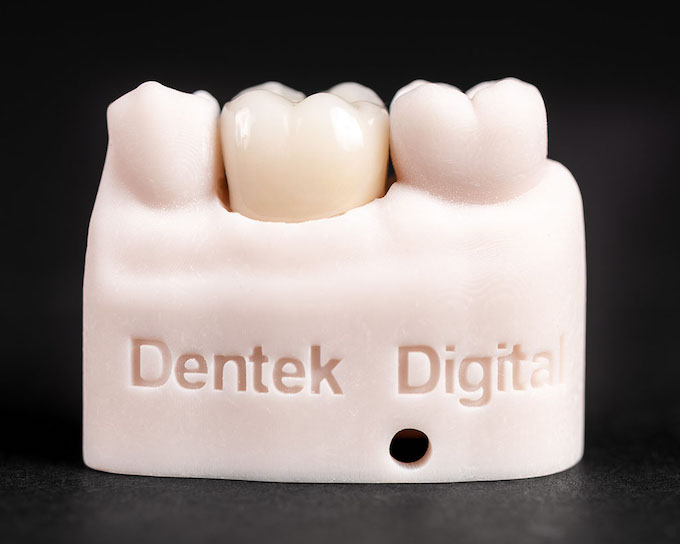
When a patient loses a tooth, the right restoration can change everything. Dental implant restorations are among the most advanced and durable solutions available in modern dentistry today. However, achieving consistent, high-quality results depends heavily on the dental lab behind the work.
At Dentek Digital, we partner with dental practices across the Greater Phoenix, Arizona area to deliver precise implant restorations using advanced CAD/CAM technology. Our digital workflow helps dentists provide better outcomes for their patients every single time.
In this post, we explore what dental implant restorations involve, how digital technology improves the process, and how Dentek Digital supports dental professionals who demand the best.
What Are Dental Implant Restorations?
Dental implant restorations replace missing teeth using a titanium implant post, an abutment, and a crown or prosthesis. Together, these components create a natural-looking, fully functional tooth replacement. Because of this, implant restorations have become a preferred solution for both patients and clinicians.
There are several types of implant restorations available today. Each serves a different clinical need.
Common Types of Implant Restorations
- Single-unit implant crowns — Replace one missing tooth with a custom-fabricated crown.
- Implant-supported bridges — Restore multiple adjacent missing teeth without removable appliances.
- Implant-retained dentures — Provide stability for full-arch cases with removable or fixed options.
- Full-arch fixed restorations — Deliver a complete, permanently fixed smile for edentulous patients.
- Custom abutments — Designed to optimize emergence profile and soft tissue support.
Additionally, screw-retained versus cement-retained options give clinicians flexibility. Your lab partner should understand these distinctions clearly and fabricate accordingly.
How CAD/CAM Technology Elevates Implant Restorations
Traditional dental labs relied heavily on manual processes. Modern digital labs, however, use CAD/CAM — computer-aided design and computer-aided manufacturing — to fabricate restorations with exceptional precision. This technology reduces human error and improves consistency across every case.
At Dentek Digital, we were among the earliest adopters of the digital CAD/CAM workflow in the country. Therefore, our team brings deep experience and refined skill to every implant restoration we fabricate.
The Digital Workflow Explained
The CAD/CAM workflow begins with a digital scan or file from the dentist. Next, our technicians use specialized software to design the restoration on-screen with precise control. Then, milling or 3D printing technology brings the design to life using high-quality materials.
This process delivers several key advantages for dental practices:
- Improved fit and accuracy — Digital design minimizes gaps and occlusal discrepancies.
- Faster turnaround — Streamlined workflows reduce production time significantly.
- Consistent quality — Every restoration meets the same high standard, case after case.
- Material flexibility — Zirconia, lithium disilicate, and other premium materials are available.
- Predictable outcomes — Dentists and patients can preview results before fabrication begins.
Moreover, the digital workflow integrates seamlessly with intraoral scanners that many modern dental practices already use. This means faster communication and fewer remakes for your team.
Why the Right Lab Partner Matters
Not all dental labs offer the same level of expertise or technology. For implant restorations specifically, precision is non-negotiable. Even small inaccuracies can affect implant health, bite function, and patient comfort.
Furthermore, an experienced lab partner understands implant systems, connection types, and material requirements. Dentek Digital works with a wide range of implant systems to ensure compatibility and accuracy for every case we receive.
What to Look for in a Digital Implant Lab
Dental practices in the Greater Phoenix area — from Scottsdale to Chandler, and from Mesa to Tempe — deserve a lab that delivers reliably. Here are qualities to prioritize when choosing your implant lab partner:
- Full digital workflow capability — From design to fabrication, all in-house.
- Experience with major implant systems — Compatibility matters for fit and longevity.
- Custom abutment fabrication — Prefabricated options are not always ideal for every case.
- Clear communication — Your lab should be easy to reach and responsive to case questions.
- Consistent turnaround times — Predictable scheduling helps your practice run smoothly.
- Quality materials — Premium zirconia and titanium components support long-term success.
As a result, partnering with the right lab reduces remakes, improves case acceptance, and strengthens your reputation with patients.
Implant Planning Services: Going Beyond the Restoration
Successful implant outcomes begin before the surgical phase. Digital implant planning allows clinicians to visualize placement, angulation, and restoration design before the procedure begins. This level of preparation leads to more predictable surgical outcomes.
At Dentek Digital, we offer digital implant planning as an advanced service for dental practices. In addition to the restoration itself, our team can assist with planning to help ensure the final result aligns with your clinical goals.
How Implant Planning Supports Your Practice
Digital implant planning combines CBCT scan data with prosthetic-driven design principles. First, the ideal restoration is planned. Then, implant position is mapped to support that restoration. This prosthetic-first approach helps avoid complications after surgical placement.
Moreover, digital planning helps you communicate more effectively with patients. Visual treatment plans are easy for patients to understand. Because of this, treatment acceptance rates tend to improve significantly.
Practices in Gilbert, Scottsdale, and other communities across the Greater Phoenix area are already taking advantage of this forward-thinking approach. Dentek Digital is proud to support those efforts from our Phoenix lab.
Materials We Use for Implant Restorations
Material selection plays a critical role in the success of any implant restoration. At Dentek Digital, we use only high-quality, clinically proven materials to fabricate our restorations.
Zirconia
Zirconia is one of the most popular materials for implant crowns and full-arch restorations. It offers excellent strength, durability, and natural-looking aesthetics. Additionally, zirconia is biocompatible, making it a safe and reliable choice for implant cases.
Titanium Abutments
Custom titanium abutments provide a precise connection between the implant and the final restoration. They allow for ideal emergence profile design and support long-term soft tissue health. Therefore, custom abutments are often preferred over stock options in complex or aesthetic cases.
Lithium Disilicate
For anterior cases where aesthetics are the top priority, lithium disilicate offers outstanding translucency and natural light behavior. Furthermore, it can be layered or monolithic depending on the clinical situation and desired result.
Frequently Asked Questions About Dental Implant Restorations
What file formats does Dentek Digital accept for implant cases?
We accept most standard digital file formats used by major intraoral scanner brands. Contact our team to confirm compatibility with your specific scanner before sending your first case.
Do you work with all implant systems?
We work with a wide range of major implant systems. However, if you have a specific system, it is always best to confirm compatibility directly with our lab team before submitting a case.
Can Dentek Digital help with full-arch implant cases?
Yes. We fabricate full-arch fixed restorations, implant-retained overdentures, and other complex prosthetics. Our team has extensive experience with both screw-retained and cement-retained full-arch designs.
How does digital implant planning differ from traditional planning?
Traditional planning relies primarily on 2D imaging and clinical judgment. Digital planning, on the other hand, integrates 3D CBCT data with prosthetic design to guide precise implant placement. As a result, outcomes are more predictable and complications are less likely.
What turnaround times can dental practices expect?
Turnaround times vary by case type and complexity. Generally, our digital workflow allows us to deliver restorations faster than traditional methods. Contact our team for specific timelines based on your case needs.
Partner With Dentek Digital for Implant Restorations
Dentek Digital has built a reputation as a trusted, innovative digital dental lab serving practices across the Greater Phoenix area — including Mesa, Tempe, Chandler, Gilbert, and Scottsdale. We combine advanced CAD/CAM technology with skilled craftsmanship to deliver implant restorations your patients will love.
Moreover, our team is easy to work with. We communicate clearly, meet deadlines, and stand behind the quality of every restoration we produce. Whether you need a single implant crown or a complex full-arch case, we are ready to help.
Finally, if you are ready to experience the difference that a truly digital lab can make for your implant cases, we would love to hear from you. Contact Dentek Digital today to discuss your next case and discover how our team can support your practice and your patients.