
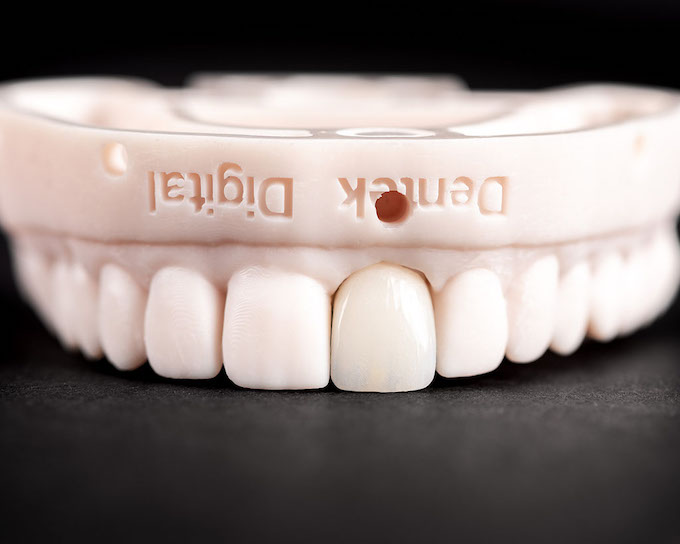
When it comes to implant restorations, precision matters more than almost anything else. Custom implant abutments give dentists the ability to achieve a fit, function, and aesthetic that stock abutments simply cannot match. As a result, more dental practices are turning to digital dental labs for this level of accuracy and craftsmanship.
At Dentek Digital, we fabricate custom implant abutments using advanced CAD/CAM technology. We serve dentists and dental practices across the Greater Phoenix, Arizona area, including communities like Mesa, Scottsdale, Chandler, and Gilbert. Our digital workflow delivers restorations that are precise, reliable, and built to support long-term patient outcomes.
Whether you are placing implants regularly or expanding your implant services, partnering with the right dental lab makes a real difference. In this post, we break down what custom abutments are, why they matter, and how Dentek Digital supports dental teams every step of the way.
What Are Custom Implant Abutments?
An implant abutment is the connector piece between a dental implant fixture and the final crown. It sits at the gumline and plays a critical role in both function and aesthetics. Therefore, choosing the right abutment type is an important clinical decision.
Stock abutments come in standard shapes and sizes. They work in some cases, but they are not designed for each individual patient. Custom implant abutments, on the other hand, are fabricated specifically for each case based on the patient’s unique anatomy and the implant position.
How Custom Abutments Are Made
The fabrication process starts with a digital scan or impression of the implant site. Next, a skilled dental technician uses CAD software to design the abutment around the patient’s specific tissue contours and occlusion. Finally, the abutment is milled from high-quality materials such as zirconia or titanium.
This digital workflow reduces guesswork. It also improves the fit at the implant-abutment interface, which supports healthier tissue response and better long-term stability. Because of this, custom abutments are increasingly the preferred choice among experienced implant dentists.
Materials Used in Custom Abutments
The most common materials for custom implant abutments include zirconia and titanium. Zirconia offers excellent aesthetics, especially in the anterior region where tissue translucency is a concern. Titanium, meanwhile, provides exceptional strength and biocompatibility for posterior cases.
Some cases call for a hybrid design, such as a titanium base with a zirconia overlay. This approach combines the strength of metal at the implant connection with the aesthetics of zirconia above the tissue. Your Dentek Digital technician can help you choose the right material for each case.
Why Custom Abutments Outperform Stock Options
Stock abutments are convenient, but they come with real limitations. They are designed to fit a range of implant systems, not a specific patient. As a result, compromises in fit, emergence profile, and tissue health are more likely.
Custom implant abutments are designed around the patient’s anatomy. This means the emergence profile is optimized for that individual’s tissue contours. Furthermore, the crown seating becomes more predictable, which streamlines the restorative appointment and reduces chairtime.
Improved Soft Tissue Outcomes
One of the most important benefits of custom abutments is how they interact with the peri-implant tissue. A well-designed emergence profile supports healthy tissue architecture. Moreover, it helps maintain the papillae and prevents tissue recession over time.
For anterior cases in particular, this matters greatly. Patients and clinicians both notice when the gumline looks natural versus when it appears flat or irregular. Additionally, healthy tissue response contributes to the long-term success of the restoration.
Better Occlusal Accuracy
Custom abutments are also designed with the patient’s occlusion in mind. Because the abutment height and angulation are planned digitally, the crown fits more accurately. This reduces the risk of occlusal issues after delivery and supports a more comfortable bite for the patient.
In busy practices across Chandler, Gilbert, and the broader Phoenix metro, this kind of predictability saves time. Fewer adjustments mean faster appointments and happier patients. Therefore, the investment in custom abutments often pays off quickly in clinical efficiency.
The Dentek Digital Workflow for Custom Abutments
Dentek Digital was one of the earliest adopters of the digital CAD/CAM workflow in the country. We combine that experience with skilled craftsmanship to deliver restorations that meet high clinical standards. Our custom abutment workflow is designed to be straightforward for the dental team.
The process begins when you send us your case. We accept digital scans from most major intraoral scanners. Additionally, we work with analog impressions and scan bodies when needed. Our team reviews each case carefully before fabrication begins.
Step-by-Step: From Scan to Delivery
- Step 1: Submit your digital scan or impression along with the implant system information and scan body used.
- Step 2: Our technicians design the custom abutment using advanced CAD software, optimizing the emergence profile and angulation for your patient.
- Step 3: The abutment is milled from the selected material — zirconia, titanium, or a hybrid design.
- Step 4: Quality checks are performed before the case ships to your practice.
- Step 5: You receive a precise, patient-specific abutment ready for seating.
This structured process helps ensure consistency case after case. Moreover, it gives dental teams confidence that the restoration will seat cleanly and look natural at delivery.
Serving Dental Practices Across Greater Phoenix
Dentek Digital proudly serves dentists throughout the Greater Phoenix area. We work with practices in Mesa, Scottsdale, Tempe, Chandler, Gilbert, and surrounding communities. Our lab is a local resource that understands the needs of Arizona dental practices.
However, our reach extends beyond Arizona. We partner with dental professionals nationally, which means our expertise supports implant cases from a wide range of implant systems and clinical scenarios. As a result, we bring a broad perspective to every case we handle.
Common Use Cases for Custom Implant Abutments
Custom abutments are appropriate for a wide variety of implant cases. Understanding when to choose custom over stock can help you make better decisions for your patients and your practice workflow.
Here are some common scenarios where custom abutments offer a clear advantage:
- Anterior implants: Aesthetics and soft tissue management are critical in the smile zone. Custom abutments allow precise control over emergence profile and gingival contours.
- Angled implants: When an implant is placed at an angle due to bone availability, a custom abutment corrects the angulation for a more aesthetic crown path of insertion.
- Subgingival margins: Custom abutments can be designed to follow the patient’s gingival contour precisely, which improves margin placement and tissue health.
- Full-arch restorations: In implant-supported full-arch cases, custom abutments help achieve uniform emergence and better load distribution across the arch.
- Cases requiring specific material choices: Patients with metal sensitivities or high aesthetic demands often benefit from zirconia custom abutments specifically designed for their case.
Furthermore, custom abutments work well alongside other digital restorations. For example, pairing a custom abutment with a CAD/CAM-milled crown creates a highly accurate, well-fitting final restoration from top to bottom.
Tips for Submitting Implant Cases to a Digital Dental Lab
Sending implant cases to a dental lab is easier when you follow a consistent protocol. These practical steps help ensure the lab receives all the information needed to fabricate an accurate custom abutment.
- Identify the implant system: Include the manufacturer, implant platform size, and scan body used. This information is essential for designing a well-fitting abutment.
- Capture an accurate scan: Use a clean, complete intraoral scan of the implant site. Scan body placement should be verified before scanning to ensure accurate data.
- Note the tissue depth: Provide information on how deep the implant sits relative to the tissue. This helps with emergence profile design.
- Indicate the material preference: Specify zirconia, titanium, or another material so the lab can plan accordingly.
- Communicate the aesthetic goals: For anterior cases especially, include shade information and any photos that help the technician understand the desired outcome.
Additionally, open communication with your lab partner is key. If you have questions about a case before submitting, reach out to the lab first. This saves time and helps avoid remakes.
Frequently Asked Questions About Custom Implant Abutments
What is the difference between a stock abutment and a custom abutment?
A stock abutment is a prefabricated connector that comes in standard sizes. A custom abutment is designed specifically for each patient using digital technology. As a result, custom abutments offer a more precise fit, better tissue response, and improved aesthetics.
Which material is best for a custom implant abutment?
The best material depends on the case. Zirconia works well for anterior cases where aesthetics and tissue translucency matter. Titanium is often preferred for posterior cases where strength is the priority. Moreover, hybrid designs are available for cases that need both strength and aesthetics.
How long does it take to receive a custom abutment from Dentek Digital?
Turnaround time varies by case complexity and material. However, our digital workflow allows us to fabricate custom abutments efficiently. Contact our team directly to discuss turnaround expectations for your specific case.
Can you work with any implant system?
Dentek Digital works with a wide range of implant systems. We request that you provide the implant manufacturer, platform size, and scan body information when submitting your case. This ensures accurate abutment design and fit.
Do I need digital scans, or can I send physical impressions?
We accept both digital scans and analog impressions. Digital scans from most major intraoral scanners work seamlessly with our CAD/CAM workflow. Additionally, we can work with traditional impressions and scan body records when digital scanning is not available.
Partner with Dentek Digital for Custom Implant Abutments
Choosing the right dental lab partner directly impacts the quality of your implant restorations. At Dentek Digital, we bring years of digital dentistry experience, advanced CAD/CAM technology, and dedicated craftsmanship to every case we handle. We serve practices across the Greater Phoenix area — including Mesa, Scottsdale, Tempe, and Chandler — and dental teams throughout the country.
Our custom implant abutments are designed to support better tissue outcomes, more predictable crown seating, and long-term restoration success. Furthermore, our team is here to communicate with you throughout the process so that every case is handled with care and precision.
Ready to elevate your implant workflow? Contact Dentek Digital today to send us your next implant case and experience the difference a dedicated digital dental lab partner can make.