
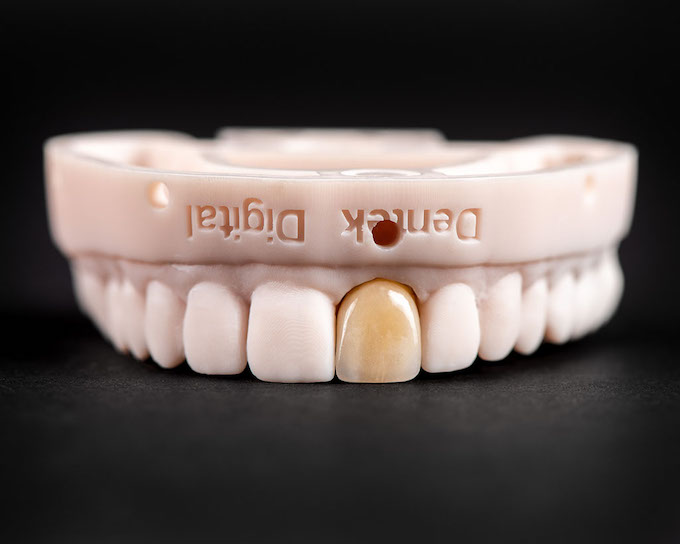
When a patient needs a single-tooth implant restoration, the choice of retention method matters. Cement retained implant crowns remain one of the most widely used solutions in modern implant dentistry. They deliver a clean, natural-looking result that blends seamlessly with surrounding teeth.
At Dentek Digital, we fabricate cement retained implant crowns using advanced CAD/CAM technology. Our digital workflow produces restorations with exceptional fit, strength, and esthetics. We partner with dental practices across the Greater Phoenix, Arizona area — from Scottsdale to Chandler — to support better patient outcomes every day.
In this post, we explore what makes cement retained implant crowns a strong clinical choice. We also cover how a digital dental lab elevates the quality and precision of every restoration we deliver.
What Are Cement-Retained Implant Crowns?
A cement-retained implant crown attaches to a dental implant using dental cement. The crown bonds to an abutment, which connects directly to the implant fixture in the bone. This approach mirrors how a traditional crown attaches to a natural tooth.
Because of this, cement-retained crowns often feel intuitive for both the dentist and the patient. The restoration sits flush with the gumline and requires no visible access hole on the biting surface. This makes it especially popular in esthetic zones.
How They Differ From Screw-Retained Crowns
Screw-retained crowns attach using a small screw through the top of the crown. They are retrievable, which some clinicians prefer. However, cement-retained crowns often offer superior esthetics because there is no access hole to fill or conceal.
On the other hand, retrievability is a valid clinical consideration. Therefore, the choice between cement and screw retention depends on case-specific factors. These include implant angulation, tissue health, and esthetic demands.
When Is Cement Retention the Right Choice?
Cement retention works well when the implant is ideally positioned. It also suits cases where esthetics are a top priority. Additionally, it performs well when the implant angle makes screw access difficult or esthetically compromising.
Dentists in Mesa, Tempe, Gilbert, and Scottsdale regularly choose cement-retained options for anterior and premolar restorations. The result is a restoration that looks and functions like a natural tooth.
The Role of CAD/CAM Technology in Crown Fabrication
Digital dentistry has transformed how dental labs fabricate implant restorations. At Dentek Digital, we were among the earliest adopters of the CAD/CAM workflow in the country. This gives our team a distinct advantage in precision and consistency.
CAD/CAM stands for Computer-Aided Design and Computer-Aided Manufacturing. In simple terms, we design the crown digitally and mill it from a high-strength material block. The result is a highly accurate restoration with minimal manual error.
Digital Scanning and Design
The process starts with a digital impression or scan sent from your practice. Our technicians import the scan into specialized design software. Then, they design the crown to match the patient’s bite, adjacent teeth, and tissue contours precisely.
Furthermore, digital design allows for quick adjustments before milling begins. This saves time and reduces the need for remakes. As a result, your practice receives a well-fitting restoration faster.
Milling and Material Selection
Once the design is approved, our milling machines carve the crown from a solid material block. We offer a range of high-quality materials, including zirconia and lithium disilicate. Each material suits different clinical needs in terms of strength and esthetics.
For example, zirconia is ideal for posterior crowns that require durability under heavy bite forces. Meanwhile, lithium disilicate offers excellent translucency for esthetic anterior restorations. Our team helps you select the right material for every case.
Why Precision Fit Matters for Cement-Retained Crowns
A precise marginal fit is critical for cement-retained implant crowns. Poor fit can lead to excess cement below the gumline. This is one of the most common complications associated with cement retention when done incorrectly.
Therefore, the accuracy of the restoration itself is a key factor in long-term success. Our CAD/CAM process produces margins with tight tolerances that minimize cement overflow risk. This supports healthier tissue outcomes for your patients.
The Importance of the Abutment Interface
The crown must seat precisely on the abutment to perform well. Even small gaps can compromise the seal and tissue response. Because of this, we engineer each crown to match the specific abutment platform and connection type.
We work with a wide range of implant systems and abutment designs. Our team stays current with evolving implant platforms to ensure compatibility. This means you can send cases from virtually any implant system with confidence.
Tissue Management and Emergence Profile
A well-designed emergence profile supports healthy gingival tissue around the implant. The emergence profile is the shape of the crown as it transitions from the abutment to the visible tooth form. Getting this right contributes to both esthetics and long-term health.
Additionally, a properly contoured crown is easier for patients to keep clean. This promotes better oral hygiene around the implant site. Our technicians pay close attention to emergence design on every restoration we fabricate.
Dentek Digital’s Workflow for Dental Practices
Sending a case to Dentek Digital is straightforward. We have designed our workflow to be efficient and easy for busy dental practices. Whether you are in Chandler, Mesa, or anywhere across the Greater Phoenix area, the process is simple.
First, your team captures a digital impression or prepares a physical impression for scanning. Next, you submit the case through our online portal with the relevant prescription details. Then, our technicians begin design and fabrication right away.
Fast Turnaround Without Compromising Quality
We understand that your schedule depends on reliable turnaround times. Our digital workflow allows us to move efficiently from design to delivery. Moreover, digital production reduces the variables that can slow down traditional lab processes.
However, speed never comes at the expense of quality. Every restoration goes through a thorough quality check before it leaves our lab. We take pride in delivering restorations that seat well and look exceptional.
Communication and Case Support
Our team is available to answer questions about your case at every stage. If you have a complex implant situation, we are happy to discuss it before you submit. This collaborative approach helps us deliver the best possible result for your patient.
Furthermore, we offer advanced services such as digital implant planning and TattooTH, our proprietary digital staining process. These tools expand what is possible for your most demanding cases.
Serving Dental Practices Across Greater Phoenix
Dentek Digital proudly serves dental practices throughout the Greater Phoenix metropolitan area. Our clients include general dentists, prosthodontists, and implant specialists from Scottsdale to Gilbert. We understand the local dental market and the high standards Arizona patients expect.
Additionally, because we operate as a fully digital lab, we can serve practices efficiently regardless of their location in the region. Our digital submission process means geography is never a barrier to accessing top-tier lab work.
Practices in Tempe, Mesa, Chandler, and surrounding communities trust us with their most esthetic and demanding cases. We consider each dentist-patient relationship a partnership. Our goal is to help you deliver results that build long-term patient trust.
Frequently Asked Questions About Cement-Retained Implant Crowns
What materials are best for cement-retained implant crowns?
Zirconia and lithium disilicate are the most common materials. Zirconia suits high-strength posterior cases. Lithium disilicate works well for esthetic anterior restorations. Your Dentek Digital technician can help you choose based on the case location and patient needs.
How do I minimize excess cement below the gumline?
Using a precisely fitting crown is the first step. Additionally, using a custom abutment with a subgingival margin placed conservatively helps reduce risk. Some clinicians also use techniques like extraoral cementation to control cement placement before seating.
Can cement-retained crowns be removed if needed?
Removal is possible but requires more effort than screw-retained options. In many cases, the crown must be cut off. Therefore, retrievability should be considered during case planning, especially for patients with a history of implant complications.
How does a digital lab improve cement-retained crown outcomes?
Digital fabrication produces tighter marginal accuracy than many traditional methods. As a result, the crown fits more precisely on the abutment. This reduces excess cement risk and supports better long-term tissue health around the implant.
Does Dentek Digital work with all implant systems?
We work with a broad range of implant platforms and abutment systems. Our team stays updated on the latest implant connections to ensure compatibility. Contact us before submitting if you have questions about a specific system.
Partner With Dentek Digital for Your Implant Crown Cases
Cement retained implant crowns demand precision at every step. From the design phase to final delivery, quality matters. At Dentek Digital, we combine advanced CAD/CAM technology with experienced craftsmanship to deliver restorations you can count on.
We are proud to be a trusted digital dental lab partner for practices across the Greater Phoenix area. Our team is ready to support your next implant case with the expertise and technology it deserves.
Ready to elevate your implant restorations? Contact Dentek Digital today to send us a case or request a consultation with our team.