
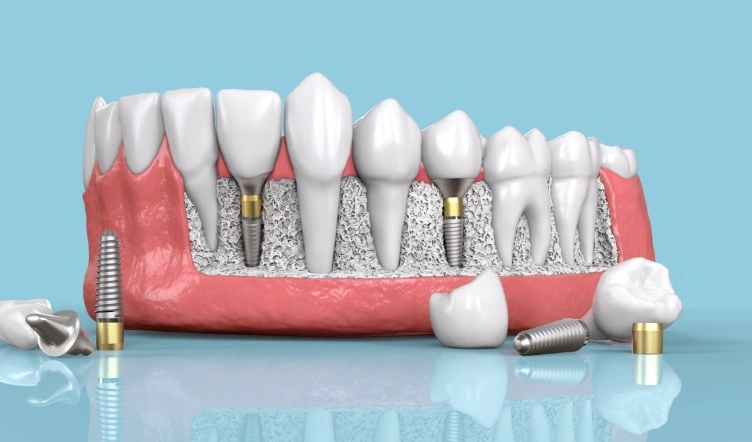
Dental implant restorations require precision at every step. For dentists in Spanish Springs, NV, choosing the right restoration type can make a meaningful difference in patient outcomes. Cement retained implant crowns remain one of the most widely used implant crown options in modern dentistry — and for good reason.
However, achieving consistent, high-quality results depends heavily on the dental lab behind the restoration. That is where an experienced digital dental lab becomes essential. Dentek Digital, based in Phoenix, Arizona, partners with dentists across the country to deliver precision-milled implant crowns built for reliable, long-term performance.
In this guide, we will walk through what cement retained implant crowns are, how they compare to screw-retained options, and why the digital CAD/CAM workflow makes a real difference in the final result.
What Are Cement-Retained Implant Crowns?
Cement retained implant crowns are prosthetic crowns that attach to a dental implant abutment using dental cement. The crown fits over a custom or stock abutment, much like a traditional crown fits over a natural tooth. This design is straightforward and familiar to most clinicians.
Because of this familiar placement process, cement retained crowns are often easier to seat — especially in posterior regions with limited access. They also tend to offer a more natural emergence profile, which supports better aesthetics and soft tissue contours around the restoration.
How the Cementation Process Works
First, the abutment is placed and torqued to the implant. Next, the crown is tried in for fit, margin verification, and occlusal check. Then, the crown is permanently or provisionally cemented using an appropriate dental cement. The process closely mirrors traditional crown cementation, making it intuitive for most dental teams.
Additionally, the margin placement depth is a critical factor in cement retained cases. Proper margin depth helps minimize excess cement below the gingival margin, which is an important clinical consideration for long-term tissue health.
Cement-Retained vs. Screw-Retained: Understanding the Difference
Both cement retained and screw-retained implant crowns have their place in modern restorative dentistry. Understanding the key differences helps clinicians choose the right option for each patient’s anatomy and clinical situation.
When Cement-Retained Crowns Are Often Preferred
- Posterior cases where screw access holes would affect occlusal function
- Cases with challenging implant angulation where a screw channel would emerge in an unfavorable position
- Patients with strong aesthetic demands in visible zones
- Clinicians seeking a familiar crown seating workflow
On the other hand, screw-retained restorations offer retrievability without disturbing the crown structure. Therefore, both options require thoughtful case planning and a well-fabricated restoration from a trusted dental lab.
When Screw-Retained May Be the Better Choice
Screw-retained crowns are often preferred when retrievability is a high priority. For example, patients with a history of bruxism or those receiving full-arch implant restorations may benefit from a screw-retained design. Moreover, certain implant positions naturally favor a screw channel that does not compromise aesthetics or function.
However, the cement retained approach remains highly effective in a wide range of everyday implant cases. The key is working with a lab that can fabricate precise margins and a well-adapted internal fit.
The Role of CAD/CAM Technology in Cement-Retained Implant Crowns
Digital fabrication has transformed how dental labs produce implant crowns. At Dentek Digital, we use advanced CAD/CAM technology to design and mill each restoration with exceptional accuracy. This digital workflow benefits both the dentist and the patient.
Furthermore, digital design allows our technicians to create custom emergence profiles tailored to each patient’s tissue anatomy. As a result, the final crown fits more predictably and supports healthier soft tissue response around the implant site.
Materials Used for Cement-Retained Crowns
Modern dental labs have access to a wide range of high-performance materials for implant crowns. At Dentek Digital, we work with materials such as:
- Zirconia — highly durable, excellent for posterior cases
- Layered or full-contour zirconia — balances strength with aesthetics
- PFM (porcelain-fused-to-metal) — a trusted option for select cases
- Lithium disilicate — ideal for anterior restorations requiring exceptional esthetics
Additionally, material selection depends on the implant location, occlusal load, and patient-specific factors. Our team works closely with referring dentists to recommend the right material for each case.
Custom Abutments and Margin Design
In many cement retained implant crown cases, a custom abutment is the preferred foundation. Custom abutments allow the lab to design the margin position, emergence angle, and soft tissue contour with far greater precision than a stock abutment allows.
Because of this, custom abutments paired with a well-designed cement retained crown typically deliver superior marginal integrity and a more natural-looking result. Dentek Digital fabricates custom titanium and zirconia abutments designed to complement each crown restoration seamlessly.
Why Dentists in Spanish Springs Trust a Phoenix-Based Digital Lab
Dentists in Spanish Springs, NV are increasingly looking to partner with high-quality digital labs that can deliver consistent, precise results. Dentek Digital serves dentists and dental practices across the country, with roots in the Greater Phoenix, Arizona market.
Our lab is recognized as a national leader in digital dentistry. We were among the earliest adopters of the CAD/CAM workflow in the United States. Today, we combine rapidly evolving technology with skilled craftsmanship to deliver restorations that meet the highest clinical standards.
Moreover, we serve dental practices throughout the Greater Phoenix region — including communities like Scottsdale, Chandler, Mesa, and Gilbert — as well as dentists across the country who want access to a truly digital dental lab.
What Sets Dentek Digital Apart
- Digital-first workflow — CAD/CAM precision from design through milling
- Experienced technicians — skilled craftsmanship behind every case
- Wide range of implant solutions — crowns, custom abutments, and full-arch implant restorations
- Fast, reliable turnaround — built to support your practice schedule
- Collaborative communication — we work with you on case-specific questions
In addition, we offer advanced services such as TattooTH and digital implant planning for practices ready to elevate their implant workflow further.
Practical Tips for Sending Cement-Retained Implant Crown Cases
Sending a successful cement retained implant crown case starts with accurate records. Here are some practical guidelines to help your cases come back right the first time.
Impression and Scan Best Practices
- Use a scan body or impression coping appropriate for your implant system
- Capture a full-arch digital scan or traditional impression with clear implant positioning
- Include a bite registration in the correct occlusal position
- Note the implant system, platform size, and connection type clearly on the prescription
Prescription Details That Help
Additionally, include material preferences, shade, and any specific margin or emergence profile notes. The more information you provide, the better our technicians can tailor the restoration to your patient’s needs. Furthermore, photos of the patient’s smile and surrounding dentition are always helpful for aesthetic cases.
Finally, if you have questions about how to prepare a case for submission, our team is always available to help before you send your records.
Frequently Asked Questions About Cement-Retained Implant Crowns
Are cement-retained implant crowns retrievable?
Cement retained crowns can be retrieved, but the process is more involved than with screw-retained restorations. Therefore, material and cement selection should account for whether retrievability is a clinical priority for your patient.
Is excess cement a concern with cement-retained implant crowns?
Yes, excess cement below the gumline is a well-known clinical consideration. However, precise margin placement by the lab — ideally with a custom abutment — significantly reduces this risk. Proper cementation technique also plays an important role in minimizing excess cement.
What implant systems does Dentek Digital work with?
We work with a wide range of major implant systems. Additionally, we accommodate both digital scan body workflows and traditional impression-based cases. Contact our team to confirm compatibility with your specific implant system before sending a case.
How long does fabrication take for a cement-retained implant crown?
Turnaround times vary depending on case complexity and materials selected. However, our digital CAD/CAM workflow allows us to work efficiently without compromising quality. Reach out to discuss timelines for your specific case needs.
Can I send cases from outside Phoenix or Arizona?
Absolutely. While Dentek Digital is based in Phoenix and serves practices throughout the Greater Phoenix area — including Scottsdale, Mesa, Chandler, and Gilbert — we partner with dentists nationwide. Dentists in Spanish Springs, NV and beyond can send cases to our lab with confidence.
Partner with Dentek Digital for Your Implant Crown Cases
Cement retained implant crowns are a dependable, versatile restoration option for a wide range of implant cases. However, the quality of the final restoration depends on the dental lab producing it. A precision-milled crown with a well-adapted margin and proper emergence profile can make a meaningful difference in both patient satisfaction and long-term outcomes.
At Dentek Digital, we bring together advanced CAD/CAM technology and experienced lab craftsmanship to deliver implant crowns you and your patients can count on. Whether your practice is located in Spanish Springs, NV, or across the Phoenix metro area, we are ready to support your implant cases with the highest quality digital restorations available today.
Ready to get started? Contact Dentek Digital to send us a case and experience the difference a truly digital dental lab can make for your practice.