
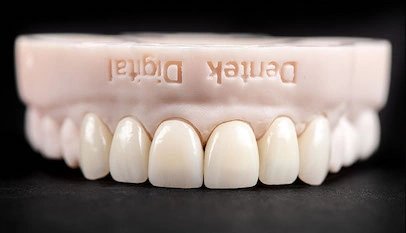
Implant restorations have transformed modern dentistry. Among the most widely used options today, cement retained implant crowns offer a reliable, esthetically strong solution for replacing missing teeth. For dentists who want consistent, high-quality results, choosing the right retention method matters greatly.
At Dentek Digital, we fabricate precision implant crowns for dental practices across the Greater Phoenix area. Our digital CAD/CAM workflow ensures each restoration fits accurately and looks natural. Therefore, dentists can deliver confident, predictable outcomes for their patients.
In this guide, we cover everything you need to know about cement-retained implant crowns. We explain how they work, when to use them, and how a trusted digital dental lab supports your success.
What Are Cement-Retained Implant Crowns?
A cement-retained implant crown attaches to an abutment using dental cement. Unlike screw-retained crowns, there is no access hole through the occlusal surface. As a result, the restoration often looks more like a natural tooth.
The crown sits on a custom or stock abutment. The abutment connects directly to the implant fixture in the bone. Then, the crown is cemented over the abutment — much like a traditional crown over a prepared tooth.
How the Retention Method Works
Cement retention relies on the bond between the crown and the abutment. The strength of that bond depends on abutment height, taper, and surface texture. Additionally, the type of cement used plays a key role in long-term stability.
Temporary or permanent cement can be used depending on the clinical situation. However, excess cement must be carefully removed to avoid peri-implant complications. Because of this, precise crown margins and proper abutment design are critical from the start.
Materials Used in Cement-Retained Crowns
At Dentek Digital, we fabricate cement-retained crowns from high-quality materials. Common choices include zirconia, PFM (porcelain-fused-to-metal), and lithium disilicate. Each material offers different strengths depending on the case.
Zirconia is especially popular for posterior restorations due to its durability. Meanwhile, lithium disilicate works beautifully in esthetic zones where light transmission matters. Our lab team helps dentists select the right material for each unique case.
Cement-Retained vs. Screw-Retained Implant Crowns
One of the most common questions in implant restorations is which retention type to choose. Both options have clear advantages. Understanding the differences helps dentists make the best clinical decision.
Cement-retained crowns typically offer better esthetics in visible areas. They do not require an access hole, which preserves the crown’s occlusal anatomy. On the other hand, screw-retained crowns are fully retrievable without risking crown damage.
When to Choose Cement Retention
Cement retention works well in several specific clinical situations. First, it is a strong choice when implant angulation makes a screw-retained crown difficult. Additionally, it suits cases where esthetics are the top priority for the patient.
Furthermore, cement-retained crowns are often easier to fabricate and seat clinically. The workflow is familiar to many dentists already accustomed to traditional crown cementation. Because of this, the learning curve tends to be lower compared to screw-retained alternatives.
Here are common situations where cement retention is a strong choice:
- Implants placed with unfavorable angulation
- Anterior esthetic zone restorations
- Cases where retrievability is less of a concern
- Short clinical crowns where screw access is challenging
- Practices transitioning from traditional crown workflows
When Screw Retention May Be Preferred
Screw retention is often preferred when retrievability is a top priority. For example, it is commonly recommended in full-arch implant cases. Moreover, screw-retained restorations eliminate the risk of excess cement complications.
However, for single-unit implant crowns with good implant positioning, cement retention remains a highly effective and proven approach. The right choice always depends on the individual patient’s anatomy and the dentist’s clinical preference.
The CAD/CAM Advantage for Implant Crowns
Digital technology has significantly improved how implant crowns are designed and fabricated. At Dentek Digital, we were among the earliest adopters of the CAD/CAM digital workflow in the country. This gives our lab a meaningful edge in precision and consistency.
CAD/CAM design allows our technicians to engineer each crown with exceptional accuracy. Additionally, digital workflows reduce human error and improve reproducibility across cases. Therefore, dentists receive restorations that fit better and require fewer adjustments at the seat appointment.
Our Digital Workflow at Dentek Digital
Our process starts with a digital impression or scan file from the dentist. Next, our skilled technicians use advanced design software to create the crown digitally. Then, precision milling or printing technology brings the design to life in the selected material.
Each restoration goes through rigorous quality checks before it leaves our Phoenix lab. Furthermore, our team is always available to discuss cases and offer support throughout the process. We serve dental practices across Phoenix, Scottsdale, Mesa, Tempe, and Chandler — and we work with practices nationally as well.
Why Digital Accuracy Matters for Implant Cases
Implant cases demand tight tolerances that traditional analog workflows can struggle to achieve consistently. Even small fit discrepancies can create issues at the implant-abutment interface over time. Because of this, digital fabrication is particularly valuable for implant restorations.
Additionally, digital records make it easier to remake or modify a case if needed. The design file is stored and accessible for future reference. As a result, dentists gain confidence knowing their implant restorations are built on a repeatable, reliable foundation.
Tips for Dentists Ordering Cement-Retained Implant Crowns
Working with a digital dental lab like Dentek Digital is straightforward. However, a few key details help ensure every case goes smoothly from start to finish. Here are practical tips to keep in mind when submitting implant crown cases.
- Send complete implant information. Always include the implant brand, system, and connection type. This ensures the correct abutment and crown design.
- Use high-quality digital impressions. Scan accuracy directly affects crown fit. Take care to capture the implant position and surrounding tissue clearly.
- Specify your material preference. Let us know if you prefer zirconia, PFM, or another material. We are happy to make recommendations based on the case.
- Communicate your margin and emergence profile needs. Clear communication helps our technicians design a crown that harmonizes with the surrounding tissue.
- Ask about custom abutments. In many cases, a custom CAD/CAM abutment improves the final esthetic and functional outcome significantly.
Our team in Phoenix works closely with dentists throughout the Greater Phoenix area, including Gilbert and Scottsdale. We are always ready to answer questions before, during, and after case submission.
Supporting Better Patient Outcomes
Ultimately, the goal of every implant restoration is a healthy, functional, and esthetic outcome for the patient. Cement-retained implant crowns, when properly designed and seated, deliver excellent long-term results. Moreover, they often meet high patient expectations in terms of appearance and comfort.
At Dentek Digital, we combine cutting-edge technology with skilled craftsmanship. We believe that a great dental lab partnership is foundational to exceptional patient care. Therefore, we invest in both our digital capabilities and our team’s expertise every day.
We are proud to support dentists across Mesa, Chandler, Tempe, Scottsdale, and throughout Greater Phoenix. Additionally, we serve dental practices nationally, including those in markets like Old Westbury, NY. No matter where you practice, our lab is built to support your implant cases with precision and care.
Frequently Asked Questions About Cement-Retained Implant Crowns
What is the biggest clinical concern with cement-retained implant crowns?
Excess cement below the gum line is the most frequently cited concern. If cement is not fully removed after seating, it can trigger peri-implant inflammation. Careful technique and a well-designed crown margin help minimize this risk significantly.
Are cement-retained crowns retrievable?
Retrieval is possible but not always easy. Unlike screw-retained crowns, removing a cemented crown often risks damaging the restoration. However, using a temporary cement rather than permanent cement can make future retrieval more manageable when needed.
Can I use digital impressions for cement-retained implant cases?
Yes, absolutely. Digital impressions are fully compatible with cement-retained implant workflows. In fact, intraoral scans often capture implant position and tissue contours more accurately than traditional impressions. Our lab accepts scan files from all major intraoral scanner brands.
How do I choose between a custom abutment and a stock abutment?
Custom abutments offer better emergence profile control and margin placement. They are especially valuable in esthetic zones and complex tissue situations. Stock abutments can work well in straightforward posterior cases. Our team can advise you based on the scan and case details you provide.
How long does it take Dentek Digital to fabricate an implant crown?
Turnaround times vary depending on the complexity of the case and material selected. Generally, our digital workflow allows for efficient production without sacrificing quality. Contact us directly to discuss specific timelines for your case needs.
Partner with Dentek Digital for Your Implant Cases
Choosing the right dental lab for implant restorations makes a real difference in your practice. At Dentek Digital, we bring national-level expertise and a fully digital workflow to every case we touch. As a result, dentists consistently receive restorations that seat well and look exceptional.
We are based in Phoenix, Arizona, and recognized as a national leader in digital dentistry. Furthermore, our team has extensive experience with cement-retained implant crowns across a wide range of clinical situations. We are ready to become a trusted partner for your practice.
Ready to elevate your implant restoration workflow? Contact Dentek Digital today to send us a case or request a consultation with our team. We look forward to supporting your patients with the highest quality digital dental restorations available.