
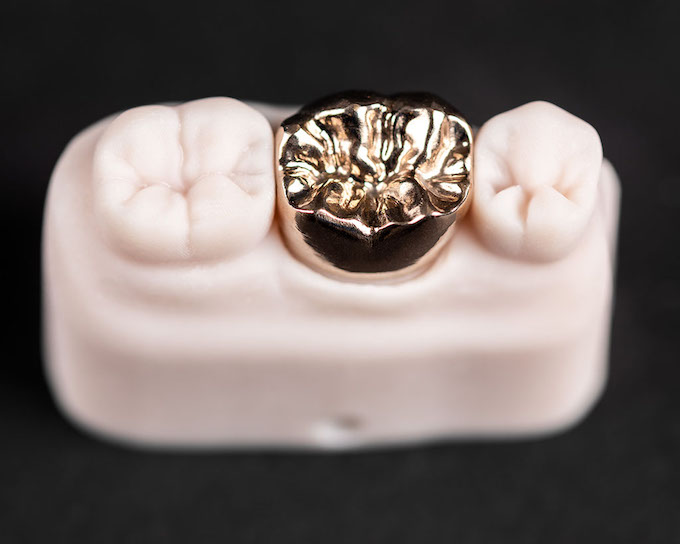
Delivering precise, natural-looking implant restorations is one of the most rewarding things a dental practice can offer patients. Cement retained implant crowns remain one of the most popular solutions for single-tooth implant cases. They offer a clean aesthetic, a familiar seating workflow, and reliable long-term performance when fabricated correctly.
At Dentek Digital, we work with dentists across the Greater Phoenix, Arizona area — including Mesa, Tempe, Chandler, and Gilbert — to fabricate high-quality implant restorations using advanced CAD/CAM technology. Our digital workflow ensures consistent fit, precise margins, and beautiful results every time.
In this post, we break down everything you need to know about cement-retained implant crowns. Whether you are new to implant restorations or refining your technique, this guide will help you make confident clinical decisions.
What Are Cement-Retained Implant Crowns?
A cement-retained implant crown is a prosthetic tooth fixed to an implant abutment using dental cement. Unlike screw-retained crowns, they do not rely on a screw channel for retention. Instead, the crown seats directly onto a custom or stock abutment and is cemented in place.
This approach closely mirrors the workflow for cemented crown restorations on natural teeth. Therefore, many dentists find the technique intuitive and easy to integrate into their existing protocols. The result is a restoration that looks, feels, and functions like a natural tooth.
How They Differ from Screw-Retained Crowns
Both options have a place in implant dentistry. However, each has distinct advantages. Cement-retained crowns offer superior aesthetics because there is no access hole to fill or conceal. They also allow for more flexibility in implant angulation.
On the other hand, screw-retained crowns are fully retrievable, which appeals to clinicians who prioritize long-term maintenance. Meanwhile, cement-retained options tend to have a more natural emergence profile. The right choice depends on the case, the patient, and the clinician’s preference.
Key Advantages of Cement-Retained Implant Crowns
Cement-retained implant crowns offer a range of clinical and aesthetic benefits. Furthermore, their compatibility with digital fabrication makes them an excellent fit for labs like Dentek Digital. Here are the primary advantages dentists consistently report.
Aesthetic Excellence
Without a screw access hole, the occlusal surface of a cement-retained crown remains fully intact. This produces a cleaner, more natural appearance. Additionally, the crown can be designed with optimal contours to blend seamlessly with adjacent teeth.
Our CAD/CAM design process at Dentek Digital allows us to match shade, shape, and translucency with exceptional accuracy. As a result, patients often cannot distinguish the restoration from their natural teeth. That is a win for both the patient and the practice.
Flexibility with Implant Angulation
Not every implant is placed at a perfect angle. Because of this, cement-retained restorations are often the preferred solution when angulation is less than ideal. A custom abutment can compensate for minor deviations without compromising the final crown’s appearance.
At our Phoenix-area lab, we design custom abutments digitally to correct angulation issues before fabrication begins. This step eliminates guesswork at chairside. Therefore, the seating appointment becomes faster and more predictable.
Familiar Cementation Workflow
Many clinicians already have a well-practiced workflow for cementing crowns. Cement-retained implant crowns leverage that same skill set. First, the abutment is torqued to the manufacturer’s specification. Next, the crown is tried in and cement is applied. Then, excess cement is carefully removed.
This familiarity reduces chair time and minimizes the learning curve. Moreover, patients tend to experience a smoother appointment when the clinician works confidently within a known protocol.
Important Clinical Considerations
Cement-retained implant crowns are highly effective. However, they require careful attention to certain clinical details. Addressing these factors upfront leads to better long-term outcomes for your patients.
Cement Management
Excess cement around the implant is one of the most cited concerns with cement-retained restorations. Sub-gingival cement remnants can contribute to peri-implant tissue irritation. Therefore, cement management is a critical step in the placement process.
Several techniques help minimize this risk. For example, clinicians can use a provisional crown or a replica of the abutment to pre-form a cement reservoir. Additionally, using cement sparingly and selecting a cement with good handling properties reduces the chance of excess.
At Dentek Digital, we can design abutments with margins positioned at or slightly above the tissue crest. This placement makes cleanup significantly easier at chairside. As a result, the risk associated with subgingival cement is greatly reduced.
Abutment Design and Material Selection
The abutment is the foundation of any implant crown. Therefore, getting the design right is essential. We fabricate custom abutments from titanium or zirconia, depending on the clinical and aesthetic requirements of each case.
Zirconia abutments are especially popular in the anterior zone. Because of this, they prevent the gray shadow that titanium can sometimes cast through thin gingival tissue. Meanwhile, titanium abutments offer exceptional strength and are ideal for posterior implants under heavy occlusal load.
Crown Material Options
The crown itself can be fabricated from several high-performance materials. Each offers a unique combination of strength and aesthetics. Here are the most commonly used options at our lab:
- Full-contour zirconia: Extremely durable and ideal for posterior restorations. Also available in high-translucency formulations for improved aesthetics.
- Layered zirconia: A zirconia coping with porcelain layered over it for enhanced lifelike appearance.
- PFM (porcelain-fused-to-metal): A time-tested option that provides reliable strength with good aesthetics.
- Lithium disilicate: An excellent choice for anterior cases where maximum translucency and natural light dynamics are desired.
Our team at Dentek Digital will help you select the right material for each case. Furthermore, our CAD/CAM milling technology ensures that every restoration meets the tightest tolerances available in modern dentistry.
How Dentek Digital Supports Your Implant Cases
We are a digital dental lab based in Phoenix, Arizona, and we serve dentists across the Greater Phoenix area, including communities like Scottsdale, Chandler, Gilbert, and Tempe. Our lab was among the earliest adopters of the CAD/CAM digital workflow in the country. That experience gives us a meaningful advantage in producing precise, consistent implant restorations.
Our Digital CAD/CAM Workflow
Every cement-retained implant crown we fabricate begins with a high-quality digital impression or scan file. We accept scans from all major intraoral scanning systems. Additionally, we process traditional impressions through our in-lab scanning workflow when needed.
From there, our technicians design the abutment and crown digitally using industry-leading CAD software. Next, the restoration is milled from a high-quality material block using our precision CAM equipment. Finally, each piece undergoes rigorous quality control before it ships to your practice.
Fast Turnaround Without Sacrificing Quality
We understand that your patients have expectations around timeline. Therefore, we maintain efficient production schedules without cutting corners. Our streamlined digital workflow allows us to deliver restorations with consistent quality and reliable turnaround times.
Moreover, our team is always available to discuss your cases before you send them. We welcome questions about case selection, material choices, margin placement, and more. Collaboration leads to better outcomes for everyone involved.
Tips for Successful Cement-Retained Implant Crown Cases
Success with cement-retained implant crowns starts well before the crown arrives at your practice. Here are practical tips that help ensure a smooth experience from start to finish.
- Communicate margin location clearly: Let the lab know exactly where you want the margin. This detail directly impacts cement management at placement.
- Use a custom impression coping or scan body: Accurate transfer of the implant position is the foundation of a well-fitting restoration.
- Request a try-in of the abutment first: Confirming abutment fit before crown delivery reduces the chance of surprises at the seating appointment.
- Document tissue health before restoration delivery: Healthy peri-implant tissue is essential for long-term success.
- Choose the right cement for the clinical situation: Retrievability needs, tissue health, and occlusal forces all influence cement selection.
Frequently Asked Questions About Cement-Retained Implant Crowns
Are cement-retained implant crowns retrievable?
Retrieval is possible but can be challenging, depending on the cement used. Some clinicians use a temporary cement to allow retrieval if needed. However, permanent cement is appropriate when long-term stability is the primary goal. Discuss retrieval needs with your lab when designing the case.
What implant systems does Dentek Digital work with?
We work with a wide range of major implant systems. Additionally, we can often accommodate less common systems with the right scan body or impression coping information. Contact us before sending a case if you have questions about compatibility.
How do I send an implant case to Dentek Digital?
Sending a case is straightforward. You can submit digital scan files through our secure portal or ship a physical impression with a completed prescription form. Our team will review the case and follow up if we have any questions before fabrication begins.
Can I get a custom abutment and crown as a unit?
Yes. We fabricate custom abutment and crown combinations regularly. In fact, designing the abutment and crown together in a single digital workflow often produces better emergence profiles and improved aesthetics. This approach is one of our most requested implant services.
What if my implant has a challenging angle?
Challenging angulation is exactly where custom abutments shine. We design the abutment digitally to correct the angle and create an ideal path of insertion for the cement-retained crown. Therefore, even difficult cases can achieve excellent results with the right lab partner.
Partner with Dentek Digital for Your Implant Restorations
Cement-retained implant crowns are a proven, versatile solution for single-tooth implant cases. When fabricated with precision and care, they deliver outstanding aesthetics and long-term performance. Moreover, they integrate smoothly into the workflows most dentists already use every day.
At Dentek Digital, we combine advanced CAD/CAM technology with skilled craftsmanship to deliver restorations that meet the highest standards in digital dentistry. We serve dental practices across Phoenix, Mesa, Scottsdale, Chandler, Gilbert, Tempe, and beyond. Our team is ready to support your implant cases from the first scan to the final delivery.
Ready to elevate your implant restorations? Contact Dentek Digital today to send us a case or discuss how we can support your practice with high-quality cement-retained implant crowns and more.