
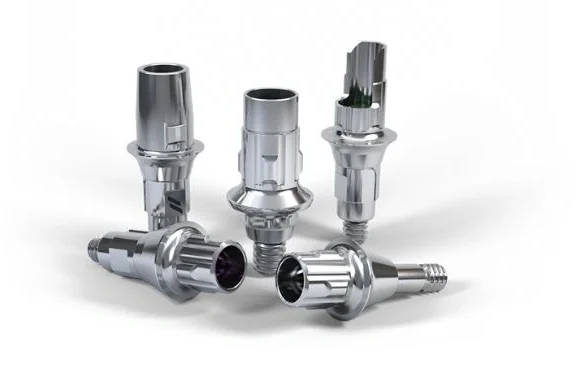
When a patient needs a single-tooth implant restoration, the retention method matters. Cement retained implant crowns offer a clean, aesthetic result that many dentists prefer for specific clinical situations. Choosing the right dental lab partner makes all the difference in fit, finish, and long-term performance.
Dentek Digital is a digital dental lab based in Phoenix, Arizona. We are recognized as a national leader in digital dentistry. We work with dental practices across the country — including those in the greater Houston area like Hunters Creek Village, TX — to deliver precise, high-quality implant restorations using advanced CAD/CAM technology.
In this post, we break down what cement retained implant crowns are, when they work best, and how partnering with a digital lab elevates your implant workflow.
What Are Cement Retained Implant Crowns?
Cement retained implant crowns are prosthetic teeth secured to an implant abutment using dental cement. Unlike screw-retained restorations, there is no access hole on the occlusal surface. Therefore, the final result looks and feels more like a natural tooth.
This retention method is popular for anterior and posterior cases where aesthetics are a priority. Furthermore, cement retained designs can be easier to seat in areas with limited access or challenging angulation.
How the Restoration Is Constructed
First, the implant abutment is either stock or custom-milled to fit the patient’s anatomy. Next, the crown is fabricated to fit over the abutment with precise marginal accuracy. Finally, the dentist cements the crown at chairside.
At Dentek Digital, we use CAD/CAM technology to design and mill each restoration with exceptional accuracy. Additionally, our digital workflow reduces manual error and speeds up turnaround time for your practice.
Cement Retained vs. Screw Retained: A Quick Comparison
Both retention methods have their place in implant dentistry. However, each has distinct advantages depending on the clinical scenario.
- Cement retained: Better aesthetics, no occlusal access hole, ideal for certain angulations
- Screw retained: Easier retrievability, no cement sub-gingival risk, preferred in many full-arch cases
- Cement retained: Works well for single-unit restorations in aesthetic zones
- Screw retained: Often preferred when retrievability is a top clinical priority
On the other hand, cement retained crowns require careful cement management to avoid sub-gingival excess. Because of this, accurate margin placement and abutment design are critical. Our team at Dentek Digital helps optimize these factors through precise digital design.
Why CAD/CAM Technology Improves Cement Retained Implant Crowns
Traditional analog workflows rely heavily on manual impression techniques and hand-built restorations. Meanwhile, CAD/CAM technology allows for digital scanning, virtual design, and precision milling — all of which improve accuracy.
Dentek Digital was one of the earliest adopters of the digital CAD/CAM workflow in the country. As a result, we have refined our processes over years of experience. Our digital workflow produces restorations with consistent marginal fit and surface quality.
Digital Impressions and Scanning
Many dental practices in Phoenix, Scottsdale, Chandler, and Tempe have already transitioned to digital intraoral scanners. Moreover, practices across the country — including those in Texas — are making this shift. Digital scans eliminate distortion common in traditional impressions. Therefore, the data we receive is more accurate from the start.
When you send us a digital file, our technicians import it directly into our CAD software. Additionally, we can communicate virtually to refine the design before milling begins. This collaboration leads to better first-time fit and fewer remakes.
Milling and Material Selection
We mill cement retained implant crowns from high-quality materials including zirconia, lithium disilicate, and PFM frameworks. Furthermore, each material is selected based on the clinical requirements of the case. For example, a posterior molar may benefit from the strength of full-contour zirconia, while an anterior tooth may call for lithium disilicate for optimal translucency.
Our milling equipment operates with tight tolerances. As a result, the margins, contacts, and occlusal anatomy are consistently accurate across every case we produce.
What Dentists Should Know About Abutment Design
The abutment is the foundation of any cement retained restoration. Therefore, its design directly impacts the outcome of the crown. A poorly designed abutment leads to marginal discrepancies, cement trapping, and potential tissue complications.
Custom abutments, designed digitally for each patient, offer significant advantages over stock options. Moreover, a custom abutment allows the lab to optimize emergence profile, margin placement, and angulation. Dentek Digital fabricates custom abutments as part of our comprehensive implant restoration services.
Margin Placement Considerations
Margin placement affects how cement is managed at the time of seating. In addition, it influences tissue health and long-term outcomes. Generally, margins placed slightly sub-gingival provide better aesthetics. However, excessive depth makes cement removal more difficult.
We work with your specifications to design abutments that balance aesthetics with clinical manageability. Also, our digital design tools allow us to visualize the emergence profile and margin position before anything is milled.
Tips for a Smooth Cement Retained Case
- Confirm implant position and angulation before selecting retention method
- Use a custom abutment when possible for better tissue management
- Communicate preferred margin depth and emergence profile to the lab
- Consider using a try-in paste before final cement to verify fit
- Use a cement with appropriate viscosity to minimize excess
- Have an explorer ready to remove sub-gingival cement before it sets
Furthermore, clear communication between the clinician and the lab is one of the most important factors in a successful cement retained case. We encourage our partner dentists to include detailed prescriptions and photographs with each submission.
Partnering with Dentek Digital from Hunters Creek Village, TX
Hunters Creek Village is a community within the greater Houston metropolitan area. While we are based in Phoenix, Arizona, we serve dental practices nationwide through our streamlined digital case submission process. Therefore, distance is not a barrier to accessing high-quality digital dental lab services.
Our partners in Mesa, Gilbert, and Tempe enjoy the same workflow as our national clients. In addition, practices in Texas and beyond benefit from our fast turnaround times and consistent quality. We have built our reputation on delivering reliable restorations that come back right the first time.
How to Send Us a Case
Sending a case to Dentek Digital is straightforward. First, complete our online case submission form and include your digital scan files or impressions. Next, our team reviews your prescription and contacts you if we have any questions. Then, we fabricate your restoration and ship it directly to your practice.
We also offer advanced services like digital implant planning and TattooTH to expand what your practice can offer patients. Moreover, our team is available to consult on complex cases before you submit. This collaborative approach leads to better outcomes for your patients.
Frequently Asked Questions About Cement Retained Implant Crowns
Are cement retained implant crowns retrievable?
Cement retained crowns are generally not as easily retrievable as screw retained restorations. However, they can be removed if necessary with some additional effort. Because of this, it is important to evaluate retrievability as a factor when choosing the retention method.
What materials are used for cement retained implant crowns?
Common materials include zirconia, lithium disilicate, and porcelain-fused-to-metal. Furthermore, material selection depends on the location of the implant, occlusal forces, and aesthetic requirements. Your dental lab can guide you on the best option for each case.
Can I send digital scan files to Dentek Digital?
Yes. We accept digital scan files from most major intraoral scanner brands. Additionally, we can work with traditional impressions if needed. Our digital workflow is designed to be flexible and accommodate your current setup.
How long does fabrication take?
Turnaround times vary depending on the complexity of the case and the restoration type. Generally, we work efficiently to minimize wait times for your practice. Contact our team directly for current turnaround estimates on cement retained implant crowns.
Does Dentek Digital offer custom abutments for cement retained cases?
Yes. We fabricate custom abutments designed specifically for each patient’s anatomy. Moreover, custom abutments improve margin placement, emergence profile, and overall tissue response. We recommend them for most cement retained implant crown cases.
Partner with a Digital Lab That Gets It Right
Cement retained implant crowns require precision at every step — from abutment design to crown fabrication to final delivery. Dentek Digital brings together advanced CAD/CAM technology and skilled craftsmanship to produce restorations you can count on.
We serve dental practices in Phoenix, Scottsdale, Mesa, Chandler, and across the country, including Hunters Creek Village, TX. Therefore, no matter where your practice is located, you can access the same high standard of digital dental lab services we are known for.
Ready to elevate your implant restorations? Contact Dentek Digital today to send us a case or discuss your next cement retained implant crown with our experienced team.