
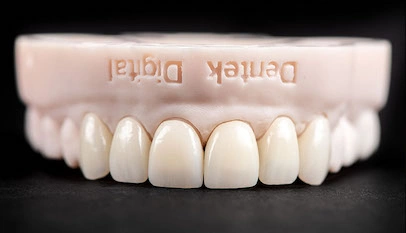
When your patients need implant restorations, precision matters at every step. Cement retained implant crowns remain one of the most widely used restoration solutions in modern implant dentistry. They offer a natural look, dependable retention, and a streamlined workflow that many dentists appreciate.
At Dentek Digital, we fabricate high-quality cement-retained implant crowns using advanced CAD/CAM technology from our lab in Phoenix, Arizona. We partner with dental professionals across the country — including practices in Atherton, CA — to deliver restorations that fit precisely and perform reliably.
In this post, we cover what cement-retained implant crowns are, how the fabrication process works, and why partnering with a experienced digital dental lab makes a real difference for your patients.
What Are Cement-Retained Implant Crowns?
Cement-retained implant crowns attach to an implant abutment using dental cement. This is one of two primary retention methods for implant crowns. The other option is screw retention, which we also fabricate at Dentek Digital.
With cement retention, the crown fits over a custom or stock abutment and is cemented into place. This approach closely mimics the feel and look of a natural tooth preparation. Additionally, it offers excellent esthetic outcomes, especially in the anterior region.
When Is Cement Retention the Right Choice?
Not every case calls for the same retention method. However, cement retention is often preferred in specific clinical situations. Understanding those situations helps you plan better restorations for your patients.
- Challenging implant angulation: Cement retention can compensate for implants placed at angles that complicate screw access.
- Esthetic priority cases: Cement-retained crowns allow for better contour and emergence profile control.
- Posterior single-unit restorations: These cases often benefit from the simplicity of the cemented approach.
- Cases with limited interocclusal space: Cement retention can work where screw access holes are impractical.
Furthermore, cement-retained restorations tend to have a familiar workflow for dentists experienced with conventional crown and bridge procedures. This makes the transition into implant restorations more intuitive.
The CAD/CAM Fabrication Process at Dentek Digital
At Dentek Digital, we use a fully digital workflow to fabricate cement-retained implant crowns. Our process begins the moment we receive your case files or physical impressions. Then, our technicians evaluate the case and design the restoration digitally using industry-leading CAD software.
From there, our milling and fabrication equipment produces a precisely engineered crown. Finally, our skilled lab technicians apply finishing and characterization to achieve natural esthetics.
Digital Scanning and Design
Digital impressions and intraoral scans have transformed how dental labs receive case data. Because of this, we can design restorations faster and with greater accuracy than traditional methods allowed. We accept scan files from major intraoral scanner brands, making it easy to submit cases digitally.
Our CAD design team carefully evaluates the emergence profile, margin placement, and occlusal contacts. As a result, you receive a crown that fits predictably and performs well from day one.
Materials We Use for Cement-Retained Crowns
Material selection plays a major role in the long-term success of an implant crown. We offer several high-performance options depending on the clinical situation and esthetic goals of the case.
- Zirconia: Durable and highly esthetic, zirconia is a top choice for both anterior and posterior implant crowns.
- PFM (Porcelain-Fused-to-Metal): A proven classic that offers reliable strength with natural-looking layered porcelain.
- Full-contour zirconia: Ideal for posterior cases where strength is the priority and esthetics are secondary.
- Layered zirconia: Combines the strength of zirconia with the translucency needed for esthetic anterior restorations.
Moreover, our team is happy to discuss material options with you when you submit a case. We want to make sure every restoration meets your clinical and esthetic expectations.
Why Arizona Dentists Trust Dentek Digital
Dentek Digital is based in Phoenix, Arizona, and we have built a strong reputation as a national leader in digital dentistry. We were among the earliest adopters of the digital CAD/CAM workflow in the country. That early investment in technology gives us a depth of experience that benefits every case we handle.
Dental practices across the Greater Phoenix area — including those in Scottsdale, Mesa, Chandler, and Tempe — rely on us for consistent, high-quality results. Additionally, we serve practices well beyond Arizona, including those in California and across the country.
A Partner You Can Count On
Reliability matters in a dental lab relationship. Therefore, we focus on clear communication, fast turnaround times, and consistent quality control at every stage of fabrication. When you send us a case, you can expect updates and transparency throughout the process.
Furthermore, our team includes experienced dental technicians who understand the nuances of implant restorations. We treat every case with the same level of attention, whether it is a single-unit implant crown or a complex full-arch case.
Advanced Technology, Skilled Craftsmanship
Technology alone does not produce great restorations. On the other hand, neither does craftsmanship without the right tools. At Dentek Digital, we combine both. Our CAD/CAM systems allow for precision that manual workflows cannot match. Meanwhile, our technicians apply their expertise during finishing and characterization to produce lifelike results.
In addition, we offer advanced services like TattooTH and digital implant planning to support more complex cases. These tools give you and your patients more options and better outcomes.
Serving Dental Practices Beyond Phoenix
While we are rooted in Phoenix, Arizona, our reach extends nationwide. Dental practices in Atherton, CA and surrounding communities have discovered the value of partnering with a lab that prioritizes digital precision and quality craftsmanship.
Sending cases to a digital lab like Dentek Digital is simple. You can submit digital scan files electronically, eliminating the delays and distortions that can come with physical impressions. As a result, the workflow becomes faster and more efficient for your practice.
Additionally, the quality of your restorations does not depend on geography. Whether your practice is in Phoenix, Scottsdale, or Atherton, you receive the same high standard of fabrication that defines everything we do at Dentek Digital.
Tips for Optimizing Your Cement-Retained Implant Crown Cases
Successful implant restorations start with good case planning and clear communication with your lab. Here are some practical tips to help streamline your cement-retained crown cases.
- Capture detailed impressions or scans: Accurate margins and emergence profiles depend on quality impressions. Always verify scan quality before submission.
- Specify the abutment type early: Letting your lab know whether you are using a stock or custom abutment helps the design team plan accordingly.
- Include shade and material preferences: The more information you provide, the better we can match the restoration to your patient’s natural dentition.
- Communicate soft tissue contours: Good emergence profile information helps us design a crown that supports healthy peri-implant tissue.
- Ask about try-in steps: For complex esthetic cases, a try-in appointment allows you to verify fit and esthetics before final cementation.
Moreover, do not hesitate to call our team with questions before submitting a case. We are here to support your workflow, not just fabricate a product.
Frequently Asked Questions About Cement-Retained Implant Crowns
What is the difference between cement-retained and screw-retained implant crowns?
Cement-retained crowns attach to the abutment using dental cement, while screw-retained crowns are secured with a small access screw. Both are effective. However, the best choice depends on implant angulation, esthetic goals, and clinical access.
Can cement-retained crowns be removed if needed?
Cement-retained crowns are more difficult to remove than screw-retained crowns. Therefore, if retrievability is a priority for a specific case, your dental lab and restorative plan should account for that early. Your lab can help you choose the best approach.
How do I submit a cement-retained implant crown case to Dentek Digital?
Submitting a case is straightforward. You can send digital scan files directly through our online portal, or contact our team to discuss the best submission method for your practice. We accept a wide range of file formats and scanner brands.
What materials work best for cement-retained implant crowns?
Zirconia is one of the most popular choices because of its strength and esthetic versatility. However, PFM and layered zirconia are also excellent options depending on the case. Our technicians can help guide you toward the best material for each patient.
How long does fabrication take for cement-retained implant crowns?
Turnaround times vary based on case complexity and material selection. In general, our digital workflow allows for efficient production without sacrificing quality. Contact us directly for current lead times when you are ready to submit a case.
Partner With Dentek Digital for Your Implant Crown Cases
Choosing the right dental lab partner is one of the most important decisions you make for your practice and your patients. At Dentek Digital, we bring together advanced CAD/CAM technology, experienced technicians, and a commitment to consistent quality that dentists can rely on.
Whether your practice is located in Mesa, Tempe, Chandler, Scottsdale, or as far away as Atherton, CA, we are ready to support your implant restorations with precision and care. Our team is here to make the process easy, efficient, and rewarding for you and your patients.
Ready to get started? Contact Dentek Digital today to send us a case or to discuss your next cement-retained implant crown with our experienced lab team. We look forward to becoming your trusted dental lab partner.