
When patients ask their dentist about teeth implants, they want honest answers and reliable solutions. Implants have become one of the most requested tooth replacement options in dentistry today. They look natural, function well, and can last for many years with proper care.
However, the quality of an implant restoration depends heavily on the dental lab behind it. Advanced fabrication technology makes a real difference. That is why more dental practices are turning to digital labs that use CAD/CAM workflows to produce precise, high-quality restorations.
At Dentek Digital, we support dentists and dental practices across the Greater Phoenix, Arizona area with industry-leading implant restorations. In this post, we break down what makes teeth implants so effective and how a digital lab partnership elevates your patient outcomes.
What Are Teeth Implants and How Do They Work?
Teeth implants are titanium posts surgically placed into the jawbone. They act as artificial tooth roots. Over time, the bone fuses around them in a process called osseointegration.
Once healed, a dental crown or other restoration is attached to the implant. The result is a stable, natural-looking tooth replacement. Because of this, implants are often considered the gold standard for missing teeth.
The Role of the Dental Crown in Implant Success
The implant post itself is only part of the equation. The crown placed on top must fit precisely and look natural. A poorly fitted crown can compromise the entire restoration.
Therefore, the fabrication process matters enormously. Digital labs use CAD/CAM technology to design and mill crowns with exceptional accuracy. As a result, patients experience better fit, better function, and better aesthetics.
Common Implant Restoration Types
Dental labs fabricate several types of implant restorations. Each serves a different clinical need. Here are the most common options:
- Single-unit implant crowns – Replace one missing tooth
- Implant-supported bridges – Span multiple missing teeth
- Full-arch restorations – Replace an entire arch of teeth
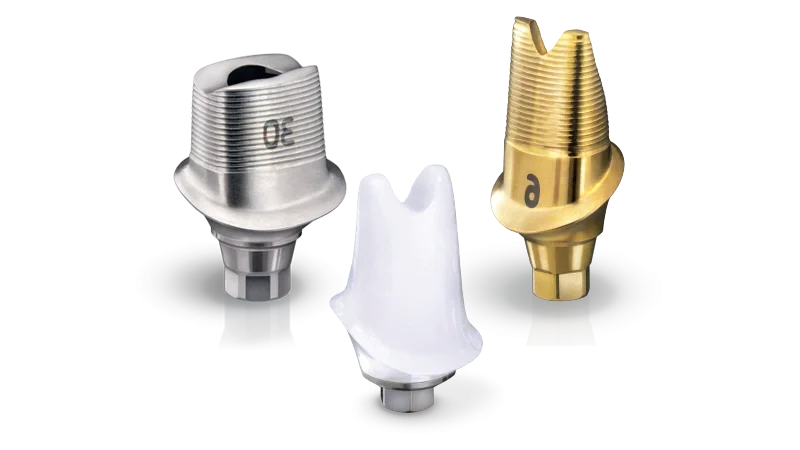
- Custom abutments – Connect the implant to the crown with precision
- Screw-retained restorations – Allow retrievability for the clinician
Furthermore, each of these can be fabricated digitally for greater consistency and accuracy.
Why Digital Fabrication Changes Everything for Implant Restorations
Traditional dental labs relied on physical impressions and manual processes. Digital labs, on the other hand, use intraoral scans and CAD/CAM software to design restorations on screen before milling them from high-quality material blocks.
This shift has transformed implant dentistry. The margin of error is dramatically reduced. Additionally, turnaround times are faster, which benefits both the practice and the patient.
CAD/CAM Technology Explained Simply
CAD stands for Computer-Aided Design. CAM stands for Computer-Aided Manufacturing. Together, they allow lab technicians to design a restoration digitally and then mill it from a solid block of ceramic, zirconia, or other material.
For teeth implants specifically, this means better occlusal accuracy and improved marginal fit. Moreover, digital workflows reduce the chance of human error that can occur with hand-built restorations.
Dentek Digital’s Approach to Implant Restorations
Dentek Digital was one of the earliest adopters of the digital CAD/CAM workflow in the country. We combine cutting-edge technology with skilled craftsmanship. Our technicians bring deep expertise to every case we handle.
We serve dental professionals across Phoenix, Mesa, Tempe, Chandler, and Scottsdale. Additionally, we work with practices beyond the immediate Phoenix metro area. Our goal is always the same: deliver precise, reliable restorations that support better patient outcomes.
What Dentists Should Look for in an Implant Restoration Lab
Choosing the right lab partner is one of the most important decisions a dental practice can make. Not all labs offer the same capabilities or quality standards. Here are key factors to evaluate:
- Digital workflow integration – Does the lab accept intraoral scans?
- Material quality – What grades of zirconia and ceramic do they use?
- Turnaround time – Can they meet your scheduling needs?
- Communication – Do they offer case consultations and feedback?
- Implant system compatibility – Can they work with the implant brands you use?
In addition, look for a lab that stays current with evolving technology. Digital dentistry advances quickly. Your lab partner should advance with it.
The Value of Advanced Services Like Digital Implant Planning
Some digital labs go beyond fabrication. For example, Dentek Digital offers digital implant planning as an advanced service. This helps dentists visualize placement before surgery and improves case accuracy from the start.
Meanwhile, services like TattooTH allow for highly customized shade and texture matching. These advanced tools make it possible to create restorations that blend seamlessly with natural dentition.
Teeth Implants and the Patient Experience
Patients care about how their implants look and feel. They also care about the process. A smooth, well-coordinated workflow between the dentist and lab reduces delays and minimizes chair time.
Because of this, digital labs that communicate clearly and deliver on time make the dentist’s job easier. They also help create a better experience for the patient. First impressions of a restoration matter, and a well-crafted crown makes a lasting impact.
Setting Realistic Expectations With Patients
It is important for dentists to help patients understand what teeth implants involve. The process takes time. Healing after implant placement is necessary before the final restoration is placed.
However, the end result is worth it for most patients. A well-placed implant with a high-quality crown can function like a natural tooth. Additionally, implants help preserve jawbone structure over time, which traditional bridges do not.
Serving Patients Across the Phoenix Metro Area
Dental practices in communities like Gilbert, Chandler, Mesa, and Scottsdale rely on consistent, high-quality lab work to meet patient demand. The Greater Phoenix area is home to a large and growing population. Therefore, dentists in the region need a lab partner who can scale with them.
Dentek Digital supports practices throughout the Phoenix metro with fast turnarounds and dependable results. We understand the pace of modern dental practices. Moreover, we are committed to being a reliable extension of your team.
Materials Used in Digital Implant Restorations
Material selection plays a big role in implant restoration success. Different materials offer different strengths. Here is a brief overview:
- Zirconia – Strong, tooth-colored, and highly biocompatible. Ideal for most implant crowns.
- PFM (Porcelain-Fused-to-Metal) – Durable and time-tested, though less aesthetic than zirconia.
- Full-contour zirconia – Excellent for posterior teeth where strength is the priority.
- Layered zirconia – Better aesthetics for anterior restorations where appearance matters most.
Furthermore, digital milling ensures that each material block is used precisely and consistently. This reduces waste and improves predictability across cases.
Frequently Asked Questions About Teeth Implants and Dental Labs
What is the difference between a dental implant and a teeth implant crown?
The dental implant is the titanium post placed in the jawbone. The teeth implant crown is the visible tooth restoration attached on top. Both must work together for optimal function and appearance.
Can my dental practice send digital scans instead of physical impressions?
Yes. Dentek Digital fully supports digital scan submissions. In fact, we encourage this workflow. Digital scans improve accuracy and eliminate distortion that can occur with traditional impressions.
How long does it typically take to receive an implant crown from a digital lab?
Turnaround times vary by case complexity. However, digital fabrication is generally faster than traditional methods. Contact our team to discuss your specific timeline needs.
Does Dentek Digital work with all implant systems?
We work with a wide range of implant systems and components. Therefore, compatibility is rarely a barrier. We recommend reaching out so we can confirm support for your preferred system.
What makes a digital lab better for implant restorations than a traditional lab?
Digital labs use CAD/CAM technology to design and mill restorations with greater precision. As a result, fit is more consistent, aesthetics are more predictable, and turnaround is typically faster.
Partner With a Trusted Digital Dental Lab for Implant Restorations
Teeth implants represent one of the most significant investments a patient can make in their oral health. Therefore, every component of the restoration must be executed with care and precision.
Dentek Digital has built its reputation by delivering exactly that. We are recognized as a national leader in digital dentistry. Moreover, we are deeply committed to serving the dental professionals and patients of the Greater Phoenix, Arizona community.
Whether your practice is in Tempe, Scottsdale, Chandler, or anywhere across the Valley, we are ready to support your implant cases with the technology and expertise they deserve. Contact Dentek Digital today to send us a case or request a consultation about your implant restoration needs.