
Choosing the right dental implant options is one of the most important decisions a patient can make. Implants restore function, improve appearance, and support long-term oral health. Therefore, understanding what is available helps patients and their dentists make confident, informed choices.
However, not all implant restorations are created equal. The quality of the lab work behind each implant crown or restoration plays a major role in the final outcome. Additionally, the technology used to fabricate those restorations matters just as much as the clinical procedure itself.
At Dentek Digital, we support dental professionals across the Greater Phoenix, Arizona area with precision-crafted, CAD/CAM-fabricated implant restorations. Our digital workflow helps dentists deliver results that are accurate, durable, and beautifully aesthetic. In this guide, we cover the most common dental implant options and what makes a high-quality restoration possible.
What Are Dental Implants and Why Do They Matter?
A dental implant is a titanium post that a dentist places into the jawbone. It acts as an artificial tooth root. Over time, the bone fuses with the post in a process called osseointegration.
Once the implant integrates, a dental restoration — such as a crown, bridge, or denture — is attached on top. This creates a stable, natural-looking replacement for missing teeth. Because of this, implants are widely considered the gold standard in tooth replacement.
Furthermore, implants help preserve the jawbone. When a tooth is lost, the bone beneath it can begin to shrink. Implants stimulate the bone, which helps maintain facial structure over time.
Who Is a Candidate for Dental Implants?
Most healthy adults with adequate bone density are candidates for implants. A dentist will evaluate bone volume, gum health, and overall medical history. In some cases, a bone graft may be needed first to build up the jaw.
Additionally, patients with certain conditions such as uncontrolled diabetes or active gum disease may need to address those concerns before proceeding. A thorough consultation with a qualified dental professional is the essential first step.
The Most Common Dental Implant Options
There are several dental implant options available today. Each serves a different clinical need. Understanding the differences helps patients and dentists choose the most appropriate treatment path.
Single Tooth Implants
A single tooth implant replaces one missing tooth. It includes a titanium post, an abutment, and a crown. This option preserves the surrounding natural teeth because no healthy tooth structure needs to be altered.
Moreover, single implants are highly versatile. They can be placed in almost any position in the mouth. The resulting restoration looks and functions very much like a natural tooth.
Implant-Supported Bridges
An implant-supported bridge replaces multiple consecutive missing teeth. Instead of relying on natural teeth for support, two or more implants anchor the bridge. This is a strong and stable solution for patients missing several teeth in a row.
Additionally, implant-supported bridges eliminate the need for a removable partial denture. They are fixed in place, which most patients find more comfortable and convenient. As a result, they are a popular choice among adults with multiple missing teeth.
Implant-Supported Dentures
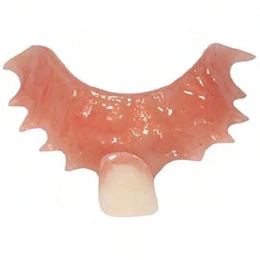
For patients missing all or most of their teeth, implant-supported dentures offer a life-changing solution. Several implants are placed in the jaw and a full-arch denture is attached to them. This eliminates the slipping and discomfort common with traditional removable dentures.
Furthermore, implant-supported dentures can be either fixed or removable. Fixed versions, sometimes called All-on-4 or full-arch restorations, are permanently attached. Removable implant dentures snap onto the implants and can be taken out for cleaning.
Mini Dental Implants
Mini implants are smaller in diameter than standard implants. They are often used when bone volume is limited or when a less invasive procedure is preferred. However, they are generally not as strong as full-sized implants and are best suited for specific clinical situations.
Therefore, mini implants are typically used to stabilize lower dentures rather than to support full crowns or bridges. A dentist will determine whether a standard or mini implant is the right choice based on each patient’s anatomy and needs.
The Role of the Dental Lab in Implant Success
The dentist places the implant, but the dental lab fabricates the restoration that goes on top. This means the lab’s quality directly affects the final result. A poorly made crown or abutment can cause fit problems, discomfort, or early failure.
At Dentek Digital, we use advanced CAD/CAM technology to design and mill every restoration with exceptional precision. CAD/CAM stands for Computer-Aided Design and Computer-Aided Manufacturing. It allows us to create restorations that fit accurately and look natural.
Because of this, dentists across Phoenix, Mesa, Chandler, and Scottsdale trust us to deliver consistent, high-quality implant restorations case after case.
CAD/CAM Technology and Implant Restorations
CAD/CAM technology begins with a digital scan of the patient’s mouth. That scan is used to design the restoration digitally before it is milled from a high-strength material. This process eliminates much of the guesswork associated with traditional lab methods.
Moreover, digital design allows for extremely precise fit adjustments. The result is a restoration that seats accurately and functions well. Additionally, CAD/CAM materials such as zirconia and lithium disilicate are known for their durability and aesthetics.
Digital Implant Planning
Dentek Digital also offers advanced digital implant planning services. This involves using 3D imaging data to plan the exact position and angle of each implant before surgery. As a result, the dentist can place implants more accurately and predictably.
Digital planning is especially valuable for complex cases involving multiple implants or full-arch restorations. Furthermore, it allows the lab and the dentist to collaborate closely, ensuring the final restoration will fit perfectly from day one.
Materials Used in Implant Restorations
The material used for an implant crown or bridge affects both its strength and its appearance. Therefore, choosing the right material is an important part of the planning process.
Zirconia
Zirconia is one of the most popular materials for implant crowns today. It is extremely strong and highly resistant to chipping or fracture. Additionally, it can be made to closely match the natural color of surrounding teeth.
Because of this, zirconia is an excellent choice for both front and back teeth. It performs well under heavy chewing forces and is well-tolerated by gum tissue.
Porcelain-Fused-to-Metal (PFM)
Porcelain-fused-to-metal crowns have a metal substructure covered with tooth-colored porcelain. They have been used successfully for many years. However, the metal core can sometimes show through at the gumline over time, which affects aesthetics.
On the other hand, PFM restorations are strong and cost-effective. They remain a reliable option for many clinical situations, particularly in the back of the mouth.
Lithium Disilicate
Lithium disilicate, commonly known by the brand name e.max, is prized for its natural appearance. It transmits light in a way that closely mimics natural tooth enamel. Therefore, it is often the preferred choice for implant crowns in highly visible areas of the smile.
Meanwhile, advances in lithium disilicate formulations have also improved its strength. It is now a viable option for posterior teeth as well in many cases.
How Dentek Digital Supports Phoenix-Area Dentists
Dentek Digital was one of the earliest digital dental labs in the country to adopt the CAD/CAM workflow. We have built our reputation on quality, accuracy, and service. As a result, dental professionals from Phoenix and surrounding communities like Tempe, Gilbert, and Chandler rely on us for their most demanding cases.
We fabricate a full range of restorations, including fixed crowns and bridges, implant restorations, removable prosthetics, and splints and nightguards. Additionally, we offer our proprietary TattooTH service for unique customization needs.
Furthermore, our team works closely with each dental practice to ensure seamless communication from case submission through delivery. We understand that your success with patients depends on reliable lab support.
Frequently Asked Questions About Dental Implant Options
How long do dental implants last?
With proper care, dental implants can last for many years or even a lifetime. The implant post itself is very durable. However, the crown on top may need to be replaced after a decade or more depending on wear.
What is the difference between fixed and removable implant restorations?
Fixed restorations are permanently attached to the implants and cannot be removed by the patient. Removable restorations snap onto implants but can be taken out for cleaning. Both options offer significant advantages over traditional dentures.
How does digital technology improve implant restorations?
Digital technology allows for more precise design and fabrication. CAD/CAM systems can produce restorations that fit more accurately than those made with traditional methods. Additionally, digital workflows reduce turnaround times and improve consistency.
What materials are best for implant crowns?
Zirconia and lithium disilicate are among the top choices for implant crowns today. Each has unique advantages depending on the location in the mouth and the patient’s bite. A dental professional can help determine the best material for each specific case.
Can a dental lab help with implant planning?
Yes. Advanced digital dental labs like Dentek Digital offer implant planning services that use 3D data to guide placement decisions. This collaborative approach improves accuracy and supports better long-term outcomes for patients.
Partner With Dentek Digital for Exceptional Implant Restorations
Understanding your dental implant options is the first step toward confident treatment planning. Whether your patients need a single crown, a full-arch restoration, or anything in between, the quality of the lab work behind each case matters enormously.
At Dentek Digital, we combine cutting-edge CAD/CAM technology with skilled craftsmanship to fabricate implant restorations that meet the highest standards. Moreover, we make it easy for dental practices across the Greater Phoenix area — from Mesa to Scottsdale and beyond — to access premium digital lab services.
Ready to elevate your implant cases? Contact Dentek Digital today to send us a case or request a consultation with our experienced team. We look forward to supporting your practice and your patients.