
Understanding your dental implant options is one of the most important steps in restoring a patient’s smile. Whether you are a dentist exploring better lab partnerships or a patient researching what your provider can offer, this guide breaks it all down clearly. Modern dental implants have transformed restorative care, and the technology behind them keeps getting better.
Today, digital dentistry plays a major role in how implant restorations are designed and fabricated. CAD/CAM technology — computer-aided design and computer-aided manufacturing — allows labs to create precise, reliable restorations faster than ever before. As a result, dentists can deliver better outcomes with shorter turnaround times.
At Dentek Digital, a leading digital dental lab based in Phoenix, Arizona, we specialize in high-quality implant restorations for dental practices across the Greater Phoenix area. We support dentists in communities like Mesa, Scottsdale, Chandler, and Tempe with advanced digital workflows and skilled craftsmanship.
What Are Dental Implants?
Dental implants are titanium posts that a surgeon places into the jawbone. They act as artificial tooth roots. Over time, the bone fuses around the post in a process called osseointegration. This creates a stable foundation for a crown, bridge, or full-arch restoration.
Implants are widely considered the gold standard for replacing missing teeth. They look, feel, and function like natural teeth. Furthermore, they help preserve the jawbone and prevent the bone loss that often follows tooth extraction.
How the Crown Restoration Fits In
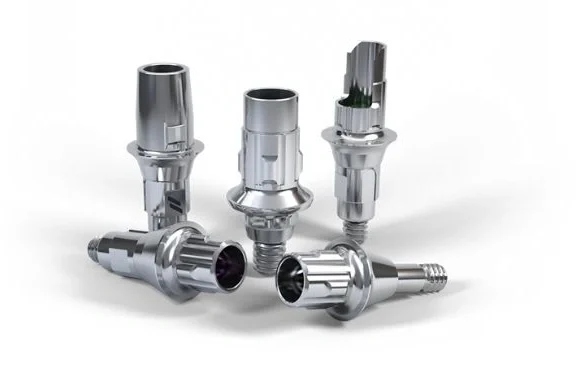
The implant post is only one part of the system. A connector piece called an abutment attaches to the post. Then, a custom-fabricated crown — made by a dental lab — sits on top. The crown is what patients actually see, so its quality matters enormously.
This is where Dentek Digital adds real value. We use advanced CAD/CAM technology to design and mill restorations with exceptional accuracy. Our digital workflow ensures that each crown fits precisely and looks completely natural.
The Most Common Dental Implant Options
There is no one-size-fits-all solution in implant dentistry. Different patients have different needs. Therefore, understanding the full range of options helps dentists plan and communicate treatment effectively.
Single-Tooth Implants
A single-tooth implant replaces one missing tooth with a post, abutment, and crown. This is the most straightforward option. It preserves the surrounding teeth and provides a permanent, natural-looking result.
Single-tooth restorations are among the most commonly requested implant cases at our lab. We fabricate these crowns using high-performance materials like zirconia and lithium disilicate. Both offer excellent strength and aesthetics.
Implant-Supported Bridges
When a patient is missing multiple adjacent teeth, an implant-supported bridge is often an ideal solution. Two implants anchor a bridge that spans the gap. Additionally, this option avoids placing posts at every missing tooth site.
Implant-supported bridges are more stable than traditional bridges. They also do not rely on adjacent natural teeth for support. As a result, the surrounding teeth stay intact and healthy.
Full-Arch Implant Restorations
For patients missing all or most of their teeth, full-arch implant solutions offer life-changing results. Options in this category include implant-supported dentures and fixed full-arch bridges. These restorations rest on a series of strategically placed implants.
Full-arch cases are complex and require careful planning. At Dentek Digital, we offer advanced digital implant planning services to support dentists with these cases. Our team helps map out implant positions digitally before treatment begins. This level of precision leads to better outcomes for patients.
All-on-4 and Similar Protocols
All-on-4 is a popular full-arch approach that uses just four implants to support an entire arch of teeth. The angled placement of the rear implants maximizes contact with available bone. Moreover, this technique often eliminates the need for bone grafting.
Dentists in Phoenix, Scottsdale, and surrounding communities frequently use All-on-4 protocols. Our lab fabricates the final restorations for these cases with a strong focus on fit, function, and aesthetics. We work closely with each dental practice to meet their specific requirements.
Materials Used in Implant Restorations
The material used to fabricate an implant crown or bridge directly affects its durability and appearance. Fortunately, dental labs today have access to several excellent material options.
Zirconia
Zirconia is one of the most popular materials for implant crowns and full-arch restorations. It is extremely strong and highly resistant to chipping or fracturing. Furthermore, modern zirconia offers outstanding translucency, making restorations look very natural.
We mill zirconia restorations in-house at Dentek Digital using precision CAD/CAM equipment. This allows us to maintain strict quality control at every stage of fabrication.
Lithium Disilicate
Lithium disilicate, often known by the brand name e.max, is a glass-ceramic material prized for its aesthetic qualities. It is an excellent choice for anterior implant crowns where appearance is the top priority. On the other hand, it may not be the best choice for high-load posterior sites.
Our technicians help dentists select the right material for each specific case. We consider the location of the tooth, bite forces, and the patient’s aesthetic goals.
Hybrid and Layered Options
Some restorations combine a zirconia substructure with a porcelain overlay. This approach blends strength with exceptional aesthetics. Also, hybrid materials continue to evolve rapidly in the digital dentistry space.
Dentek Digital stays at the forefront of these advancements. We were one of the earliest adopters of digital CAD/CAM workflows in the country. Therefore, our team is experienced with a wide range of material options and fabrication techniques.
The Role of Digital Implant Planning
One of the most valuable tools in modern implant dentistry is digital implant planning. This process uses 3D imaging data — typically from a CBCT scan — to plan implant placement virtually before surgery begins.
Digital planning helps dentists visualize bone volume, identify ideal implant positions, and design surgical guides. Because of this, surgery becomes more predictable and efficient. Patients benefit from shorter procedures and faster healing.
Dentek Digital offers digital implant planning as part of our advanced services. We partner with dental practices in Mesa, Tempe, Chandler, and throughout the Greater Phoenix area to support complex implant cases from start to finish. Our planning services integrate seamlessly with our restoration fabrication workflow.
Surgical Guides
A surgical guide is a custom-made device that helps the dentist place implants at precise angles and depths. It is designed based on the digital plan. As a result, the placement matches the restoration plan exactly.
Using surgical guides reduces the risk of error and helps ensure a better-fitting final restoration. Furthermore, it shortens chair time for the patient and simplifies the surgical procedure for the dentist.
What to Look for in a Dental Lab Partner
Choosing the right dental lab is just as important as choosing the right implant system. A skilled lab partner can make a significant difference in the quality of your final restorations.
Here are some key qualities to look for when evaluating a dental lab for implant cases:
- Digital CAD/CAM capabilities: Look for a lab that uses modern design and milling technology for consistent accuracy.
- Material expertise: The lab should offer a range of high-quality materials and guide you toward the best choice for each case.
- Implant system compatibility: Make sure the lab works with the implant systems and components you use in your practice.
- Clear communication: A good lab partner communicates proactively and keeps you informed throughout fabrication.
- Fast, reliable turnaround: Timely delivery helps you keep your schedule and serve your patients well.
- Advanced planning services: Labs that offer digital implant planning add extra value for complex cases.
Dentek Digital checks all of these boxes. We are proud to be a trusted lab partner for dental practices across the Greater Phoenix region, including communities in Scottsdale, Gilbert, Mesa, and beyond.
TattooTH: A Unique Innovation from Dentek Digital
One of the most distinctive services we offer is TattooTH. This innovative technology allows restorations to carry a unique digital identifier embedded directly into the prosthetic. It is a subtle but powerful way to track and identify restorations.
TattooTH is especially relevant in full-arch implant cases and complex restorations. It adds a layer of traceability that benefits both the dentist and the patient. Additionally, it reflects our broader commitment to pushing the boundaries of digital dentistry.
Frequently Asked Questions About Dental Implant Options
What is the most durable material for an implant crown?
Zirconia is generally considered the most durable option for implant crowns. It resists chipping and fracturing very well, making it ideal for posterior teeth that handle heavy bite forces. However, your dentist and lab can recommend the best material based on your specific case.
How long does it take to get an implant restoration from a dental lab?
Turnaround times vary by case complexity and the lab’s workflow. Digital labs like Dentek Digital can often complete restorations faster than traditional labs because CAD/CAM fabrication is more efficient. Ask your lab about typical lead times when planning your cases.
Can a dental lab help with implant planning, or is that only for the dentist?
Many digital dental labs now offer implant planning services. At Dentek Digital, we provide digital implant planning as part of our advanced offerings. This means the lab and the dentist collaborate on the plan before surgery even begins. The result is a more seamless workflow and better-fitting restorations.
What implant systems does Dentek Digital work with?
We work with a wide range of implant systems and components. Contact our team directly to confirm compatibility with the specific system you use in your practice. We are happy to discuss your needs and find the best solution.
How does digital dentistry improve implant outcomes?
Digital dentistry improves implant outcomes in several important ways. First, CAD/CAM design creates more precise restorations with better fit. Next, digital implant planning reduces surgical error. Finally, digital workflows speed up fabrication and reduce chair time for patients. Overall, the digital approach leads to more predictable, higher-quality results.
Partner with Dentek Digital for Your Implant Cases
Dental implant restorations require precision, expertise, and the right technology. Dentek Digital brings all three together. We combine advanced CAD/CAM fabrication with skilled technicians and innovative services to deliver restorations you can count on.
We proudly serve dental practices throughout the Greater Phoenix area, including Scottsdale, Mesa, Tempe, Chandler, and Gilbert. Whether you need a single-tooth crown or a complex full-arch case, our team is ready to support you every step of the way.
Ready to elevate your implant restorations? Contact Dentek Digital today and let our team show you what a true digital lab partner can do for your practice and your patients.