
If you are exploring dental implant options, you are already taking a great step toward restoring your smile and confidence. Dental implants are one of the most effective long-term solutions for missing teeth. They look natural, function like real teeth, and can last for many years with proper care.
However, not all implant restorations are created equal. The quality of your implant crown, bridge, or restoration depends heavily on the dental lab behind it. Additionally, the technology used to design and fabricate that restoration plays a major role in the final result.
At Dentek Digital, we are a digital dental lab based in Phoenix, Arizona. We partner with dentists and dental practices to deliver precise, high-quality implant restorations using advanced CAD/CAM technology. In this post, we break down your dental implant options so you can make informed decisions.
What Are Dental Implants and How Do They Work?
Dental implants are titanium posts that a dentist surgically places into the jawbone. They act as artificial tooth roots. Over time, the bone fuses around the implant in a process called osseointegration.
Once the implant is stable, a dental restoration is attached on top. This restoration is what you see when you smile. Therefore, the quality of that crown or bridge matters just as much as the implant itself.
Modern digital dental labs like Dentek Digital use CAD/CAM technology to design and mill these restorations with exceptional accuracy. As a result, the fit, function, and appearance are significantly better than older methods.
Key Components of a Dental Implant
- Implant fixture: The titanium post placed in the jawbone.
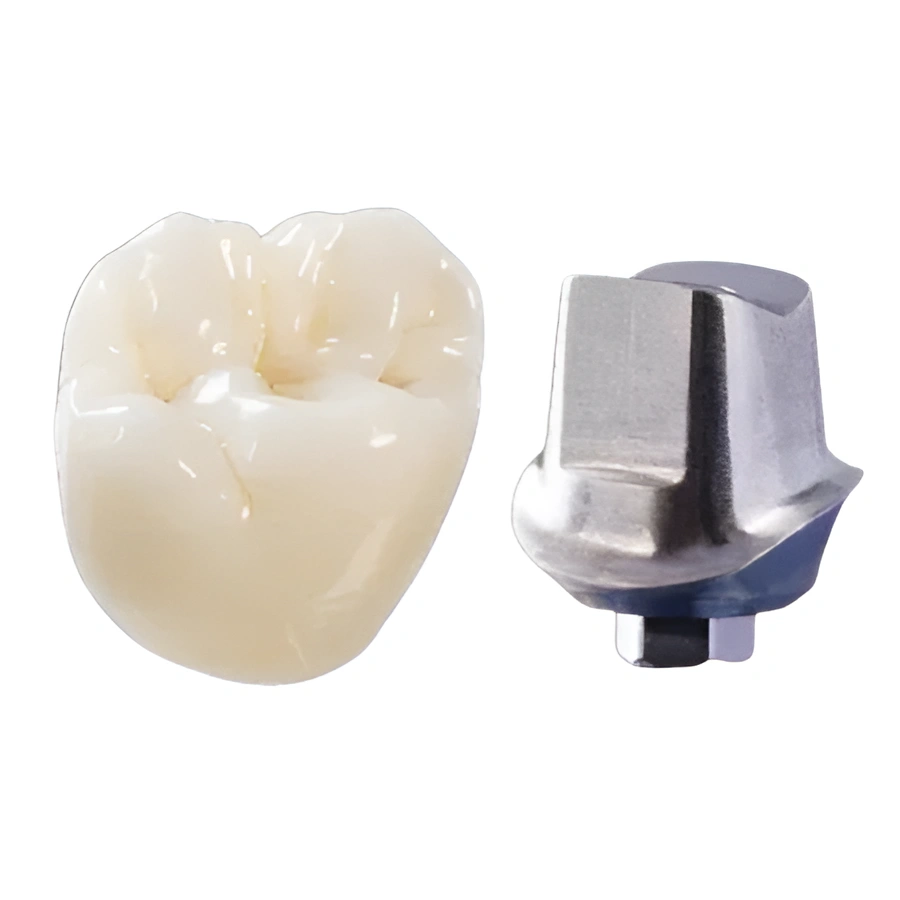
- Abutment: The connector piece between the implant and the crown.
- Restoration: The crown, bridge, or denture visible in your mouth.
Each component must work together precisely. Furthermore, the restoration must be fabricated with accuracy to ensure a proper bite and a natural look.
Common Dental Implant Options Available Today
There are several dental implant options depending on your specific needs. Your dentist will evaluate your bone density, oral health, and goals before recommending a solution. Below, we cover the most common choices.
Single-Tooth Implants
A single-tooth implant replaces one missing tooth. It consists of one implant post and one crown. This option is ideal for patients who are missing a single tooth due to injury, decay, or extraction.
Single-tooth implant crowns are commonly fabricated from zirconia or porcelain-fused materials. Moreover, digital labs like Dentek Digital mill these crowns using CAD/CAM technology for a precise, natural-looking result.
Implant-Supported Bridges
An implant-supported bridge replaces multiple missing teeth in a row. Instead of relying on natural teeth for support, it anchors to two or more implant posts. This is a strong and stable solution for patients missing several adjacent teeth.
Because of this design, implant-supported bridges distribute bite forces more evenly. They also preserve the surrounding bone structure better than traditional bridges.
Implant-Supported Dentures
Implant-supported dentures are a great option for patients who are missing most or all of their teeth. They attach to a series of implants for stability. As a result, they do not slip or shift like traditional dentures.
These are sometimes called overdentures or All-on-X restorations. They offer improved chewing ability and a more secure fit. Additionally, they can dramatically improve a patient’s quality of life.
Full-Arch Implant Restorations
Full-arch restorations replace an entire arch of teeth using a fixed implant bridge. This option uses a small number of implants to support a full set of teeth. It is often called All-on-4 or All-on-6, depending on the number of implants used.
However, the number of implants varies by case. Your dentist will determine the best approach based on your bone density and oral health. The restoration itself is fabricated in a dental lab using digital design tools for accuracy and durability.
How CAD/CAM Technology Improves Implant Restorations
CAD/CAM stands for Computer-Aided Design and Computer-Aided Manufacturing. It is the backbone of modern digital dentistry. At Dentek Digital, we were among the earliest adopters of the digital CAD/CAM workflow in the country.
This technology allows us to design restorations digitally with extreme precision. Then, we mill them from high-quality materials using computer-controlled machines. The result is a restoration that fits better and lasts longer than traditionally fabricated options.
Benefits of Digital Fabrication for Implants
- Higher accuracy: Digital design reduces the margin for human error.
- Better fit: Restorations are milled to precise measurements from digital scans.
- Consistent quality: Every restoration meets the same high standards.
- Faster turnaround: Digital workflows are more efficient than traditional methods.
- Material variety: CAD/CAM supports zirconia, e.max, PMMA, and more.
In addition, digital workflows make communication between the dentist and the lab more efficient. Dentists in Phoenix, Mesa, Scottsdale, Chandler, and Gilbert can send digital scans directly to our lab for fast, accurate processing.
Digital Implant Planning: A Game-Changer for Dentists
One of the most advanced services we offer at Dentek Digital is digital implant planning. This service helps dentists place implants with greater precision before the procedure even begins.
Using 3D imaging and digital design software, we create a virtual treatment plan. This shows exactly where the implant should be placed for the best outcome. Therefore, the entire process becomes more predictable and efficient.
Dental practices in the Greater Phoenix area — including those in Tempe, Mesa, Gilbert, and Scottsdale — benefit greatly from this service. It reduces surgical guesswork and supports better patient outcomes overall.
How Digital Implant Planning Works
First, the dentist takes a CBCT scan (a 3D X-ray) and a digital impression of the patient’s mouth. Next, our team at Dentek Digital reviews the data and designs a precise surgical guide. Then, the dentist uses that guide during surgery to place the implant in the ideal position.
This level of planning supports accuracy from start to finish. Moreover, it helps the final restoration fit perfectly because the implant is placed exactly where it should be.
What Materials Are Used for Implant Restorations?
The material used for your implant crown or bridge affects both aesthetics and durability. Dentek Digital works with several high-quality materials, depending on the clinical needs of each case.
Zirconia
Zirconia is one of the most popular materials for implant crowns today. It is extremely strong and has a natural, tooth-like appearance. Furthermore, it is biocompatible, meaning the body accepts it well.
Full-contour zirconia crowns are milled from a single block of material. As a result, they are durable, chip-resistant, and esthetically pleasing. They are an excellent choice for both front and back teeth.
Porcelain-Fused-to-Metal (PFM)
PFM crowns combine a metal substructure with a porcelain outer layer. They offer good strength and a natural look. However, the metal margin can sometimes show at the gumline over time.
This option is still used in certain clinical situations. Your dentist will advise whether PFM is the right choice for your specific case.
PMMA and Composite Provisionals
PMMA is a strong acrylic material often used for temporary implant restorations. Additionally, it can be used in full-arch cases as a long-term provisional solution while the final restoration is being fabricated.
At Dentek Digital, we mill PMMA provisionals with the same precision we apply to final restorations. Therefore, patients get a great-looking provisional that functions well throughout the healing process.
Choosing the Right Dental Lab for Your Implant Restoration
The dental lab you choose matters enormously. A skilled lab with advanced technology produces better-fitting, longer-lasting restorations. Moreover, a lab that communicates well with your dental team helps avoid delays and remakes.
Dentek Digital is recognized as a national leader in digital dentistry. We combine rapidly evolving technology with skilled craftsmanship. Additionally, we partner closely with dental practices to ensure every case meets the highest standards.
Dentists in Phoenix, Scottsdale, Chandler, Tempe, and across the Greater Phoenix area trust us for implant restorations, full-arch cases, and complex digital workflows. We make it easy to send cases, communicate on details, and receive consistent results.
What to Look for in a Dental Lab
- Digital workflow capabilities: CAD/CAM design and milling for precision.
- Implant experience: Familiarity with various implant systems and abutment types.
- Material quality: Use of premium, reliable materials.
- Communication: Clear, responsive collaboration with your dental team.
- Turnaround time: Efficient production without sacrificing quality.
Frequently Asked Questions About Dental Implant Options
What is the most common type of dental implant restoration?
The single-tooth implant crown is the most common restoration. It replaces one missing tooth with a post and a custom-milled crown. Additionally, implant-supported bridges and full-arch restorations are popular for patients with multiple missing teeth.
How does a digital dental lab improve implant outcomes?
A digital dental lab uses CAD/CAM technology to design and fabricate restorations with high precision. As a result, the crown or bridge fits more accurately onto the implant. This reduces the need for adjustments and supports a better long-term outcome.
What materials are best for implant crowns?
Zirconia is widely considered one of the best materials for implant crowns. It is strong, natural-looking, and biocompatible. However, the best material depends on the location of the tooth and the patient’s bite. Your dentist and lab will help determine the right choice.
What is digital implant planning?
Digital implant planning is a process where 3D imaging and design software are used to plan implant placement before surgery. Dentek Digital offers this service to help dentists place implants precisely. Therefore, the final restoration fits better and the overall outcome improves.
Can dental practices outside Phoenix use Dentek Digital?
Yes. While we are based in Phoenix, Arizona, we work with dental practices across the country. Dentists in Mesa, Tempe, Scottsdale, Chandler, Gilbert, and beyond regularly partner with our lab. We make the case submission process simple and efficient.
Partner with Dentek Digital for Exceptional Implant Restorations
Choosing the right dental implant options for your patients starts with partnering with the right lab. At Dentek Digital, we combine advanced CAD/CAM technology with expert craftsmanship to deliver restorations that dentists and patients can trust.
Whether you need a single implant crown, a full-arch restoration, or digital implant planning support, we are here to help. Furthermore, our team works closely with dental practices in Phoenix, Scottsdale, Mesa, Chandler, Tempe, and Gilbert to ensure every case is handled with precision and care.
Ready to elevate your implant cases? Contact Dentek Digital today to discuss your next case and discover how our digital dental lab can support better outcomes for your patients.