
Choosing the right dental implant options is one of the most important decisions a patient can make for their long-term oral health. However, not all implant solutions are created equal. The materials, design, and fabrication process behind each restoration play a huge role in how well it performs over time.
Therefore, understanding what goes into a high-quality implant restoration matters just as much as choosing the right dentist. At Dentek Digital, we work with dental professionals to fabricate precise, reliable implant restorations using advanced CAD/CAM technology. Our lab serves dentists and practices across the Greater Phoenix, Arizona area, including communities like Mesa, Scottsdale, Chandler, and Gilbert.
In this guide, we break down the most common dental implant options available today. Additionally, we explain how digital lab technology is changing the way these restorations are designed and delivered.
What Are Dental Implants and How Do They Work?
A dental implant is a titanium post that a dentist places into the jawbone. It acts as an artificial tooth root. Over time, the bone fuses around the post in a process called osseointegration.
Once the implant is stable, a dental restoration is attached on top. This restoration — called a crown, bridge, or overdenture — is what patients actually see and use to chew. Furthermore, the quality of that restoration determines how natural and functional the final result feels.
The Role of the Dental Lab in Implant Restorations
Most patients focus on the surgical side of implants. However, the dental lab plays an equally critical role. The lab fabricates the custom crown, abutment, or prosthetic that attaches to the implant.
At Dentek Digital, we use digital CAD/CAM workflows to design and mill each restoration with exceptional accuracy. As a result, the fit, function, and aesthetics of the final product are consistently high. We partner with dentists across Phoenix and the surrounding region to support better patient outcomes.
The Most Common Dental Implant Options Available Today
There are several types of implant restorations available. Each one suits a different clinical situation. Below, we cover the most widely used options and what makes each one unique.
Single-Tooth Implant Crowns
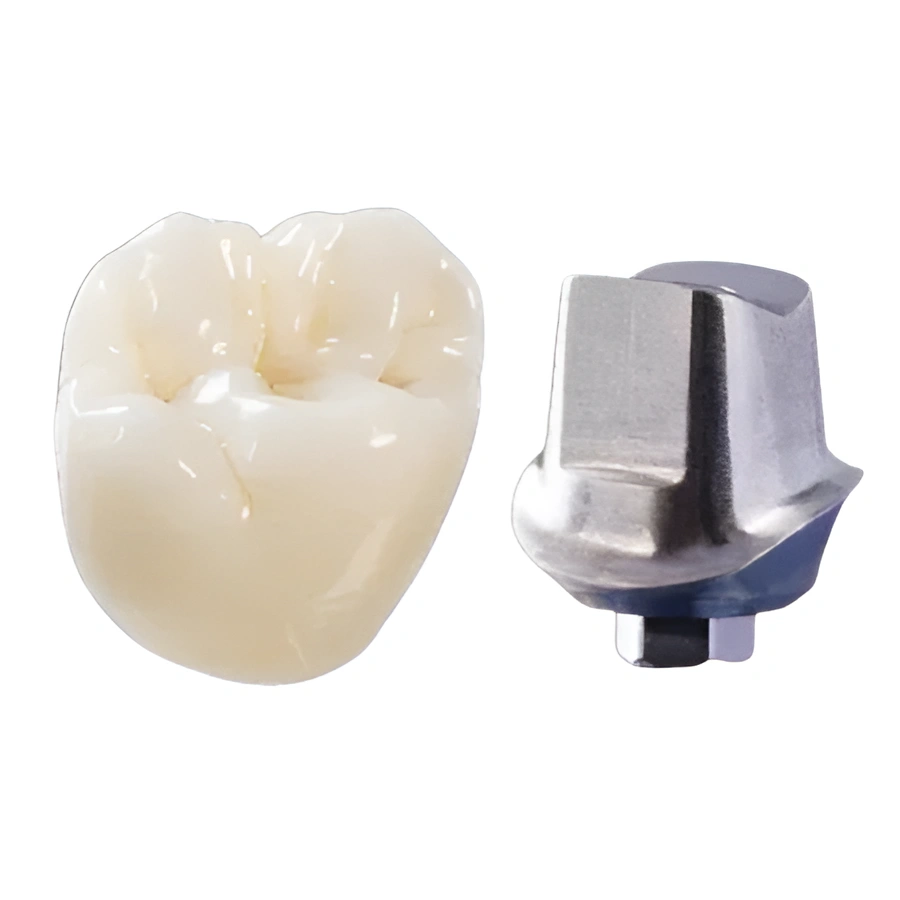
A single-tooth implant crown replaces one missing tooth. It consists of the implant post, a connector piece called an abutment, and a custom crown on top. This is the most common implant restoration type.
Moreover, single-tooth implants look and function very much like natural teeth. They do not affect surrounding teeth the way a traditional bridge would. Because of this, they are often the preferred option when only one tooth is missing.
At our Phoenix-area lab, we fabricate single-unit implant crowns using high-strength zirconia and other premium materials. Each crown is digitally designed to match the patient’s bite and surrounding teeth precisely.
Implant-Supported Bridges
When multiple adjacent teeth are missing, an implant-supported bridge is often the best solution. Two or more implants support a series of crowns across the gap. This eliminates the need for a removable partial denture.
Additionally, implant-supported bridges are more stable than traditional bridges because they anchor directly into the bone. Therefore, patients typically experience better chewing function and long-term comfort. Our CAD/CAM system allows us to design multi-unit bridges with exceptional precision.
Implant-Retained Overdentures
For patients missing most or all of their teeth, implant-retained overdentures offer a reliable solution. Two to four implants are placed in the jaw. Then, a specially designed denture snaps or locks onto the implants.
This option provides far more stability than a traditional removable denture. Furthermore, it helps preserve jawbone density over time, which is a major benefit. Dentek Digital fabricates implant overdentures with careful attention to fit, bite balance, and aesthetics.
Full-Arch Implant Restorations (All-on-X)
Full-arch implant restorations — often called All-on-4 or All-on-X — replace an entire arch of teeth using just four to six implants. A fixed prosthesis is then attached to these implants. The result is a stable, permanent set of teeth.
In addition, this approach is much more affordable than placing individual implants for every missing tooth. It also provides excellent function and aesthetics. Our digital workflow allows us to plan and fabricate these complex restorations with a high degree of accuracy.
How CAD/CAM Technology Improves Implant Restorations
Traditional dental lab methods relied heavily on manual techniques and physical impressions. Today, digital technology has transformed the process entirely. CAD/CAM — which stands for Computer-Aided Design and Computer-Aided Manufacturing — allows labs to design and mill restorations digitally.
As a result, restorations are more accurate, consistent, and efficient than ever before. Dentek Digital was one of the earliest adopters of the digital CAD/CAM workflow in the country. We bring that expertise to every implant case we handle for dentists across Phoenix, Scottsdale, Mesa, and beyond.
Digital Implant Planning
One of our most advanced services is digital implant planning. This process uses 3D imaging and digital design tools to map out the ideal implant position before surgery. Because of this, dentists can place implants with greater confidence and precision.
Moreover, digital planning improves communication between the surgeon, the restoring dentist, and our lab team. Everyone works from the same digital blueprint. Therefore, the final restoration fits more predictably and requires fewer adjustments.
Precision Milling and Premium Materials
Once the design is complete, our milling machines carve the restoration from a solid block of material. We use high-strength zirconia, lithium disilicate, and other premium materials depending on the clinical requirements.
Furthermore, digital milling produces extremely consistent results. Each restoration meets the same high standards of fit and finish. This consistency is something hand-crafted lab work simply cannot always guarantee.
What Dentists Should Look for in a Digital Dental Lab
Choosing the right lab partner is just as important as selecting the right implant system. There are several key qualities that separate top-tier digital labs from the rest. Here is what to look for:
- Digital workflow capability: The lab should use a fully integrated CAD/CAM system from scan to delivery.
- Material quality: Premium zirconia, titanium, and ceramic materials should be standard, not optional.
- Implant compatibility: The lab should work with major implant systems and support a wide range of abutment options.
- Turnaround time: Fast, reliable delivery supports your practice schedule and patient satisfaction.
- Communication: A responsive lab team that understands your cases and communicates proactively is invaluable.
- Experience with complex cases: Full-arch and multi-unit implant cases require specialized knowledge and equipment.
Dentek Digital meets all of these standards. We serve dental professionals throughout the Greater Phoenix area, including practices in Chandler, Gilbert, Tempe, and Scottsdale. Our team is known for quality, precision, and responsive service.
TattooTH: A Unique Option for Implant Restorations
At Dentek Digital, we also offer TattooTH — an innovative service that allows custom graphics or designs to be added to dental restorations. For implant crowns in visible areas, this option gives patients a way to personalize their smile in a subtle or expressive way.
Additionally, TattooTH uses a precise digital process that integrates seamlessly with our CAD/CAM workflow. It is a creative solution that sets forward-thinking dental practices apart. Ask us how this service can add value to your implant offerings.
Frequently Asked Questions About Dental Implant Options
What is the most durable material for implant crowns?
High-strength zirconia is widely considered one of the most durable materials for implant crowns. It resists chipping and wear well. Moreover, it can be shaded to match natural teeth closely. Lithium disilicate is another strong option with excellent aesthetics.
How long does it take to receive an implant restoration from a dental lab?
Turnaround time varies based on the complexity of the case. However, most single-unit restorations can be completed within a few business days in a digital lab. Full-arch cases and custom implant planning may take longer. Our team works efficiently to support your practice timeline.
Can a dental lab help with implant planning before surgery?
Yes. Digital implant planning is a service offered by advanced dental labs like Dentek Digital. We use 3D data to help plan ideal implant positions and design the final restoration before surgery begins. This improves outcomes and reduces chairside adjustments.
What implant systems does Dentek Digital support?
We work with a wide range of major implant systems and can fabricate custom abutments and restorations for most platforms. Contact our team to confirm compatibility with your preferred system. We are always happy to discuss your specific case needs.
How does a digital lab differ from a traditional dental lab?
A digital lab uses CAD/CAM technology to design and mill restorations from digital scans. Traditional labs rely more on physical impressions and manual fabrication. As a result, digital labs typically offer greater accuracy, faster turnaround, and more consistent quality across every case.
Partner with Dentek Digital for Exceptional Implant Restorations
The right dental implant options can transform a patient’s quality of life. However, the restoration behind that implant has to be fabricated with precision and care. That is exactly what Dentek Digital delivers, case after case.
We are proud to serve dental professionals across Phoenix, Mesa, Scottsdale, Chandler, Gilbert, and the entire Greater Phoenix region. Our digital CAD/CAM technology, premium materials, and experienced lab team make us a trusted partner for implant cases of all types.
Whether you are restoring a single tooth or planning a full-arch case, we are ready to help. Contact Dentek Digital today to send us a case or discuss your next implant restoration with our team.