
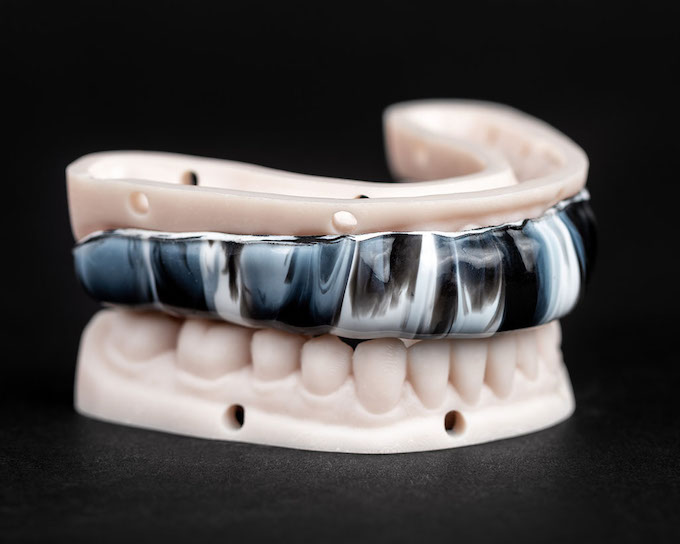
Implant dentistry continues to evolve at a rapid pace. One of the most clinically meaningful advances in recent years is the rise of angled screw channel implant crowns. These restorations solve a long-standing challenge in implant prosthetics — how to restore implants placed in non-ideal angulations without compromising aesthetics or function.
For dentists in Old Westbury, NY, partnering with a nationally recognized digital dental lab makes all the difference. Dentek Digital, based in Phoenix, Arizona, specializes in CAD/CAM fabricated implant restorations that meet the highest standards of precision and quality. We serve dental practices across the country, including those seeking advanced implant crown solutions.
In this post, we break down everything you need to know about angled screw channel implant crowns — how they work, why they matter, and how Dentek Digital can support your implant cases from start to finish.
What Are Angled Screw Channel Implant Crowns?
Traditional screw-retained implant crowns require the implant to be placed with near-perfect axial alignment. However, anatomy does not always cooperate. Bone availability, sinus proximity, and nerve location often force implant placement at an angle.
Angled screw channel technology addresses this directly. It allows the screw access channel to be redirected — typically up to 25 degrees or more — so the crown can still be screw-retained even when the implant is not perfectly aligned. As a result, dentists gain far more flexibility in implant placement without sacrificing the advantages of screw retention.
How the Angulation Is Achieved
The redirection happens at the abutment level. A specially designed component shifts the screw channel angulation relative to the implant’s long axis. This means the access hole exits through the occlusal or lingual surface instead of through the facial aspect of the crown. Therefore, aesthetics are preserved without compromising retrievability.
Dentek Digital fabricates these restorations using advanced CAD/CAM workflows. Our design team uses digital planning tools to map the angulation precisely before a single unit is milled. This level of precision is a core part of what we do at our Phoenix, Arizona lab.
Why Screw Retention Still Matters
Cement-retained implant crowns have long been a workaround for angulation challenges. However, excess cement subgingivally remains a well-documented clinical concern. Screw-retained designs eliminate that risk entirely.
Furthermore, screw retention makes restorations fully retrievable. If a complication arises — a cracked crown, a component issue, or a need for modification — the clinician can simply unscrew and retrieve the restoration. This is a major advantage for long-term implant maintenance.
Benefits of Screw Retention at a Glance
- No cement risk: Eliminates subgingival cement-related peri-implant complications.
- Full retrievability: Restorations can be removed and replaced without damage.
- Better long-term outcomes: Simpler to manage over the life of the implant.
- Stronger occlusal integrity: Screw access holes are sealed without adhesive uncertainty.
Additionally, patients benefit from the reduced risk of soft tissue complications. For practices focused on delivering excellent long-term care, screw retention is often the preferred approach when anatomy allows.
The CAD/CAM Advantage in Fabricating Angled Screw Channel Crowns
Angled screw channel restorations are not simple to fabricate. They require a highly precise digital workflow from scan to delivery. This is where CAD/CAM technology truly shines — and where Dentek Digital’s expertise adds real value for dental practices nationwide.
Our team uses industry-leading design software to plan the angulation virtually before fabrication begins. We verify the screw channel path, margin fit, occlusal contacts, and emergence profile digitally. Because of this, the chance of remakes or fit issues is significantly reduced.
The Digital Workflow Step by Step
First, your practice sends us a digital scan or physical impression along with implant records and shade information. Next, our technicians design the restoration in CAD software, carefully mapping the angled screw channel. Then, the restoration is milled from high-strength materials and hand-finished by skilled lab technicians in our Phoenix facility.
Finally, the finished restoration is carefully inspected, packaged, and shipped to your practice. The entire process is streamlined, accurate, and designed to minimize chair time for you and your patient.
Materials We Use
Dentek Digital fabricates angled screw channel implant crowns in a range of high-performance materials, including:
- Zirconia: Exceptional strength and excellent aesthetics for posterior and anterior cases.
- PFM (Porcelain-Fused-to-Metal): A reliable choice for many implant crown scenarios.
- Full-contour zirconia: Ideal for high-load posterior sites requiring maximum durability.
- Layered zirconia: Offers superior aesthetics for visible anterior implant cases.
Moreover, material selection is guided by the specific clinical situation. Our team is happy to discuss material recommendations case by case.
Serving Dentists in Old Westbury and Beyond
Dentek Digital is proud to work with dentists across the country, including dental practices in Old Westbury, NY. Distance is not a barrier in today’s digital dentistry landscape. With intraoral scanners and digital submission portals, you can send us a case from anywhere and receive a precision-milled restoration fabricated in our Phoenix, Arizona lab.
Our digital-first approach means faster turnaround times, fewer remakes, and restorations that consistently meet high standards of fit and aesthetics. In addition, our team is always available to consult on complex implant cases before you submit.
Why Practices Nationwide Choose Dentek Digital
Dentek Digital was among the earliest adopters of digital CAD/CAM workflows in the country. We have built our reputation on technical excellence and reliable service. Our lab serves dental practices across the Greater Phoenix area — including communities such as Mesa, Tempe, Chandler, Scottsdale, and Gilbert — as well as practices across the United States.
Furthermore, our team combines advanced technology with skilled hand craftsmanship. Technology alone does not produce great restorations — experienced technicians do. We believe in both.
Clinical Tips for Submitting Angled Screw Channel Implant Cases
Submitting an angled screw channel case successfully starts with good records. Here are some practical guidelines to help your cases go smoothly.
- Use a high-quality intraoral scan: Accuracy at the scan stage directly impacts fit at delivery.
- Include a scan body in the scan: This gives our team the data needed to position the implant correctly in the design software.
- Note the implant system and connection type: Different implant brands use different components. This information is essential.
- Communicate the desired angulation: If you have a specific screw access hole target, let us know. We will incorporate it into the design.
- Provide shade and contour preferences: Clear aesthetic goals help our technicians deliver the result you envision.
Additionally, including photos of the adjacent dentition and soft tissue is always helpful. The more clinical context we have, the better your restoration will be. Contact Dentek Digital to discuss your next implant case or to get started with a digital submission today.
Frequently Asked Questions About Angled Screw Channel Implant Crowns
What angulation range can be corrected with angled screw channel technology?
Most angled screw channel systems can redirect the access channel by up to 25 to 30 degrees. Therefore, a wide range of implant angulations can still result in screw-retained restorations. Your specific implant system may vary, so always confirm with the manufacturer’s specifications.
Are angled screw channel crowns more difficult to fabricate than standard implant crowns?
Yes, they require additional planning and precision. However, with a proper digital workflow and experienced technicians, the process is well-managed. Dentek Digital’s CAD/CAM approach is specifically designed to handle these complexities efficiently and accurately.
Can angled screw channel crowns be used for both anterior and posterior cases?
Absolutely. They are effective in both zones. For anterior cases, the redirected screw channel typically exits through the lingual surface, preserving the natural look of the crown. For posterior cases, they provide excellent function and retrievability.
What implant systems does Dentek Digital work with?
We work with a wide range of major implant systems and connection types. When you submit your case, simply include your implant details and we will confirm compatibility. Our team is experienced with most widely used implant platforms in the market today.
How long does turnaround typically take for an angled screw channel implant crown?
Turnaround times vary depending on the complexity of the case and the materials selected. However, our digital workflow is designed for efficiency. Contact our team directly to get current turnaround estimates for your specific case type.
Work With a Trusted Digital Dental Lab
Angled screw channel implant crowns represent a significant advancement in implant prosthetics. They expand what is clinically possible and help dentists deliver better outcomes for their patients. However, their quality depends entirely on the precision of fabrication.
Dentek Digital brings together cutting-edge CAD/CAM technology and expert craftsmanship to produce implant restorations that perform and look exceptional. Whether you are in Old Westbury, NY, or anywhere else in the country, we are ready to support your implant cases with the highest level of digital lab expertise.
Our team is committed to being a true partner for your practice — not just a vendor. We consult, collaborate, and deliver. Ready to get started? Explore your options and send us a case today. Let Dentek Digital show you what a world-class digital dental lab can do for your patients.