
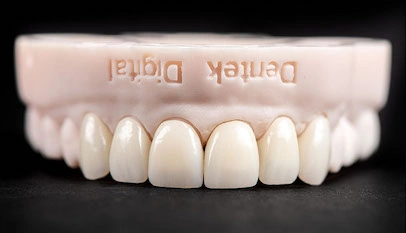
Implant placement rarely lands in a perfect position. When an implant is placed at an angle, retrieving a screw-retained crown becomes a real challenge. That is exactly where angled screw channel implant crowns make a difference. They give dental practices a reliable, retrievable solution without compromising esthetics or function.
At Dentek Digital, we fabricate precision implant restorations for dentists across Greater Phoenix, Arizona. Additionally, we proudly partner with dental professionals in other markets — including practices in Colleyville, TX — who demand the highest quality digital lab work. Our advanced CAD/CAM workflow allows us to handle complex implant cases with consistency and accuracy.
If angled implants are part of your everyday caseload, this guide will help you understand the technology, the benefits, and why a digital lab partner matters so much.
What Are Angled Screw Channel Implant Crowns?
A standard screw-retained implant crown works well when the implant is placed in an ideal trajectory. However, many implants end up slightly off-axis. In those cases, the access hole may land in an esthetically problematic spot — like the middle of a facial surface.
Angled screw channel technology solves this problem. It uses a specially designed abutment and crown system that redirects the screw access channel. Therefore, the access hole can be repositioned up to a certain degree off-axis. This keeps the opening on the lingual or occlusal surface where it belongs.
How the Angled Channel Works
The system works through a rotating, angled interface inside the abutment. As a result, the lab can redirect the screw path while maintaining a secure, retrievable connection to the implant. The crown is then milled to match the corrected access angle precisely.
Furthermore, this approach eliminates the need for cemented restorations in many difficult cases. Screw retention is generally preferred because it remains retrievable. Cemented crowns, on the other hand, carry the risk of excess cement causing peri-implant issues.
Common Implant Angulation Challenges
Several clinical situations create angulation challenges. For example, bone availability may force a slightly buccal or labial implant trajectory. Additionally, pre-existing anatomy can limit the surgeon’s ideal placement path. In the anterior zone, these issues become especially visible.
Angled screw channel systems address these situations directly. They allow dental practices to maintain the benefits of screw retention without sacrificing the final esthetic result. Moreover, they simplify seating and retrieval compared to angled cement-retained options.
Benefits of Angled Screw Channel Crowns for Your Practice
Dentists who add angled screw channel implant crowns to their restorative toolkit gain meaningful clinical advantages. First, they expand the range of implant cases they can handle in-house. Next, they reduce reliance on cemented restorations. Finally, they improve long-term retrievability for their patients.
Retrievability and Long-Term Maintenance
Retrievability is one of the most important factors in implant crown design. Because implant components can occasionally require adjustment or replacement, easy access matters. Angled screw channel crowns keep that access point in a clean, accessible location.
Additionally, practices in areas like Scottsdale, Chandler, and Gilbert have found that patients appreciate the long-term serviceability of screw-retained restorations. Moreover, the retrievable design supports better peri-implant tissue health over time.
Esthetic Outcomes in the Anterior Zone
In the anterior region, esthetics are paramount. A facial access hole on a front crown is not an acceptable outcome. Therefore, angled screw channel technology is especially valuable for maxillary anterior implants.
By redirecting the access channel lingually, the lab preserves the full esthetic surface of the crown. As a result, patients receive a restoration that looks completely natural. The correction is invisible from the front, which is exactly what patients expect.
Consistency Through CAD/CAM Technology
Fabricating angled screw channel crowns demands precision. The angulation must be captured and reproduced accurately. This is where digital CAD/CAM workflow creates a clear advantage over traditional methods.
At Dentek Digital, our team uses advanced milling technology to produce angled screw channel restorations with exact specifications every time. Furthermore, digital workflows reduce the risk of human error in an already complex process. Dental practices in Mesa, Tempe, and across Greater Phoenix trust us to deliver consistent, accurate results on every case.
Materials for Angled Screw Channel Implant Crowns
Material selection plays a significant role in the success of any implant restoration. For angled screw channel crowns, the right material must balance strength, esthetics, and compatibility with the access channel design.
Zirconia
Zirconia is one of the most commonly used materials for implant crowns today. It offers excellent strength and good esthetic properties. Additionally, modern multi-layered zirconia provides natural-looking translucency that works well in visible zones.
Moreover, zirconia is highly biocompatible. This makes it a strong choice for patients who may have sensitivities to other materials. For posterior cases with heavy occlusal loads, monolithic zirconia is often the preferred option.
PFM and Layered Options
Some cases call for porcelain-fused-to-metal or layered porcelain-over-zirconia restorations. These options allow for more nuanced shade customization. However, they require careful design to maintain the structural integrity of the access channel area.
Our digital team evaluates each case individually. Therefore, we recommend the most appropriate material based on the clinical situation, the patient’s esthetic goals, and the implant position.
The Digital Lab Workflow for Angled Screw Channel Cases
A precise digital workflow is essential for angled screw channel implant crowns. The process begins with accurate data capture at the clinical level. From there, the lab takes over with design and fabrication.
What We Need From Your Practice
To fabricate an angled screw channel crown, we need a few key items. First, a digital implant scan or a high-quality PVS impression is required. Next, the scan body or analog must be compatible with the implant system being used. Additionally, shade information and any bite records should be included.
Our team works with most major implant platforms. Because of this, coordinating your case with our lab is straightforward. We will confirm compatibility and walk you through any case-specific requirements before we begin fabrication.
Design and Milling at Dentek Digital
Once we receive your case, our technicians design the restoration using advanced CAD software. The angled channel is precisely mapped during the design phase. As a result, the milling machine can reproduce the exact angulation with high accuracy.
Furthermore, every restoration goes through a thorough quality check before it ships. We verify fit, margin integrity, occlusal design, and access channel alignment. Dental practices in Phoenix and beyond rely on this process to receive restorations that seat correctly the first time.
Why Partner with a Digital Lab Like Dentek Digital?
Not every dental lab has the technology or expertise to handle angled screw channel implant crowns well. This is a precision-driven restoration that requires both advanced equipment and experienced technicians. Choosing the right lab partner directly affects your clinical outcomes.
Dentek Digital was one of the earliest adopters of digital CAD/CAM workflow in the country. Additionally, we are recognized as a national leader in digital dentistry. Our team combines cutting-edge technology with genuine craftsmanship to deliver restorations you can count on.
Moreover, we make communication easy. Whether you are a practice in Chandler, Scottsdale, or Colleyville, TX, our team is available to discuss your cases and help you navigate complex restorative situations. We treat every case as a partnership.
Frequently Asked Questions About Angled Screw Channel Implant Crowns
What degree of angulation can be corrected with an angled screw channel system?
Most angled screw channel systems can redirect the access path by a meaningful number of degrees off-axis. However, the exact range depends on the specific system used. Therefore, we always review implant platform compatibility before beginning a case.
Is an angled screw channel crown more difficult to seat than a standard implant crown?
In most cases, no. Because the access channel is pre-designed and milled to the correct angle, seating is straightforward. The screw path is clear and accessible, making delivery similar to a standard screw-retained case.
Can angled screw channel crowns be used with any implant system?
Not all implant systems support angled screw channel components. Additionally, component availability varies by manufacturer. Our team will confirm compatibility with your specific implant platform when you submit your case.
How does an angled screw channel crown differ from a cement-retained crown?
The key difference is retrievability. A screw-retained angled crown can be removed and replaced without damaging the restoration. Cement-retained crowns, on the other hand, are often difficult or impossible to remove cleanly. Moreover, excess cement from cemented crowns can irritate peri-implant tissues.
Does Dentek Digital work with practices outside of Arizona?
Yes. While we are based in Phoenix, Arizona, and serve practices throughout Greater Phoenix — including Mesa, Tempe, Gilbert, and Scottsdale — we also partner with dental professionals nationwide. Practices in Colleyville, TX and other markets can contact Dentek Digital to get started with our digital lab services.
Ready to Send Your Next Implant Case?
Angled screw channel implant crowns are one of the most effective solutions for off-axis implant placement. They protect esthetics, support retrievability, and simplify long-term maintenance. Furthermore, when fabricated through a precise digital workflow, they deliver consistently excellent results.
At Dentek Digital, we bring together advanced technology and skilled craftsmanship to support dental professionals who demand the best. Whether you are in Phoenix, Scottsdale, or Colleyville, TX, we are ready to be your trusted lab partner for complex implant cases.
Explore your options and take the next step toward better implant outcomes. Reach out to our team today to discuss your case and learn how our digital workflow can support your practice.