
Patients who are missing one or more teeth often ask their dentist about permanent dental implants. These restorations offer a long-lasting, natural-looking solution that can transform a patient’s confidence and oral health. For dentists and dental practices, delivering that result depends heavily on the quality of the lab behind the restoration.
At Dentek Digital, we fabricate implant restorations using advanced CAD/CAM technology. Our digital workflow produces precise, reliable components that fit well and perform beautifully. We partner with dental professionals across the Greater Phoenix, Arizona area — including practices in Mesa, Scottsdale, Chandler, and Gilbert — to help their patients achieve outstanding outcomes.
In this post, we break down how permanent dental implants work, what goes into fabricating them at a digital lab, and how the CAD/CAM process benefits both dentists and their patients.
What Are Permanent Dental Implants?
Permanent dental implants are titanium posts surgically placed into the jawbone. They act as artificial tooth roots. Over time, the bone fuses with the implant in a process called osseointegration.
Once the implant integrates, a dental crown, bridge, or other restoration is placed on top. This final restoration is what patients see and use every day. Therefore, the quality and precision of that restoration matters enormously.
Unlike removable dentures, implant-supported restorations are fixed in place. As a result, patients enjoy improved chewing function, clearer speech, and a more natural feel. Moreover, implants help preserve the jawbone by stimulating it the way natural tooth roots do.
How Implant Restorations Differ from Other Crowns
Implant crowns connect to the implant fixture through a component called an abutment. This connection must be highly precise. Even small inaccuracies can lead to fit issues, bite problems, or long-term complications.
Additionally, the material selection for implant crowns requires careful consideration. Zirconia is a popular choice because of its strength and natural appearance. However, the specific case and patient needs will guide the best material option.
Because of this, digital fabrication methods — such as CAD/CAM milling — offer a significant advantage. They produce components with tight tolerances and consistent accuracy that manual methods often cannot match.
The CAD/CAM Advantage in Implant Restoration Fabrication
CAD/CAM stands for Computer-Aided Design and Computer-Aided Manufacturing. This technology allows dental labs to design restorations digitally and then mill or print them with high precision. Dentek Digital was one of the earliest adopters of this workflow in the country.
Our team uses advanced scanning, design software, and milling equipment to create implant restorations that fit accurately. Furthermore, the digital process streamlines communication between the lab and the dental practice. Digital case submissions reduce errors and speed up turnaround times.
For dentists in the Greater Phoenix area — from practices in Tempe to those serving patients in Chandler or Gilbert — this means fewer remakes, better-fitting restorations, and more satisfied patients.
Digital Scanning and Case Design
The digital workflow begins with an accurate scan of the patient’s mouth or implant position. Many dental practices now use intraoral scanners to capture this data. Next, the scan file is sent to our lab electronically.
Our technicians then use specialized software to design the crown or bridge in three dimensions. This allows us to visualize the restoration before we ever mill it. As a result, we can catch potential issues early and refine the design for the best possible outcome.
Additionally, digital design allows us to account for the opposing teeth, adjacent teeth, and gingival contours. All of these factors influence how well the final restoration functions and looks.
Material Selection for Implant Crowns
Choosing the right material is a critical step. For permanent dental implants, common restoration materials include full-contour zirconia, layered zirconia, and PFM (porcelain-fused-to-metal). Each has different strengths and aesthetic qualities.
Full-contour zirconia is highly durable and works well for posterior cases. Layered zirconia offers more aesthetic detail for visible anterior teeth. Meanwhile, PFM remains a trusted option in certain clinical situations.
Our team at Dentek Digital helps dental practices choose the right material for each case. We consider the implant location, occlusal forces, and patient preferences. Therefore, every restoration we deliver is tailored to the specific clinical scenario.
What Dentists Should Know About Implant Restoration Workflows
Delivering a successful implant restoration requires close collaboration between the dentist and the dental lab. The quality of the impression or scan, the accuracy of the bite registration, and the clarity of the case notes all affect the final result.
Furthermore, communication about shade, material, and timing ensures that the restoration meets clinical and aesthetic expectations. At Dentek Digital, we make this collaboration seamless. Our team is available to discuss cases, answer questions, and provide guidance throughout the process.
Dental practices in Scottsdale, Mesa, and across the Greater Phoenix area rely on our expertise to support their implant cases. We understand that your reputation depends on the quality of your restorations. Because of this, we hold ourselves to the highest standards of craftsmanship and precision.
Common Implant Restoration Components We Fabricate
- Implant Crowns: Single-tooth restorations placed on a custom or stock abutment.
- Implant Bridges: Multi-unit restorations supported by two or more implants.
- Custom Abutments: Precision-designed connectors that optimize emergence profile and aesthetics.
- Implant-Supported Dentures: Full-arch restorations for patients who have lost all or most of their teeth.
- Screw-Retained Restorations: Fixed restorations that attach directly to the implant without cement.
Each of these components requires precise fabrication. Additionally, each requires a thorough understanding of implant systems and prosthetic principles. Our technicians bring both technical skill and clinical knowledge to every case.
Digital Implant Planning at Dentek Digital
We also offer advanced digital implant planning services. This involves using 3D imaging data to plan implant placement before surgery. As a result, the surgical team can place implants in the ideal position for the planned restoration.
This approach is known as prosthetically driven implant planning. It starts with the end result in mind. Therefore, the final restoration fits better, functions better, and looks more natural. Practices across Phoenix and the surrounding communities are adopting this approach to improve patient outcomes.
Tips for Dental Practices Submitting Implant Cases
Sending a well-prepared implant case to the lab makes a meaningful difference. Here are some practical tips to help dental practices get the best results from their digital lab partner.
- Use a high-quality intraoral scanner to capture accurate digital impressions. Clean, detailed scans lead to better-fitting restorations.
- Include a clear bite registration so the lab can design the restoration to meet the opposing arch accurately.
- Specify the implant system and component details precisely. Different implant brands require different restorative components.
- Provide shade information with a photo reference when aesthetics are a priority.
- Communicate turnaround expectations early so the lab can plan accordingly.
- Include detailed case notes about any special clinical considerations, such as limited occlusal space or parafunctional habits.
Moreover, open communication between the practice and the lab throughout the process prevents surprises. At Dentek Digital, we encourage dental teams to reach out at any stage of the case. We are here to support you.
Why Partner with a Digital Dental Lab for Implant Restorations?
Not all dental labs are equal when it comes to implant restorations. Digital labs offer distinct advantages in accuracy, efficiency, and consistency. Furthermore, a lab with deep expertise in implant prosthetics brings added value to every case.
Dentek Digital has built a reputation as a national leader in digital dentistry. Our team combines cutting-edge technology with skilled craftsmanship. We serve dental practices throughout Phoenix, Tempe, Gilbert, Chandler, Scottsdale, Mesa, and beyond.
In addition, our broad range of services means you can rely on us for more than just implant crowns. We fabricate fixed restorations, removable prosthetics, splints, nightguards, and more. This makes us a comprehensive lab partner for practices of all sizes and specialties.
The TattooTH Difference
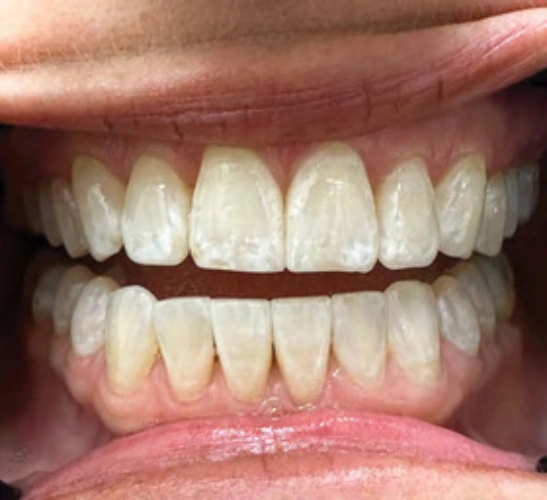
One of our most innovative offerings is TattooTH, an advanced surface characterization process that adds lifelike detail to restorations. This technology enhances the natural appearance of crowns and bridges. As a result, patients receive restorations that closely mimic the look and texture of natural teeth.
For implant cases where aesthetics are paramount — especially in the anterior region — TattooTH provides a level of realism that sets our restorations apart. Additionally, this service reflects our commitment to continuous innovation in every area of our craft.
Frequently Asked Questions About Permanent Dental Implants
How long do permanent dental implants last?
With proper care and maintenance, implant fixtures can last for many years. The longevity of the restoration on top — the crown or bridge — depends on the material used and the patient’s oral hygiene habits. High-quality CAD/CAM fabrication contributes to the durability and longevity of the restoration component.
What materials are best for implant crowns?
Zirconia is widely regarded as one of the best materials for implant crowns because of its strength and natural appearance. However, the best material depends on the clinical situation. Our lab team can guide dental practices in selecting the most appropriate option for each case.
How does digital fabrication improve implant restorations?
Digital fabrication — through CAD/CAM milling and 3D printing — produces restorations with higher accuracy and consistency than traditional methods. This leads to better fit, fewer adjustments at the chair, and improved patient satisfaction. Additionally, the digital workflow speeds up the overall process.
Can Dentek Digital work with any implant system?
We work with a wide range of implant systems and prosthetic components. When submitting a case, it is important to specify the implant brand, platform, and connection type. Our team will confirm compatibility and guide you through the process if needed.
How do I submit an implant case to Dentek Digital?
Submitting a case is simple. You can send digital scans, case notes, and shade information through our secure submission portal. Our team reviews each case carefully and follows up with any questions. We are committed to making the process smooth and efficient for every dental practice we serve.
Partner with Dentek Digital for Your Implant Restorations
Delivering exceptional permanent dental implants to your patients starts with choosing the right lab partner. At Dentek Digital, we combine advanced CAD/CAM technology with experienced craftsmanship to produce restorations you can trust.
We proudly serve dental practices throughout the Greater Phoenix area, including Mesa, Scottsdale, Tempe, Chandler, and Gilbert. Furthermore, our expertise in digital implant planning and innovative services like TattooTH sets us apart from conventional labs.
Ready to elevate your implant restorations? Contact Dentek Digital today to send us a case or request a consultation. Our team is ready to support your practice and your patients with the highest quality dental lab services available.