
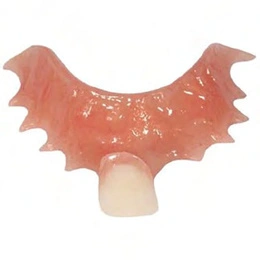
Full mouth dental implants represent one of the most transformative solutions in modern dentistry today. Patients who have lost most or all of their teeth can regain full function and a natural-looking smile. However, delivering excellent outcomes requires more than skilled chairside work — it demands a precision-focused dental lab partner behind the scenes.
At Dentek Digital, we support dental professionals across the Greater Phoenix area with advanced CAD/CAM restorations built for implant cases. Therefore, understanding how full mouth implant restorations are designed and fabricated is essential for any practice looking to elevate patient outcomes.
In this post, we cover the key clinical and lab considerations for full mouth dental implants. Additionally, we share how a digital workflow improves accuracy, efficiency, and long-term results for dentists and their patients.
What Are Full Mouth Dental Implants?
Full mouth dental implants replace an entire arch — or both arches — of missing teeth. Unlike removable dentures, implant-supported restorations are fixed in place. As a result, they function much like natural teeth and offer superior stability and comfort.
There are several approaches a dentist may choose. The right option depends on bone volume, patient health, and aesthetic goals.
Common Full Mouth Implant Approaches
- Implant-supported fixed bridges: Multiple implants anchor a full-arch fixed prosthesis.
- All-on-4 or All-on-X: Four or more strategically placed implants support a complete arch restoration.
- Implant-retained overdentures: Removable prosthetics that snap onto implant attachments for added stability.
- Full-arch zirconia bridges: Milled from high-strength zirconia for durable, esthetic full-arch restorations.
Each approach requires precise lab fabrication to succeed. Furthermore, the materials and workflows chosen at the lab level directly impact fit, function, and longevity.
Why Digital Dentistry Changes Everything for Implant Cases
Traditional impressions introduce human error into complex implant cases. Digital scanning eliminates that risk. Because of this, more practices across Phoenix, Scottsdale, and Chandler are shifting to fully digital implant workflows.
At Dentek Digital, we were among the earliest adopters of digital CAD/CAM workflows in the country. We combine advanced technology with skilled craftsmanship to deliver restorations that fit right the first time.
Benefits of a Digital Workflow for Full Arch Cases
- Higher accuracy: Digital scans capture implant positions with precision that traditional impressions cannot match.
- Faster turnaround: CAD/CAM milling reduces production time without sacrificing quality.
- Better communication: Digital files allow seamless collaboration between the dentist and lab team.
- Predictable outcomes: Virtual planning and design verification reduce costly remakes.
Moreover, digital workflows support better documentation and case archiving. This is especially valuable for full mouth implant cases that may require future maintenance or adjustments.
The Role of the Dental Lab in Full Mouth Implant Success
The dental lab is a critical partner in every full mouth implant case. First, the lab team must interpret the clinician’s prescription accurately. Then, they design the prosthesis using CAD software before milling or printing the final restoration.
At Dentek Digital, our technicians work closely with dentists in Mesa, Tempe, Gilbert, and across the Phoenix metro area. We treat every case as a collaboration, not just a transaction.
What a Quality Dental Lab Brings to Implant Cases
A skilled lab team contributes expertise that goes far beyond fabrication. For example, our technicians evaluate occlusion, phonetics, and esthetics during the design phase. This proactive approach helps catch potential issues before the restoration reaches the patient’s mouth.
Additionally, material selection is a major lab-side responsibility. For full arch cases, the lab must balance strength, translucency, and tissue compatibility — all while meeting the dentist’s clinical specifications.
Materials Used in Full Mouth Implant Restorations
- Monolithic zirconia: Highly durable and ideal for posterior full-arch bridges.
- Layered zirconia: Offers enhanced esthetics for anterior visibility.
- PMMA (acrylic): Often used for transitional or provisional full-arch prosthetics.
- Titanium frameworks: Provide a strong substructure for implant-supported prostheses.
On the other hand, no single material is right for every patient. Therefore, open communication between the dentist and the lab is essential to match materials to clinical needs.
Digital Implant Planning: A Game-Changer for Dentists
One of the most powerful tools in modern implant dentistry is digital implant planning. This technology allows clinicians to virtually place implants before surgery. As a result, surgical guides can be fabricated with exceptional accuracy.
Dentek Digital offers advanced digital implant planning services to support dentists throughout the Phoenix area. Furthermore, this service integrates seamlessly into the full CAD/CAM workflow — from planning to final restoration fabrication.
How Digital Implant Planning Works
First, the patient’s CBCT scan and digital impressions are merged into a single 3D model. Next, the implant positions are virtually planned based on available bone and prosthetic goals. Then, a surgical guide is designed and fabricated for precise, guided implant placement.
Because of this integrated approach, full mouth implant cases become more predictable for both the dentist and patient. Additionally, this workflow reduces surgical time and supports minimally invasive techniques.
Supporting Dentists Across Greater Phoenix
Dentek Digital proudly serves dental professionals throughout the Greater Phoenix metropolitan area. From practices in Scottsdale and Gilbert to clinics in Chandler and Mesa, we are a trusted digital lab partner for implant cases of all complexity levels.
We understand the pressures modern dental practices face. Therefore, we focus on fast turnaround, clear communication, and restorations that fit accurately the first time. Our goal is to make every implant case smoother for the dentist and better for the patient.
Our Full Mouth Implant Services Include
- Full-arch zirconia and layered bridges
- Implant-supported overdentures and hybrids
- Screw-retained and cement-retained restorations
- Transitional PMMA provisionals
- Digital implant planning and surgical guides
- Custom abutments milled in-house
In addition, our team stays current with evolving implant systems and compatible components. We work with a wide range of implant platforms to support your preferred clinical workflow.
Tips for Dentists Managing Full Mouth Implant Cases
Full mouth implant cases are complex. However, a few key practices can make the process more efficient and predictable from start to finish.
- Use digital scans whenever possible. Intraoral scans reduce impression error and improve lab communication.
- Include a detailed lab prescription. Specify material preferences, shade, occlusal scheme, and implant platform details.
- Communicate vertical dimension early. Establishing the correct occlusal vertical dimension before fabrication saves significant time.
- Plan for a transitional phase. A PMMA provisional allows the patient to test function and esthetics before the final restoration.
- Involve your lab team early. Early collaboration helps avoid surprises and streamlines the full case workflow.
Moreover, building a consistent relationship with your dental lab improves outcomes over time. The more your lab understands your clinical style and patient population, the better your results will be.
Frequently Asked Questions About Full Mouth Dental Implants
What is the difference between All-on-4 and a full-arch bridge?
All-on-4 refers to a surgical technique using four implants to support a full-arch prosthesis. A full-arch bridge is the restoration itself. Therefore, All-on-4 is one method of delivering a full-arch implant-supported restoration.
How long does it take to fabricate a full-arch implant restoration?
Turnaround times vary depending on case complexity and material selection. However, digital workflows at Dentek Digital are designed to minimize delays while maintaining the highest quality standards.
What materials are best for full mouth implant restorations?
Monolithic zirconia is commonly chosen for its strength and durability. Additionally, layered zirconia offers improved esthetics for visible areas. The best choice depends on the patient’s needs, bite forces, and the dentist’s clinical goals.
Can Dentek Digital work with my preferred implant system?
Yes. We work with a wide range of implant platforms and compatible components. Contact our team to confirm compatibility with your preferred system before submitting a case.
What information should I send with a full mouth implant case?
Send digital scans, a CBCT file if applicable, photos, shade information, your lab prescription, and any relevant implant platform details. Furthermore, including photos of the patient’s smile and profile helps our technicians achieve the best esthetic result.
Partner With Dentek Digital for Your Implant Cases
Full mouth dental implants represent a significant investment — for the patient and the dental practice. Therefore, choosing the right lab partner is one of the most important decisions a dentist can make for these complex cases.
Dentek Digital combines digital precision with expert craftsmanship to deliver full-arch implant restorations that perform beautifully. We support dental professionals across Phoenix, Mesa, Scottsdale, Chandler, and beyond with fast, reliable, and high-quality lab services.
Ready to elevate your implant workflow? Contact Dentek Digital today to discuss your next full mouth implant case and discover how our digital lab services can support better outcomes for your patients.