
Full mouth dental implants represent one of the most transformative solutions in modern restorative dentistry. Patients who have lost most or all of their teeth can regain full function and a natural-looking smile. For dentists, delivering these outcomes depends heavily on the quality of the lab behind the case.
At Dentek Digital, we support dental professionals across Greater Phoenix — from Scottsdale to Chandler — with precision digital restorations built for implant cases of every complexity. Our CAD/CAM workflow gives dentists a reliable, efficient path to exceptional patient results.
In this post, we explore what full mouth dental implants involve, how digital technology improves outcomes, and how a trusted dental lab partner makes all the difference. Whether you serve patients in Mesa, Tempe, or Gilbert, this guide offers practical insight you can use right away.
What Are Full Mouth Dental Implants?
Full mouth dental implants replace an entire arch — or both arches — of missing teeth. They use titanium posts surgically placed into the jawbone. These posts act as artificial tooth roots. Over time, they fuse with the bone in a process called osseointegration.
Once the implants integrate, a dental lab fabricates custom prosthetic teeth to attach to them. These restorations are designed to look, feel, and function like natural teeth. The result is a stable, long-lasting solution that traditional dentures simply cannot match.
Common Treatment Approaches
Dentists typically choose from several treatment designs for full arch cases. Each has specific clinical indications and lab requirements. Understanding the differences helps you select the right approach for each patient.
- Implant-Supported Fixed Bridges: A full arch of teeth anchored to multiple implants. These are non-removable by the patient and feel closest to natural teeth.
- All-on-4 / All-on-X Protocols: Full arch restoration supported by four or more strategically angled implants. This approach often reduces the need for bone grafting.
- Implant-Supported Overdentures: A removable prosthesis that snaps onto implant attachments. These offer improved stability over traditional dentures.
- Hybrid Prosthetics: A fixed, screw-retained restoration combining an acrylic or milled framework with prosthetic teeth. These are fabricated entirely in the dental lab.
Each option requires precise lab fabrication. Therefore, choosing a lab with deep digital implant expertise is essential for predictable results.
Why Digital Technology Elevates Full Arch Implant Cases
Digital dentistry has fundamentally changed how full mouth implant cases are planned and executed. Traditional analog workflows involved physical impressions, manual wax-ups, and time-consuming back-and-forth. Digital workflows streamline every step.
At Dentek Digital, we were among the earliest adopters of CAD/CAM technology in the country. Because of this, we have refined our digital processes across thousands of complex cases. Our team brings deep expertise to every full arch restoration we fabricate.
Digital Implant Planning
Digital implant planning is one of the most powerful tools available to implant dentists today. It allows clinicians to visualize the final restoration before a single implant is placed. This approach reduces surprises and improves surgical accuracy.
Our lab offers advanced digital implant planning services. We work collaboratively with your team to ensure the prosthetic outcome is mapped from the very beginning. This prosthetically driven planning approach leads to better alignment between surgery and the final restoration.
CAD/CAM Fabrication for Implant Prosthetics
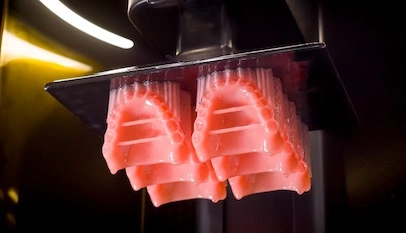
CAD/CAM stands for computer-aided design and computer-aided manufacturing. In simple terms, it means we use software to design your patient’s restoration digitally, then mill or print it with precision machinery. The result is a restoration with extremely tight tolerances.
Additionally, CAD/CAM fabrication is highly repeatable. Every component is designed to exact specifications. For full mouth implant cases — where passive fit is critical — this precision is not just helpful. It is essential.
Our Phoenix-area lab fabricates a wide range of implant prosthetics using this technology. These include milled zirconia bridges, titanium frameworks, PMMA temporaries, and hybrid prosthetics. We combine advanced technology with skilled craftsmanship on every case.
The Role of the Dental Lab in Full Mouth Implant Success
A skilled implant dentist is only as effective as the lab supporting them. The prosthetic component of full mouth implant treatment is highly complex. It demands precision, strong communication, and deep knowledge of implant systems and materials.
Dentists in Scottsdale, Mesa, and throughout the Greater Phoenix area trust Dentek Digital because we treat every case as a partnership. We don’t just fabricate — we collaborate. Our team is available to discuss case details, offer material recommendations, and troubleshoot challenges before they become problems.
What to Look for in a Digital Implant Lab
Not every dental lab is equipped for complex full arch implant work. When evaluating a lab partner, consider the following factors.
- Digital workflow capability: Does the lab use CAD/CAM design and milling for implant prosthetics? Analog labs may lack the precision needed for passive-fit restorations.
- Implant system compatibility: A quality lab works with all major implant systems and uses verified, compatible components.
- Case communication: The lab should offer clear channels for pre-case planning, in-process updates, and delivery timelines.
- Material options: Full arch cases benefit from a range of material choices. Zirconia, titanium, PMMA, and acrylic each have their place. Your lab should offer them all.
- Turnaround time: Efficient turnaround keeps your schedule moving and improves the patient experience.
Moreover, a great lab will proactively flag potential issues in the design phase — before any milling begins. This saves time, reduces remakes, and leads to better outcomes.
Materials Used in Full Arch Implant Restorations
Material selection plays a major role in the longevity and appearance of full mouth implant restorations. The right material depends on the patient’s bite forces, aesthetic goals, and the type of prosthetic design chosen.
Zirconia
Zirconia is a popular choice for full arch fixed restorations. It is extremely strong and highly aesthetic. Modern multi-layered zirconia closely mimics the translucency of natural teeth. Furthermore, zirconia is biocompatible and resistant to staining over time.
Our lab mills zirconia restorations in-house using precision CAD/CAM equipment. We offer monolithic and layered zirconia options depending on the case requirements. Each restoration is custom-shaded to match the patient’s natural dentition or desired outcome.
Titanium Frameworks
Titanium is often used as the substructure for hybrid prosthetics. It is lightweight, strong, and highly biocompatible. A milled titanium bar provides a rigid, precise foundation that supports the prosthetic teeth layered on top.
In addition, titanium frameworks offer an excellent passive fit when milled with CAD/CAM technology. This passive fit is critical for long-term implant health. Ill-fitting frameworks can place stress on implants and lead to complications over time.
PMMA for Temporaries
PMMA (polymethyl methacrylate) is a high-quality acrylic material used for interim prosthetics. During the healing phase of full arch implant treatment, patients often wear a milled PMMA temporary. This allows the implants to integrate while giving the patient full function and aesthetics.
Meanwhile, the final restoration is being carefully designed and fabricated. A well-made PMMA temporary also serves as a blueprint for the final prosthetic. It helps confirm aesthetics, occlusion, and phonetics before the definitive restoration is completed.
TattooTH: An Advanced Service for Implant Prosthetics
Dentek Digital offers TattooTH, an advanced surface treatment for dental prosthetics. This proprietary service enhances the surface characteristics of certain restorations. It is one of many ways we push beyond standard lab offerings to give your patients something better.
As a result, dentists working with us have access to innovations not widely available through conventional labs. We continually invest in emerging technology to stay ahead of the curve. Our patients in Chandler, Gilbert, and across Phoenix benefit from these advancements every day.
Workflow Tips for Dentists Managing Full Arch Implant Cases
Full arch implant cases are among the most rewarding — and most demanding — procedures in dentistry. A smooth workflow reduces stress for you and your team. Here are some practical tips to improve how these cases run.
- Start with a treatment plan that considers the prosthetic outcome first. Prosthetically driven planning leads to better implant positioning and simpler lab fabrication.
- Use digital impressions whenever possible. Intraoral scans are more accurate than traditional impressions for implant cases. They also eliminate distortion and save time.
- Communicate with your lab early. Send a case brief before submitting the physical or digital case. Early communication catches issues before they delay delivery.
- Verify occlusion carefully at each appointment. Full arch implant restorations require precise occlusal balance. Catching bite issues early prevents costly adjustments later.
- Plan for temporaries in complex cases. A well-designed interim prosthetic improves patient satisfaction and guides the final restoration design.
Finally, build a strong relationship with your lab. The more your lab understands your preferences and your patients, the better and more efficient the results become over time.
Frequently Asked Questions About Full Mouth Dental Implants
What makes full mouth dental implants different from traditional dentures?
Full mouth dental implants are anchored directly to the jawbone. Traditional dentures rest on the gums and can shift or slip. Implants provide a stable, fixed foundation that feels more like natural teeth. They also help preserve bone volume over time.
How long does a full mouth implant case typically take?
Treatment timelines vary depending on the patient’s bone condition and the protocol used. Some cases can be completed in a single day using immediate-load techniques. Others require several months for proper osseointegration before the final restoration is placed. Your clinical protocol and the lab turnaround both affect the overall timeline.
What implant systems does Dentek Digital work with?
We work with all major implant systems used by dentists across Greater Phoenix. Our team is experienced with a wide range of platforms and uses verified, compatible components. Contact us with your specific implant system details when submitting a case.
Can digital impressions be used for full arch implant cases?
Yes. In fact, digital impressions are often preferred for implant cases. Intraoral scans provide highly accurate data and eliminate the distortion risk of traditional impression materials. We accept digital files from all major intraoral scanning platforms.
Does Dentek Digital offer digital implant planning services?
Yes. We offer advanced digital implant planning as part of our full range of implant services. This service helps align the surgical plan with the prosthetic outcome from the start. Reach out to our team to learn how to incorporate planning into your next full arch case.
Partner With Dentek Digital for Full Arch Implant Cases
Full mouth dental implants demand precision at every stage — from surgical planning to final delivery. The dental lab you choose directly impacts the quality and predictability of your outcomes. Dentek Digital brings digital-first expertise, advanced CAD/CAM fabrication, and a collaborative approach to every case we handle.
We proudly serve dental professionals across Greater Phoenix, including Scottsdale, Mesa, Tempe, Chandler, and Gilbert. Our team is recognized as a national leader in digital dentistry, and we bring that expertise to every restoration we fabricate.
Ready to elevate your full arch implant cases? Contact Dentek Digital today to discuss your next case and discover how our digital workflow can support better outcomes for your patients.