
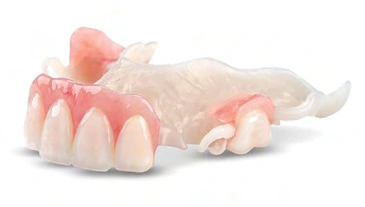
When patients lose most or all of their teeth, full mouth dental implants can restore both function and confidence. This solution has become one of the most sought-after treatments in modern dentistry. As a result, dental practices everywhere are looking for reliable lab partners to help deliver exceptional results.
At Dentek Digital, we support dentists across the Greater Phoenix, Arizona area with precision-crafted implant restorations. We use advanced CAD/CAM technology to fabricate components that fit accurately and perform reliably. Therefore, your patients get restorations built to the highest standards available today.
Whether your practice is in Phoenix, Scottsdale, Mesa, or Chandler, understanding how full mouth implant cases come together is essential. This guide walks you through everything your team needs to know — from treatment concepts to the lab workflow behind the final restoration.
What Are Full Mouth Dental Implants?
Full mouth dental implants replace an entire arch — or both arches — of missing teeth. Instead of removable dentures, patients receive a fixed, implant-supported restoration. This approach provides stability, a natural appearance, and long-term function.
The treatment typically involves placing multiple implants into the jawbone. Those implants then support a full-arch prosthesis, such as a zirconia bridge or implant-supported overdenture. Because the prosthesis is anchored directly to the implants, it does not shift or slip during eating or speaking.
Common Full Arch Implant Approaches
There are several clinical approaches for full mouth implant cases. Each has specific lab requirements and prosthetic considerations. Here are the most common options:
- All-on-4 or All-on-X: A full arch is supported by four or more strategically placed implants.
- Implant-supported overdenture: A removable prosthesis that snaps onto implant attachments for added retention.
- Fixed zirconia bridge: A screw-retained, non-removable full-arch restoration milled from high-strength zirconia.
- Hybrid denture: A metal-reinforced acrylic prosthesis retained by implants — also known as a PMMA or acrylic hybrid.
Additionally, the right option depends on the patient’s bone volume, clinical goals, and the dentist’s treatment philosophy. A skilled lab partner plays a critical role in making each approach successful.
Why the Lab Workflow Matters for Implant Cases
Full mouth implant restorations are among the most complex cases a dental lab handles. Precision is everything. Even small errors in fit or occlusion can create serious clinical problems down the line.
At Dentek Digital, we were one of the earliest adopters of the digital CAD/CAM workflow in the country. Because of this, we have refined our process over years of real-world casework. Our team uses industry-leading software and milling equipment to design and fabricate restorations with exceptional accuracy.
Digital Scanning and Case Planning
The digital workflow begins with a high-quality intraoral or model scan. Accurate scan data is the foundation of a well-fitting restoration. Therefore, we encourage our partner practices to submit clean, complete scans for every implant case.
Furthermore, we offer digital implant planning as an advanced service. This allows clinicians to visualize placement, angulation, and prosthetic space before surgery begins. As a result, cases are better planned, and the final restoration fits more predictably.
CAD/CAM Design and Fabrication
Once we receive the case data, our team designs the restoration using sophisticated CAD software. We model every contour, contact, and occlusal surface with care. Then, the design goes to our milling center, where high-strength zirconia or PMMA is milled with precision.
After milling, our skilled technicians finish, stain, and glaze each restoration by hand. This combination of technology and craftsmanship produces results that are both accurate and esthetically refined. Dental practices in Gilbert, Tempe, and across the Phoenix metro trust this process for their most demanding implant cases.
What Dentists Should Know Before Submitting a Full Mouth Implant Case
Submitting a full mouth implant case to a digital lab requires careful preparation. The more complete and accurate your submission, the smoother the fabrication process will be. Here are key considerations to keep in mind:
- Implant system and connection type: Always specify the implant brand, platform, and interface. Accurate analog or scan body information is essential.
- Vertical dimension of occlusion (VDO): Confirm and record the correct VDO before the lab designs the prosthesis.
- Phonetic and esthetic records: Photos, lip support measurements, and smile line data help the lab design a natural-looking result.
- Material preference: Indicate whether you want monolithic zirconia, layered zirconia, PMMA, or another material.
- Screw access channel positions: Communicate any angulation considerations that affect access hole placement.
Moreover, open communication between the clinician and the lab technician leads to better outcomes. We encourage our partner practices to reach out before submitting complex cases so we can align on expectations from the start.
The Role of Zirconia in Full Mouth Implant Restorations
Zirconia has become the material of choice for most full-arch implant restorations. It offers outstanding strength, biocompatibility, and esthetics. In addition, it resists chipping better than traditional porcelain-fused-to-metal options.
High-translucency zirconia can mimic the natural look of teeth without sacrificing durability. Meanwhile, high-strength zirconia grades are ideal for posterior regions where occlusal forces are greatest. Our lab selects the appropriate zirconia grade based on each case’s clinical demands.
Monolithic vs. Layered Zirconia
Monolithic zirconia is milled from a single block of material without an outer porcelain layer. This makes it extremely strong and reduces the risk of chipping. However, it requires careful staining and glazing to achieve natural-looking esthetics.
Layered zirconia features a zirconia substructure with hand-applied porcelain on top. This approach produces exceptional esthetic results. On the other hand, it requires more lab time and carries a slightly higher risk of chipping under heavy occlusal load. Your clinical situation will guide the best choice.
Supporting Better Patient Outcomes Through Lab Partnership
Delivering excellent full mouth implant results is a team effort. The dentist, the surgical specialist, and the dental lab must all work together with precision and communication. Therefore, choosing the right lab partner is one of the most important decisions a practice can make.
Dentek Digital partners with dental professionals across Phoenix, Scottsdale, Mesa, Chandler, Gilbert, and Tempe. We treat every case with the attention it deserves. Our team is available to consult on case planning, material selection, and occlusal design — all before a single component is milled.
We also offer TattooTH, our advanced esthetic surface characterization service. This technique adds incredibly lifelike color and texture to restorations. As a result, full arch implant cases achieve natural-looking results that patients love.
Frequently Asked Questions About Full Mouth Dental Implants
How long does it take to fabricate a full arch implant restoration?
Turnaround time varies based on case complexity and material selection. However, most full arch implant restorations are completed within a few weeks of receiving complete case records. We work with practices to meet clinical timelines whenever possible.
What implant systems does Dentek Digital support?
We work with a wide range of implant systems and connections. When you submit your case, simply specify the implant brand and platform. Our team will confirm compatibility and request any additional information needed.
Can digital planning help reduce surgical complications?
Yes, digital implant planning is a valuable tool for improving surgical predictability. It allows the clinician to visualize implant positions relative to the planned prosthesis before surgery. As a result, placement decisions are better informed and more precise.
What materials are available for full mouth implant cases?
We offer monolithic zirconia, layered zirconia, PMMA (acrylic hybrid), and other materials depending on the clinical indication. Furthermore, we can guide you in selecting the best material for each patient’s needs and functional demands.
How do I get started with Dentek Digital for implant cases?
Getting started is simple. Reach out to our team, discuss your case, and we will walk you through our submission process. We make it easy for practices across Greater Phoenix to access world-class digital lab services.
Partner With Dentek Digital for Your Full Mouth Implant Cases
Full mouth dental implants represent one of the most transformative treatments in dentistry today. Patients regain the ability to eat, speak, and smile with confidence. However, achieving those outcomes consistently requires a lab that combines advanced technology with genuine expertise.
Dentek Digital is that partner. We bring precision CAD/CAM fabrication, deep clinical knowledge, and a commitment to quality to every case we touch. From the initial scan to the final glaze, we are with you every step of the way.
If your practice serves patients in Phoenix, Scottsdale, Mesa, Chandler, Tempe, Gilbert, or anywhere across the Greater Phoenix area, we are ready to support your implant cases. Contact Dentek Digital today to send us a case or discuss your next full arch implant restoration with our team.