
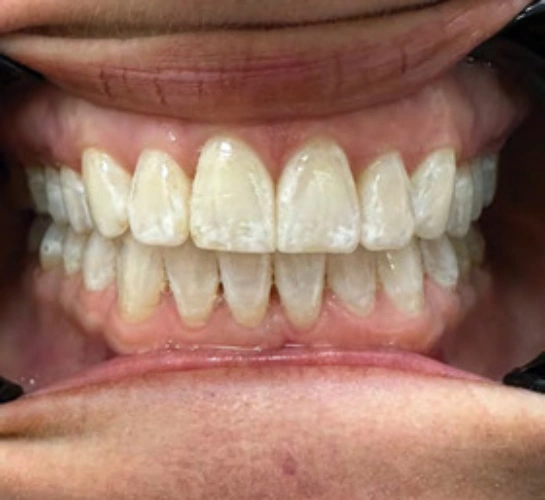
Replacing missing teeth is one of the most important decisions a patient can make. Teeth implants are widely regarded as the gold standard for tooth replacement. They look natural, function like real teeth, and can last for many years with proper care.
Dental practices across the Greater Phoenix area — including those in Mesa, Tempe, Chandler, and Gilbert — are offering implant solutions to more patients than ever before. Additionally, the technology behind implant restorations has advanced dramatically in recent years.
At Dentek Digital, we support dental professionals with precision-crafted implant restorations built using advanced CAD/CAM technology. Therefore, understanding how implants work — and how the restoration process fits in — can help dentists deliver better outcomes for their patients.
What Are Teeth Implants?
Teeth implants are artificial tooth roots. They are placed directly into the jawbone by a dental surgeon. Over time, the implant fuses with the bone in a process called osseointegration.
Once the implant has integrated, a dental restoration is placed on top. This restoration — called a crown — is what the patient sees and uses every day. Furthermore, modern implant crowns are virtually indistinguishable from natural teeth.
The implant system typically involves three components: the implant post, an abutment, and the crown. Each part plays a critical role in the final result. Because of this, precision at every stage of the process matters enormously.
Why Patients Choose Implants Over Other Options
Implants offer several advantages over traditional tooth replacement options. For example, unlike dentures, implants do not slip or shift during eating or speaking. They also help preserve the jawbone, which can deteriorate after tooth loss.
Moreover, implants do not require grinding down adjacent healthy teeth, as a dental bridge does. They function independently and feel more natural as a result. Many patients report a significant improvement in their confidence and quality of life.
The Role of the Dental Lab in Implant Restorations
Most patients focus on the surgical side of implants. However, the dental lab plays an equally important role. The lab fabricates the crown, abutment, and other restorative components that complete the implant.
At Dentek Digital, we use a fully digital CAD/CAM workflow to design and mill implant restorations. This approach delivers exceptional accuracy and fit. Additionally, it significantly reduces turnaround time for dental practices in Phoenix, Scottsdale, Gilbert, and beyond.
Every restoration we produce goes through rigorous quality checks. We combine advanced milling technology with skilled craftsmanship. Therefore, dentists who partner with us can feel confident in the restorations they deliver to their patients.
CAD/CAM Technology and Implant Crowns
CAD/CAM stands for Computer-Aided Design and Computer-Aided Manufacturing. In short, it uses digital scans and software to design restorations with extreme precision. The design is then milled from high-quality materials.
This process eliminates much of the guesswork involved in traditional lab methods. Furthermore, digital workflows allow for better communication between the dentist and the lab. As a result, the final restoration fits more predictably and requires fewer adjustments.
Dentek Digital was among the earliest dental labs in the country to adopt the CAD/CAM workflow. We bring that experience to every case we handle. Dental practices across the Greater Phoenix area rely on us for this level of expertise.
Types of Implant Restorations We Fabricate
Not every implant case is the same. First, a patient may need a single tooth replaced. Next, they may need multiple teeth replaced across an arch. In more complex cases, a full-arch restoration may be required.
At Dentek Digital, we fabricate a wide range of implant restorations. Our capabilities include single implant crowns, implant-supported bridges, and full-arch solutions. Additionally, we offer custom abutments designed for optimal emergence profile and aesthetics.
Single Implant Crowns
A single implant crown replaces one missing tooth. It consists of a crown attached to a custom abutment. The abutment connects to the implant post already placed in the jawbone.
We design each crown to match the surrounding teeth in shape, size, and shade. Therefore, the result looks completely natural. Dental practices in Tempe and Chandler regularly send us single-unit implant cases with excellent outcomes.
Implant-Supported Bridges and Full-Arch Restorations
When multiple adjacent teeth are missing, an implant-supported bridge is often a great solution. Meanwhile, patients missing all or most of their teeth may benefit from a full-arch restoration. These solutions use multiple implants to support a fixed prosthesis.
Full-arch restorations require especially precise planning and fabrication. Furthermore, they must be both strong and natural-looking. Our digital workflow handles this level of complexity with consistency and accuracy.
Digital Implant Planning: A Smarter Approach
Dentek Digital also offers advanced digital implant planning services. This service helps dental practices plan implant placement with greater accuracy before surgery begins. As a result, the surgical and restorative phases align more seamlessly.
Digital implant planning uses 3D imaging and software to map out ideal implant positions. Additionally, it allows the lab and the dental team to collaborate closely from the very beginning. This collaborative approach reduces complications and improves outcomes.
Practices across the Greater Phoenix area — from Mesa to Scottsdale — are embracing digital implant planning. It represents the future of implant dentistry. Moreover, it helps dentists provide a higher standard of care to every patient they treat.
How Planning Improves the Final Restoration
When the implant is placed in the ideal position, the restoration fits and functions better. On the other hand, implants placed in suboptimal positions can create challenges for the lab and the dentist. Because of this, planning ahead makes a real difference.
Our team at Dentek Digital works closely with dental professionals during the planning phase. We provide guidance on implant angles, emergence profiles, and restorative space. Therefore, by the time the restoration is fabricated, much of the uncertainty has already been eliminated.
What to Look for in a Dental Lab for Implant Restorations
Choosing the right dental lab is as important as choosing the right surgical team. However, many dentists do not always give this decision the attention it deserves. Here are some key factors to consider.
- Digital workflow capabilities: A fully digital lab offers greater precision and faster turnaround times.
- Experience with implant cases: Look for a lab with a strong track record across a variety of implant scenarios.
- Material quality: High-quality materials lead to more durable, natural-looking restorations.
- Communication and collaboration: A great lab works with you, not just for you.
- Turnaround time: Efficient production keeps your patients on schedule and satisfied.
Dentek Digital checks every one of these boxes. Furthermore, as a nationally recognized leader in digital dentistry, we bring a level of expertise that is difficult to match. Dental practices throughout Phoenix and the surrounding communities trust us with their most complex cases.
Frequently Asked Questions About Teeth Implants
How long do teeth implants typically last?
With proper care, teeth implants can last for many years — often decades. The implant post itself is highly durable. However, the crown on top may eventually need replacement due to normal wear over time.
Are teeth implants suitable for every patient?
Not every patient is an immediate candidate for implants. Sufficient bone density is required to support the implant post. Additionally, certain health conditions may affect candidacy. A thorough evaluation by the treating dentist is always the first step.
How does the dental lab contribute to the implant process?
The lab fabricates the visible restoration that sits on top of the implant. This includes the crown and often the abutment. Therefore, lab quality directly affects the appearance, fit, and function of the final result.
What materials are used for implant crowns?
Common materials include zirconia and porcelain-fused-to-zirconia. These materials are strong, biocompatible, and highly aesthetic. Moreover, they are well-suited to the demands of everyday chewing and biting forces.
How does digital CAD/CAM technology improve implant restorations?
CAD/CAM technology allows for highly precise digital design and milling of restorations. As a result, the fit is more predictable and accurate than with traditional methods. Additionally, digital workflows speed up the fabrication process without sacrificing quality.
Partner with Dentek Digital for Implant Excellence
Teeth implants represent one of the most rewarding areas of modern dentistry. However, achieving consistently great results requires a skilled dental lab as your partner. At Dentek Digital, we are committed to supporting dental practices across Phoenix, Mesa, Chandler, Gilbert, Tempe, and Scottsdale with the highest quality restorations available.
Our fully digital CAD/CAM workflow, combined with decades of experience and skilled craftsmanship, means every implant restoration we produce meets the highest standards. Furthermore, we offer digital implant planning to help your team succeed before the first incision is made.
If you are ready to elevate your implant cases, we invite you to contact Dentek Digital and discuss how we can support your practice. Together, we can deliver outstanding outcomes for your patients — one restoration at a time.