
When it comes to replacing missing teeth, tooth implants remain one of the most effective and long-lasting solutions available today. Patients across communities like Los Altos Hills, CA are increasingly seeking implant-based restorations that look natural and function reliably. Because of this, the demand for high-quality dental implant components has grown significantly.
Behind every successful implant case, there is a skilled dental team — and an equally skilled dental lab. The restorations fabricated in the lab are just as important as the surgical placement. Therefore, choosing the right lab partner makes a real difference in patient outcomes.
At Dentek Digital, we are a digital dental lab based in Phoenix, Arizona. We support dentists and dental practices with precision-crafted implant restorations using advanced CAD/CAM technology. In this post, we break down what makes tooth implants work, what to look for, and how a digital lab elevates the entire process.
What Are Tooth Implants and Why Do They Matter?
Tooth implants are titanium posts surgically placed into the jawbone. They act as artificial tooth roots. On top of each implant, a custom-fabricated crown or restoration is attached to restore function and appearance.
Moreover, implants help preserve jawbone density over time. Traditional bridges or dentures do not offer this benefit. As a result, implants are widely considered the gold standard for tooth replacement.
Patients benefit from restorations that feel and look like natural teeth. Additionally, with the right lab-fabricated components, the fit and aesthetics are significantly improved. This is where digital dentistry changes the game entirely.
How the Implant Process Works
First, the dentist places the implant into the jawbone during a surgical procedure. Then, a healing period allows the implant to integrate with the bone. Finally, the dental lab fabricates a custom crown or restoration that is attached to the implant.
Each step requires precision. However, the lab phase is where quality really shows. A poorly designed crown can affect bite alignment, aesthetics, and long-term function. Therefore, the lab’s role is critical from start to finish.
Types of Implant Restorations
There are several types of restorations used with tooth implants. Each serves a specific clinical need. Understanding the differences helps dentists and patients make informed decisions.
- Single-unit implant crowns: Used to replace one missing tooth with a custom crown seated on an abutment.
- Implant-supported bridges: Used to replace multiple adjacent teeth using implants as anchors.
- Full-arch restorations: Such as All-on-4 or hybrid prosthetics, used to replace an entire arch of teeth.
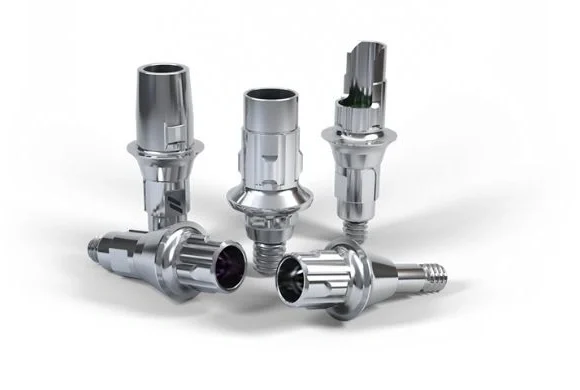
- Custom abutments: Lab-fabricated components that connect the implant to the final restoration.
Furthermore, each of these options benefits from digital design and milling. CAD/CAM technology allows for consistent, precise fabrication every time.
The Role of Digital Technology in Implant Restorations
Digital dentistry has transformed how implant restorations are designed and made. CAD/CAM stands for Computer-Aided Design and Computer-Aided Manufacturing. In simple terms, it means the restoration is designed on a computer and milled by a precision machine.
Additionally, digital workflows reduce human error and improve fit accuracy. Consequently, patients experience fewer adjustments at the seat appointment. This saves time for both the dental team and the patient.
At Dentek Digital, we were among the earliest adopters of digital CAD/CAM workflows in the country. Therefore, our team brings deep experience to every implant case we handle.
CAD/CAM vs. Traditional Lab Methods
Traditional lab methods rely heavily on hand-crafted techniques. While skilled, these methods can introduce variability. On the other hand, CAD/CAM technology produces highly repeatable results with excellent marginal accuracy.
For implant restorations specifically, a precise fit at the implant interface is essential. Even small inaccuracies can affect screw torque, occlusion, and long-term success. As a result, digital fabrication is the preferred approach for high-quality implant work.
Moreover, digital design files can be shared, stored, and reproduced if a restoration ever needs to be remade. This adds a layer of consistency that traditional methods cannot match.
Materials Used in Digital Implant Restorations
Modern digital labs work with a range of high-performance materials. Choosing the right material depends on the location of the implant and the patient’s needs.
- Zirconia: Known for its strength and natural appearance. Ideal for both anterior and posterior implant crowns.
- PFM (Porcelain-Fused-to-Metal): A time-tested option with strong substructure and aesthetic coverage.
- Titanium abutments: Highly biocompatible and widely used for implant connections.
- PEEK and hybrid materials: Used in certain full-arch and transitional restorations.
Because of this wide range, digital labs can tailor every case to the specific clinical situation. Furthermore, material choices are discussed collaboratively with the referring dentist.
Why Dentists Rely on a Trusted Lab for Implant Cases
A dental lab is not just a fabrication facility. It is a clinical partner. Dentists who work with experienced digital labs see better outcomes and fewer remakes. Additionally, communication is smoother when the lab understands the clinical context.
At Dentek Digital, we serve dental practices across the Greater Phoenix area, including communities like Mesa, Scottsdale, Tempe, and Chandler. We understand the high standards Arizona dental professionals expect. Therefore, we invest in the best equipment and the most skilled technicians available.
Moreover, our team offers digital implant planning services to support the entire treatment workflow. This means we are involved from the planning stage — not just at the fabrication step.
What to Look for in a Dental Lab for Implant Work
Not all dental labs are equally equipped for implant cases. Here are key qualities to look for when choosing a lab partner.
- Experience with implant systems: The lab should be familiar with major implant brands and connection types.
- Digital workflow capability: CAD/CAM design and milling should be core to their process.
- Material quality: High-grade zirconia, titanium, and other materials are non-negotiable.
- Clear communication: The lab should be responsive and easy to work with on complex cases.
- Turnaround consistency: Reliable timelines help practices keep their schedules on track.
Furthermore, a lab that offers implant planning support adds even more value to the partnership. As a result, dentists can plan cases more confidently from the start.
Digital Implant Planning: A Closer Look
Digital implant planning uses 3D imaging and design software to map out implant placement before surgery. This approach improves surgical accuracy and guides the fabrication of any needed surgical guides or provisional restorations.
Additionally, planning digitally allows the final restoration to be considered before the implant is placed. This is called a restorative-driven approach. Because of this, the final crown or prosthetic fits better and functions more predictably.
At Dentek Digital, we offer digital implant planning as part of our advanced services. Practices in Gilbert, Tempe, and across the Greater Phoenix area have used this service to improve their implant workflows.
Supporting Patients with the Right Information
Dentists play a key role in helping patients understand their implant options. However, patients often come in with questions gathered from online research. Therefore, it helps to have clear, straightforward answers ready.
Here are some practical points dentists can share with patients who are considering tooth implants.
- Implants require sufficient bone volume and good overall health for placement.
- The full process, from placement to final restoration, can take several months.
- Implants require regular maintenance, just like natural teeth.
- The quality of the final crown matters just as much as the implant itself.
- Choosing an experienced dental team and a skilled lab improves the chances of a successful outcome.
Moreover, patient education reduces anxiety and sets realistic expectations. As a result, treatment acceptance rates and overall satisfaction tend to improve.
Frequently Asked Questions About Tooth Implants
What makes tooth implants different from dentures or bridges?
Tooth implants are anchored directly into the jawbone. Therefore, they behave more like natural teeth. Dentures and bridges sit on or above the gum line. Additionally, implants help preserve bone density, which other options do not.
How long does an implant restoration typically last?
With proper care, implant restorations can last many years or even decades. However, the longevity depends on factors like material quality, bite forces, and oral hygiene. Furthermore, the precision of the lab-fabricated crown plays a significant role in long-term performance.
What is the role of the dental lab in an implant case?
The dental lab designs and fabricates the crown, abutment, or prosthetic that attaches to the implant. Additionally, a skilled lab like Dentek Digital ensures the restoration fits precisely and meets the aesthetic goals of the case. Therefore, the lab is a true clinical partner in implant treatment.
Can a digital lab support full-arch implant cases?
Yes. Digital labs are especially well-suited for full-arch restorations. Because of this, cases like All-on-4 or full-arch zirconia bridges benefit greatly from CAD/CAM fabrication. Moreover, digital design allows for efficient adjustments and accurate fit across the entire arch.
How do dentists in the Phoenix area work with Dentek Digital?
Dentists submit cases digitally or through traditional impressions. Next, our team designs and fabricates the restoration using our CAD/CAM workflow. Then, the finished product is delivered back to the practice. Additionally, we offer implant planning support for practices that want a more integrated workflow.
Partner With a Digital Lab That Understands Implants
Tooth implants represent one of the most rewarding areas of modern dentistry. However, they also require precise execution at every step. Therefore, the lab you choose matters more than many practitioners realize.
At Dentek Digital, we combine advanced CAD/CAM technology with experienced craftsmanship. We serve dental practices across Phoenix, Scottsdale, Mesa, Chandler, and the broader Arizona region. Furthermore, our team is committed to delivering restorations that meet the highest clinical standards.
Whether you are working on a single-unit implant crown or a complex full-arch case, we are ready to support your practice. Contact Dentek Digital today to send us a case or to discuss how our digital lab services can elevate your implant outcomes.