
Patients searching for top dental implants want more than a missing tooth replaced. They want a restoration that looks natural, functions reliably, and lasts for years. For dentists serving communities like Manhattan Beach, CA, delivering that result starts long before the patient sits in the chair.
The quality of the implant restoration depends heavily on the dental lab behind it. Therefore, partnering with a lab that uses advanced digital workflows makes a measurable difference. At Dentek Digital, we fabricate precision implant restorations for dental practices across the Greater Phoenix area and beyond.
In this post, we break down what separates good implant restorations from exceptional ones. Additionally, we share how dentists can use digital lab technology to raise their standard of care.
What Makes Dental Implants Truly Outstanding?
Not all implant restorations are equal. However, certain principles define the best outcomes regardless of where a patient receives treatment. Understanding these principles helps dentists set realistic expectations and deliver superior results.
Top dental implants succeed because of careful planning, precise fabrication, and quality materials. Furthermore, the collaboration between the dentist and the dental lab plays a critical role throughout the process.
Fit and Precision Come First
A well-fitting implant crown protects the surrounding tissue and bone. It also supports a natural bite. Because of this, even small inaccuracies in the restoration can lead to long-term complications.
Digital workflows eliminate much of the guesswork. CAD/CAM technology allows labs to design and mill restorations with exceptional accuracy. As a result, adjustments at delivery are minimal, and patient satisfaction improves significantly.
Material Selection Matters
The material used for an implant restoration affects both aesthetics and durability. Zirconia is a popular choice because it is strong, biocompatible, and highly aesthetic. Meanwhile, layered zirconia offers excellent translucency for anterior cases.
At Dentek Digital, we help dentists choose the right material for each case. Moreover, our team understands how different materials behave under occlusal load and in various aesthetic zones.
The Role of Digital Technology in Implant Restorations
Digital dentistry has transformed how implant restorations are designed and fabricated. In addition, it has made communication between dentists and dental labs far more efficient. Dentists no longer need to rely solely on physical impressions and handwritten prescriptions.
Instead, digital scans and structured case files allow labs to work with precise data from the start. Therefore, the final restoration reflects the patient’s actual anatomy more accurately than ever before.
CAD/CAM Dentistry Explained
CAD/CAM dentistry stands for Computer-Aided Design and Computer-Aided Manufacturing. It uses digital scanning, 3D modeling software, and precision milling or printing equipment. Because of this technology, dental labs can fabricate restorations with tight tolerances and consistent quality.
Dentek Digital was one of the earliest adopters of the digital CAD/CAM workflow in the country. Our team has refined this process over many years. As a result, we produce restorations that meet the highest standards of fit, function, and aesthetics.
Digital Implant Planning
Planning is one of the most important phases of any implant case. Furthermore, poor planning is one of the leading causes of complications down the line. Digital implant planning tools allow dentists to visualize the ideal implant position before surgery.
At Dentek Digital, we offer advanced digital implant planning as part of our services. This helps dentists in Phoenix, Scottsdale, Chandler, and Gilbert provide more predictable surgical outcomes. Additionally, it ensures the final restoration is designed with the prosthetic result in mind from day one.
Ready to streamline your next implant case? Contact Dentek Digital to discuss your case with our experienced team.
How Dentek Digital Supports Implant Cases
Dentek Digital is a nationally recognized digital dental lab based in Phoenix, Arizona. We partner with dental professionals to deliver precise, reliable restorations for their patients. Our implant services are designed to support dentists at every stage of the restoration process.
Moreover, our lab combines advanced technology with skilled craftsmanship. Every case receives individual attention from our experienced technicians. Therefore, you can trust that every restoration we fabricate meets a consistently high standard.
Our Implant Restoration Options
We fabricate a wide range of implant-supported restorations. These include single-unit crowns, implant bridges, and full-arch solutions. In addition, we work with all major implant systems to ensure compatibility with your preferred components.
Our team also supports implant overdentures and hybrid restorations. Because of this, we are a comprehensive resource for dental practices handling both simple and complex implant cases. Dentists in Mesa, Tempe, and Scottsdale rely on us for consistent, high-quality results.
TattooTH and Advanced Services
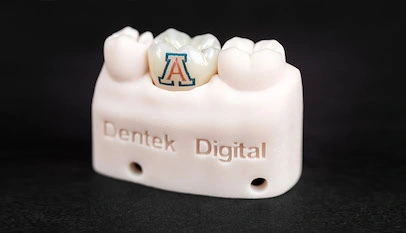
One of our most innovative offerings is TattooTH. This advanced service allows for custom characterization of restorations to match a patient’s unique smile. Furthermore, it gives dentists a powerful tool for aesthetic implant cases where blending with natural dentition is critical.
We also offer digital smile design support and other advanced fabrication services. As a result, dental practices that partner with us gain access to capabilities that set their care apart. Additionally, these services help attract patients who are seeking top dental implants and premium cosmetic results.
Tips for Dentists Seeking Better Implant Outcomes
Delivering consistently excellent implant restorations requires a systematic approach. Here are practical steps that can help dentists raise their standard of care and improve patient outcomes.
- Use digital impressions whenever possible. They reduce error and improve scan accuracy compared to traditional methods.
- Communicate clearly with your lab. Share photos, bite records, and shade information to give your lab everything it needs.
- Plan prosthetically from the start. Design the ideal restoration first, then work backward to plan implant placement.
- Choose materials based on the case. Consider occlusal forces, aesthetic zone location, and patient habits before selecting a material.
- Partner with a lab that specializes in digital workflows. A lab with deep digital expertise will produce more predictable results.
Finally, always review the restoration carefully at delivery. Even with precise digital fabrication, minor adjustments may be needed. Therefore, building time into appointments for seating and verification pays off in patient satisfaction.
Why the Lab Relationship Matters
Many dentists underestimate how much the lab relationship affects clinical outcomes. However, a strong lab partnership is one of the most valuable assets a dental practice can have. The lab is an extension of your clinical team.
When you work with a lab that communicates openly and delivers consistently, your workflow improves. Moreover, your team spends less time on remakes and adjustments. As a result, your practice becomes more efficient and more profitable.
At Dentek Digital, we prioritize this partnership. We serve dental practices across the Greater Phoenix area, including communities in Gilbert, Chandler, Mesa, and Tempe. Furthermore, we work with practices nationwide who need a reliable digital lab they can count on.
Send us a case and experience the Dentek Digital difference firsthand. Our team is ready to support your next implant restoration from planning through delivery.
Frequently Asked Questions About Dental Implant Restorations
What is the difference between an implant crown and a regular crown?
An implant crown attaches to a dental implant fixture in the jawbone. A regular crown, on the other hand, sits on top of a natural tooth. Therefore, the design and fabrication process differs significantly between the two restoration types.
How does digital scanning improve implant restorations?
Digital scanning captures precise 3D data of the mouth and implant position. Because of this, the lab can design a restoration that fits accurately without relying on physical impressions. Additionally, digital files are easier to share and review remotely.
What materials does Dentek Digital use for implant crowns?
We work with a variety of high-quality materials, including full-contour zirconia, layered zirconia, and PFM options. Moreover, we select materials based on the clinical requirements of each specific case. Our team is happy to discuss material options with your practice.
Can Dentek Digital work with my preferred implant system?
Yes. We are compatible with all major implant systems and components. Furthermore, we stay current with new systems as they enter the market. Therefore, switching to a new implant brand does not require changing labs.
How do I get started with Dentek Digital?
Getting started is simple. First, reach out to our team to discuss your case. Next, send us your digital files or physical impressions along with a prescription. Then, our technicians will fabricate your restoration and deliver it with the quality you expect.
Partner With Dentek Digital for Top Dental Implants
Delivering top dental implants to your patients starts with choosing the right lab partner. Dentek Digital brings national-level expertise, advanced digital technology, and skilled craftsmanship to every case we handle. Because of this, dental practices across the Greater Phoenix area trust us with their most demanding restorations.
Whether your practice is in Scottsdale, Chandler, Gilbert, or anywhere in the region, we are ready to support your implant workflow. Additionally, we welcome dentists from beyond Arizona who are looking for a precision-focused digital lab they can rely on.
Explore your options and take your implant restorations to the next level. Contact Dentek Digital today and let’s build something exceptional together.