
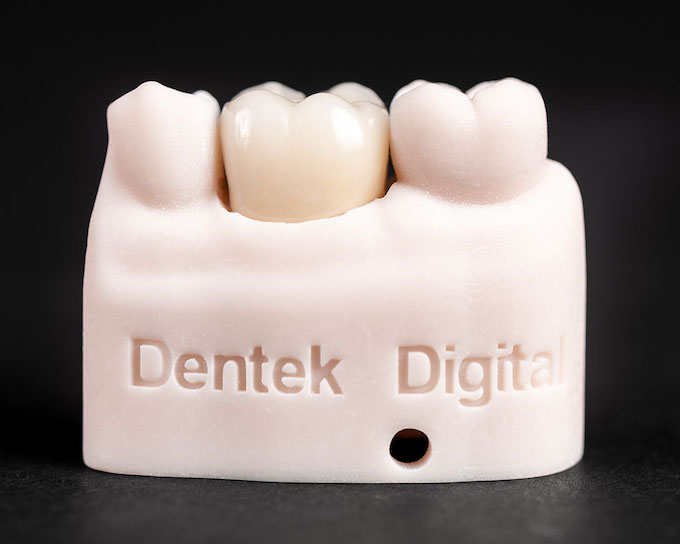
Every dental restoration starts with a choice. The material you select shapes how well a crown, bridge, or implant restoration performs over time. More importantly, it directly influences restoration longevity — and ultimately, your patient’s satisfaction.
For dentists across the Greater Phoenix area, understanding material science is no longer optional. It is a clinical advantage. The right material paired with a precise digital workflow can mean the difference between a restoration that thrives for years and one that fails prematurely.
At Dentek Digital, we work with dental practices throughout Phoenix, Scottsdale, Chandler, and beyond. We help clinicians match the right materials to every case — backed by advanced CAD/CAM fabrication and deep lab expertise.
Why Material Selection Matters More Than Ever
Modern dentistry offers more material options than ever before. However, more options also mean more decisions. Each material carries its own strengths, limitations, and ideal use cases.
Therefore, selecting the wrong material — even with a perfect impression — can compromise a restoration’s fit, aesthetics, or durability. The clinical environment, bite forces, and patient habits all play a role. Material selection must account for all of them.
Additionally, digital fabrication has raised the bar. CAD/CAM milling and 3D printing demand materials specifically engineered for those workflows. Not every material performs the same way in a digital lab environment.
The Role of the Digital Lab in Material Guidance
A skilled digital lab is more than a fabrication partner. It is a clinical resource. When dentists in Mesa or Gilbert submit a case, our team reviews the indication, occlusal demands, and aesthetic goals before recommending a material path.
Furthermore, digital labs like Dentek Digital can test material compatibility with specific milling and sintering equipment. This ensures every restoration is fabricated under optimal conditions for that material’s properties.
Because of this, open communication between the dentist and the lab is essential. The more clinical detail we receive, the better our material recommendations become.
Common Restoration Materials and Their Performance Profiles
Not all materials suit every clinical situation. Below is a practical overview of the most commonly used materials in today’s digital dental lab environment.
Zirconia
Zirconia has become one of the most widely used materials in modern restorative dentistry. It offers exceptional strength and is well-suited for posterior crowns, bridges, and implant-supported restorations.
Moreover, advances in translucent zirconia formulations have improved its aesthetic performance significantly. Today, high-translucency zirconia can meet both strength and appearance demands in many cases.
However, selecting the right zirconia type matters. Monolithic, layered, and multi-layer options each serve different indications. Therefore, working with a knowledgeable lab helps you choose the correct formulation for each patient.
Lithium Disilicate (e.max)
Lithium disilicate is a popular choice for anterior restorations and cases where aesthetics are a priority. It offers strong optical properties and a natural-looking appearance.
Additionally, it performs well in low-to-moderate stress environments. For single crowns, veneers, and inlays on anterior or premolar teeth, it remains a go-to option for many Phoenix-area clinicians.
On the other hand, it may not be the best fit for patients with heavy bruxism or high posterior bite forces. In those cases, a stronger material like zirconia may serve better.
PFM (Porcelain-Fused-to-Metal)
Porcelain-fused-to-metal restorations have a long track record in dentistry. They combine a metal substructure with a porcelain outer layer. As a result, they offer good strength with reasonable aesthetics.
However, PFM restorations are less common in fully digital workflows. Meanwhile, all-ceramic options have gained ground due to improved strength and metal-free construction. Many practices in Tempe and Scottsdale have shifted heavily toward all-ceramic solutions.
Still, PFM remains a valid choice in certain clinical situations. Your lab partner can help you evaluate when it makes sense.
PMMA and Composite Resins
PMMA (polymethyl methacrylate) and composite resin materials are used primarily for temporaries, diagnostic restorations, and some longer-term interim restorations. They are easy to adjust and cost-effective.
Furthermore, milled PMMA temporaries from a digital lab offer excellent fit compared to hand-formed alternatives. They help protect prepared teeth while final restorations are being fabricated.
However, these materials are not intended for permanent use. They serve an important transitional role rather than a long-term restorative one.
Key Factors That Influence Restoration Longevity
Material type is one piece of the puzzle. Several other factors work together to determine how long a restoration will last in real-world clinical conditions.
Occlusal Forces and Bite Load
Posterior teeth endure significantly higher bite forces than anterior teeth. Therefore, materials used in the back of the mouth must prioritize strength. Zirconia and PFM tend to handle posterior occlusal loads better than more aesthetic-focused ceramics.
Additionally, patients who clench or grind introduce extreme and unpredictable forces. In those cases, material hardness, flexural strength, and the use of a nightguard all become critical considerations.
Dentek Digital fabricates custom splints and nightguards to complement restorative work. Protecting a high-quality restoration with a proper occlusal device is a smart, proactive strategy.
Marginal Fit and Digital Precision
Even the strongest material will fail prematurely if the marginal fit is poor. Gaps at the margin allow bacteria and fluids to infiltrate, leading to secondary decay or debonding.
Because of this, digital fabrication is a game changer for dental restoration quality. CAD/CAM milling produces consistently tight margins that are difficult to achieve with traditional methods alone. The result is a restoration that seals better and lasts longer.
At Dentek Digital, our digital workflow begins with precision scanning and ends with a restoration fabricated to exacting tolerances. That level of accuracy supports long-term clinical success.
Surface Finish and Occlusal Adjustment
The surface texture of a restoration affects both wear and antagonist tooth health. A rough or improperly polished surface can accelerate wear of opposing natural teeth or restorations.
Moreover, occlusal adjustments made chairside must be followed by thorough polishing. Grinding a ceramic restoration without refinishing can leave micro-rough surfaces that increase wear over time.
Therefore, dentists should use manufacturer-recommended polishing systems after any chairside adjustment. A well-finished surface protects both the restoration and surrounding dentition.
Cementation and Bonding Protocol
The cement or bonding agent used plays a major role in how securely a restoration seats and how long it stays in place. Different materials require different cementation strategies.
For example, high-translucency zirconia often requires adhesive resin cementation to achieve optimal bond strength. Traditional zinc phosphate cement may not provide the same retention for ultra-thin ceramic restorations.
Additionally, following the manufacturer’s surface preparation protocol — including etching and silane application where appropriate — ensures the cementation system works as intended. Skipping steps can drastically reduce long-term performance.
Matching Materials to Patient Needs in Phoenix and Beyond
Patients across the Greater Phoenix area come with diverse clinical profiles. A Scottsdale patient seeking a highly aesthetic anterior restoration has different needs than a Chandler patient replacing a worn molar.
Therefore, there is no single “best” material. The ideal choice depends on the tooth position, opposing dentition, aesthetic expectations, parafunctional habits, and systemic factors. A thorough patient assessment guides every material decision.
Furthermore, patient communication matters. When patients understand why you chose a specific material, they are more invested in protecting it. Education builds trust and improves compliance with protective measures like nightguards.
Digital Planning Supports Better Material Decisions
Advanced digital tools are transforming how material decisions get made. At Dentek Digital, our digital workflow allows us to visualize the restoration before fabrication begins. As a result, we can flag potential concerns — like thin occlusal clearance — that might affect material performance.
Additionally, digital implant planning helps ensure that implant-supported restorations are designed with the right spatial and load-bearing parameters from the start. This prevents material mismatches that could compromise the final outcome.
If you are treating patients in the Mesa or Gilbert area and want a lab partner that brings this level of planning to every case, contact Dentek Digital to discuss your next restoration.
Frequently Asked Questions About Material Selection and Restoration Longevity
Which material offers the best restoration longevity for posterior crowns?
Zirconia is generally considered one of the strongest options for posterior restorations. However, the best choice depends on the specific clinical situation, occlusal load, and patient habits. Your lab partner can help you evaluate the options for each case.
Does CAD/CAM fabrication improve how long restorations last?
Yes, in most cases. Digital fabrication produces tighter margins and more consistent fit than many traditional methods. Because of this, CAD/CAM restorations typically perform very well over time when proper material and cementation protocols are followed.
How do I know if a patient’s bite forces are too high for ceramic materials?
Clinical signs like wear facets, cracked cusps, or a history of broken restorations suggest high occlusal load. Additionally, patient-reported grinding or clenching is a key indicator. In those cases, stronger materials and occlusal protection devices are strongly recommended.
Can the same material be used for both anterior and posterior restorations?
Some materials, like multi-layer zirconia, are designed for use across different regions of the mouth. However, anterior and posterior restorations often have different primary demands — aesthetics versus strength. Therefore, material selection should always be zone-specific rather than one-size-fits-all.
How involved is the dental lab in material selection?
An experienced digital lab should be very involved. At Dentek Digital, we review each case submission and provide material recommendations based on the clinical details provided. We see ourselves as an extension of your practice, not just a fabrication service.
Partner With a Lab That Understands Material Science
Choosing the right material is one of the most impactful decisions in restorative dentistry. It shapes how well a restoration performs, how long it lasts, and how satisfied your patient feels years down the road.
At Dentek Digital, we combine deep material knowledge with advanced CAD/CAM technology to support dental practices across Phoenix, Scottsdale, Tempe, and the wider Greater Phoenix area. We help you make confident material decisions — case by case, patient by patient.
Finally, strong outcomes start with strong partnerships. Send us a case today and experience the Dentek Digital difference for yourself.