Digital dentistry is moving fast. Dental labs and practices across Greater Phoenix, Arizona are feeling the pressure to keep up. One of the most powerful shifts happening right now is the rise of the additive workflow in dental lab fabrication.
An additive workflow uses 3D printing technology to build dental restorations layer by layer. This approach is faster, more precise, and more consistent than many traditional methods. As a result, dentists and their patients benefit from better-fitting restorations delivered in less time.
At Dentek Digital, we have embraced this technology from the ground up. We combine advanced CAD/CAM systems with skilled craftsmanship to give dental practices across Phoenix, Scottsdale, Mesa, and Chandler a serious competitive edge. In this post, we break down how the additive workflow improves your dental lab process from start to finish.
What Is an Additive Workflow in Dentistry?
Traditional manufacturing removes material to create a shape. This is called subtractive manufacturing. Additive manufacturing, on the other hand, builds a shape by adding material layer by layer using a 3D printer.
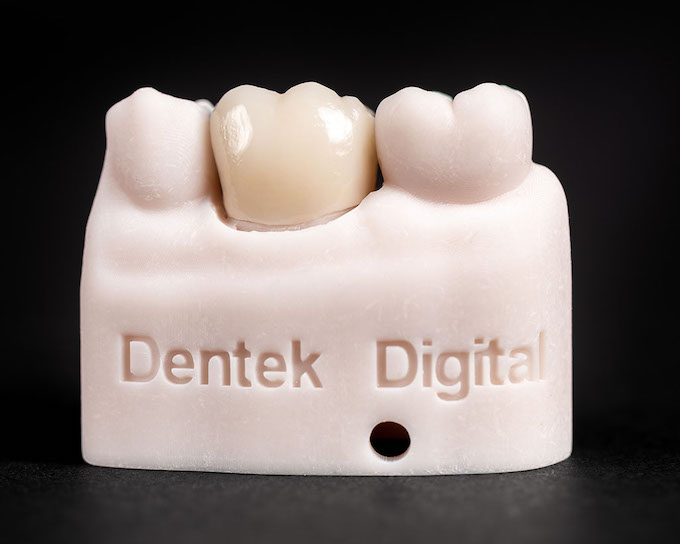
In dentistry, this means fabricating crowns, surgical guides, denture bases, nightguards, and more directly from a digital file. The printer follows a precise digital blueprint created through CAD/CAM dentistry software. Therefore, every restoration starts with an accurate, validated digital design.
This process reduces human error at several stages. Additionally, it allows the lab to produce multiple items simultaneously. That kind of efficiency is hard to achieve with traditional bench work alone.
How Does It Differ from Subtractive Manufacturing?
Subtractive manufacturing mills restorations from a solid block of material. It is excellent for high-strength restorations like full-contour zirconia crowns. However, it generates material waste and limits design complexity.
Additive manufacturing uses only the material it needs. Furthermore, it can produce more intricate geometries that milling cannot easily achieve. Both methods have their strengths. A modern dental lab uses both strategically depending on the case type.
Which Restorations Benefit Most from Additive Processes?
Several restoration types and lab products benefit greatly from 3D printing. These include:
- Surgical and implant guides — precise placement aids for implant procedures
- Denture bases and try-ins — fast, accurate trial fittings before final fabrication
- Splints and nightguards — consistent thickness and fit every time
- Diagnostic models — detailed study models from intraoral scan data
- Wax-ups and temps — rapid prototyping for complex restorative planning
Meanwhile, high-strength final restorations like zirconia are still best milled. A smart lab knows when to print and when to mill. That judgment comes from experience.
Key Benefits of an Additive Workflow for Dental Practices
Switching to or partnering with a lab that uses an additive workflow delivers real benefits. These advantages affect your turnaround time, your case accuracy, and your patient experience.
Faster Turnaround Times
3D printers can run overnight or in batch sequences. Because of this, a lab can complete multiple cases simultaneously without adding staff hours. Practices in Gilbert and Tempe report faster delivery when working with digitally equipped labs. This directly impacts patient scheduling and chair time.
Additionally, digital files eliminate the delays caused by physical impressions getting lost or damaged in transit. Everything moves through a secure digital pipeline. As a result, the workflow becomes more predictable for everyone involved.
Higher Accuracy and Consistency
Every printed item comes from a validated digital file. Therefore, the margin for human variation drops significantly. A nightguard printed on a Tuesday will match the design specs just as closely as one printed on a Friday.
Moreover, digital scans eliminate distortions that can occur with traditional polyvinyl siloxane impressions. The data is clean from the start. That accuracy carries through every step of the additive workflow.
Reduced Material Waste
Additive manufacturing only uses what it needs. In contrast, milling removes a large portion of a block that cannot always be recovered. For labs running high volumes, this efficiency adds up quickly. It also supports more sustainable lab practices overall.
Scalability Without Sacrificing Quality
A digital additive workflow scales well. A lab can increase output without proportionally increasing labor. Furthermore, quality stays consistent across larger volumes. This is especially valuable for group practices and DSOs in the Phoenix metro area looking to streamline their supply chain.
How Dentek Digital Integrates the Additive Workflow
Dentek Digital was among the earliest adopters of the digital CAD/CAM workflow in the country. We have built our lab around digital-first processes. Our additive workflow is fully integrated with our design and milling systems.
When a practice sends us a digital scan, our team evaluates the case and selects the right fabrication path. Some restorations go straight to milling. Others follow the additive workflow. Many complex cases use both methods at different stages.
For example, an implant case may involve a printed surgical guide, a milled zirconia crown, and a printed temporary. Each component is fabricated using the best method for that application. This hybrid approach is what sets a leading digital lab apart.
Our Advanced Services That Rely on Additive Technology
Several of our specialized offerings depend heavily on 3D printing capabilities. These include:
- Digital Implant Planning — we design and print precise surgical guides based on CBCT and scan data
- TattooTH — our advanced full-arch solution uses additive processes during key fabrication stages
- Splints and Nightguards — printed for consistent thickness, occlusion, and fit
- Removable Prosthetics — denture try-ins and bases produced quickly and accurately
Additionally, our team stays current with emerging resin and material technologies. As new printable materials enter the market, we evaluate and adopt those that meet our quality standards. We never compromise on the final result.
If you are a dental practice in Scottsdale, Mesa, Chandler, or anywhere across the Phoenix area, contact Dentek Digital to explore how our additive workflow can support your cases.
Tips for Dental Practices Transitioning to a Digital Workflow
Partnering with a digital lab is easier when your practice is also moving toward digital. Here are some practical steps to make the transition smoother.
Invest in a Quality Intraoral Scanner
Your scanner is the starting point for every digital case. A high-quality scan produces clean data. That clean data drives better outcomes throughout the entire additive workflow. Talk to your lab about which scanner formats they accept before purchasing.
Start with Lower-Complexity Cases
If digital workflows are new to your team, start simple. Single-unit crowns, nightguards, and study models are great entry points. Then, as your team grows comfortable, move into implant planning and full-arch cases.
Communicate with Your Lab Early
Digital does not mean hands-off. Strong communication with your lab still matters. Share clinical photos, notes on occlusion, and patient expectations upfront. Because of this, your lab technician can make informed design decisions from the start.
Evaluate Turnaround and Quality Together
Speed matters, but it should not come at the expense of quality. When evaluating a digital lab partner, look at both. Moreover, ask about their quality control process for printed and milled restorations. A great lab has checks at every stage.
Frequently Asked Questions About Additive Workflows in Dental Labs
What materials are used in dental 3D printing?
Dental 3D printers use photopolymer resins designed for specific applications. These include resins for surgical guides, denture bases, temporaries, and splints. Material science in this space is advancing rapidly. New options with improved strength and biocompatibility continue to emerge.
Is an additive workflow right for every type of restoration?
Not always. High-strength permanent restorations like full-contour zirconia are still best milled. However, many lab products and prosthetics are excellent candidates for additive manufacturing. Your lab can help determine the right approach for each case type.
How does 3D printing affect the accuracy of a restoration?
When the digital scan is accurate and the design is properly validated, printed restorations achieve a high level of precision. Additionally, removing manual steps from fabrication reduces the chance of human error. The result is a more consistent fit across cases.
Can small dental practices in Phoenix benefit from digital lab services?
Absolutely. You do not need an in-house printer to benefit from an additive workflow. Partnering with a digital lab like Dentek Digital gives solo and small-group practices access to the same advanced technology used by larger organizations. The lab handles the technology investment on your behalf.
What should I look for in a digital dental lab partner?
Look for experience, technology investment, and communication. A strong partner uses current CAD/CAM and additive technology, maintains clear quality control standards, and communicates proactively about your cases. Furthermore, local labs serving the Phoenix metro area can offer faster turnaround and easier collaboration.
Partner with Dentek Digital for a Better Additive Workflow
The additive workflow is not a future trend. It is the current standard for leading dental labs. Practices across Phoenix, Tempe, Gilbert, and Scottsdale are already benefiting from faster, more accurate restorations made possible by digital fabrication.
At Dentek Digital, we have built our reputation on being ahead of the curve. We were one of the first labs in the country to embrace the digital CAD/CAM workflow. Today, we continue to lead by combining proven additive manufacturing methods with skilled technician oversight.
Whether you need implant guides, nightguards, denture bases, or complex full-arch restorations, our team is ready to support your practice. We make it easy to send cases, communicate clearly, and receive high-quality results consistently.
Ready to take the next step? Contact Dentek Digital today to send us a case or schedule a consultation. We are proud to serve dental professionals across the Greater Phoenix, Arizona area and beyond.