
Every dentist wants confident, consistent results. Predictable restorations are no longer just an ideal — they are an achievable standard. Thanks to modern CAD (Computer-Aided Design) technology, dental labs can now engineer restorations with remarkable accuracy before a single material is ever milled or printed.
At Dentek Digital, we have been at the forefront of digital dentistry in Phoenix, Arizona for years. We were among the earliest adopters of the CAD/CAM workflow in the country. That experience gives us a deep understanding of what makes a restoration truly predictable.
In this post, we explore how CAD design improves predictability at every stage — from design intent to final delivery — and why that matters for dentists across the Greater Phoenix area.
What Makes a Restoration Predictable?
Predictability means consistent, repeatable outcomes. A predictable restoration fits well, functions properly, and meets the patient’s aesthetic expectations. Moreover, it does all of this case after case, not just occasionally.
Traditional analog workflows relied heavily on manual skill and subjective judgment. Therefore, small variations in technique could lead to inconsistent results. CAD design changes that equation entirely.
The Role of Precision in Predictability
CAD software allows technicians to design restorations in a precise digital environment. Every margin, contact point, and occlusal surface is engineered with accuracy. As a result, the guesswork that once crept into analog workflows is significantly reduced.
Furthermore, digital design files can be reviewed, adjusted, and approved before fabrication begins. This step alone dramatically improves the reliability of the final restoration. Dentists in Scottsdale, Chandler, and Gilbert are already seeing these benefits in their practices.
Consistency Across Cases
One of the strongest advantages of CAD is repeatability. Because designs are built within a standardized digital framework, similar cases produce similar outcomes. Additionally, saved design preferences and templates help ensure that a crown fabricated today mirrors the quality of one fabricated six months ago.
This level of consistency is difficult to achieve manually. However, with CAD, it becomes a natural part of the workflow.
How CAD Design Improves Every Stage of Restoration Fabrication
CAD does not just improve one part of the process. Instead, it enhances predictability across the entire fabrication workflow — from digital impressions to final delivery.
Digital Impressions and Accurate Data
Predictability starts with clean, accurate data. When dentists send digital scans rather than physical impressions, the margin for error shrinks immediately. CAD software reads these scans with precision and builds restoration designs directly from that data.
For dental practices in Mesa and Tempe, this means fewer remakes and faster turnaround. Moreover, it means patients spend less time in the chair for adjustments.
Virtual Articulation and Occlusal Planning
CAD platforms allow technicians to virtually articulate restorations before fabrication. This means occlusion is evaluated and refined in a digital environment. Therefore, the restoration arrives at the dental office already optimized for the patient’s bite.
This step is particularly valuable for full-arch cases, implant restorations, and complex reconstructions. Additionally, virtual articulation reduces the risk of premature contacts that require chairside grinding.
Margin Design and Fit Accuracy
Margin accuracy is one of the most critical factors in restoration longevity. CAD software allows technicians to trace and refine margins with a level of detail that is difficult to replicate by hand. As a result, internal fit and marginal seal are consistently precise.
Furthermore, digital margin design allows for easy review and communication between the lab and the dental office. If adjustments are needed, they can be made digitally before any material is committed.
CAD Technology and the Phoenix Digital Dentistry Advantage
Phoenix and the surrounding communities are home to a growing number of forward-thinking dental practices. Many dentists in Scottsdale, Gilbert, Mesa, and Chandler have already integrated digital scanning into their workflows. However, the full benefit of that investment is only realized when paired with a lab that uses equally advanced CAD capabilities.
Dentek Digital bridges that gap. Our team works within a fully digital CAD/CAM workflow that complements the intraoral scanners and digital tools that modern dental offices already use. Because of this, the data flows seamlessly from the dental chair to our design software with minimal disruption.
Fewer Remakes, Better Outcomes
Remakes are costly — in time, materials, and patient trust. CAD-driven workflows significantly reduce remake rates. Additionally, when a case does require revision, the digital file makes it easy to identify where the adjustment is needed and correct it quickly.
For busy Phoenix-area dental practices, this efficiency translates directly into better patient experiences and smoother scheduling.
Communication and Case Collaboration
CAD design also improves communication between labs and dental offices. Digital files, design previews, and annotated images can all be shared electronically. Therefore, dentists can review and approve designs before fabrication begins.
This collaborative approach builds confidence on both ends. Moreover, it creates a shared record of the case that supports continuity over time.
If you want to explore how this workflow can benefit your practice, contact Dentek Digital and let’s talk through your next case together.
CAD-Designed Restorations Across Dentek Digital’s Product Range
CAD design supports a wide range of restoration types. At Dentek Digital, we apply these capabilities across our full menu of lab services.
- Fixed Restorations: Crowns, bridges, veneers, and inlays all benefit from CAD-driven margin accuracy and occlusal precision.
- Dental Implants: CAD is especially critical for implant restorations, where fit and angulation are non-negotiable.
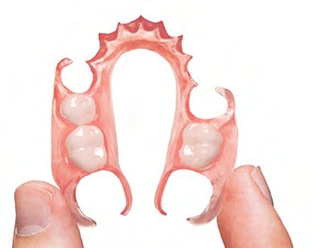
- Removables: Digital design improves the fit and comfort of removable prosthetics, reducing adjustment appointments.
- Splints and Nightguards: CAD ensures consistent thickness, bite registration accuracy, and proper occlusal coverage.
- TattooTH: Our advanced TattooTH service uses digital precision to deliver highly esthetic, customized results.
Each of these categories benefits from the same core advantage: a design process grounded in data, reviewed before fabrication, and executed with consistent precision.
Practical Tips for Dentists Seeking More Predictable Results
Working with a CAD-driven lab is a strong foundation. However, there are also steps dental practices can take to further improve predictability on their end.
- Use high-quality digital scans: Clean scan data leads to cleaner CAD designs. Ensure prep margins are fully captured before sending the case.
- Communicate shade and esthetic goals clearly: Include shade tabs, photos, and notes with every case submission. CAD handles geometry, but esthetic direction still requires your input.
- Specify occlusal scheme preferences: Let your lab know how you prefer contacts and excursive movements to be designed. This helps align the virtual articulation to your clinical intent.
- Review digital previews when available: If your lab offers design previews, take advantage of them. Catching issues at the design stage is always faster and cheaper than adjusting after fabrication.
- Build a consistent relationship with your lab: Over time, your lab learns your preferences. Additionally, consistent communication builds a collaborative rhythm that benefits every case.
Frequently Asked Questions About CAD and Predictable Restorations
What is CAD design in dental lab fabrication?
CAD stands for Computer-Aided Design. In dental labs, it refers to the use of specialized software to digitally design restorations before they are milled, printed, or otherwise fabricated. Furthermore, it allows technicians to control fit, form, and function with precision.
How does CAD improve restoration fit compared to traditional methods?
CAD design is based on accurate digital scan data rather than physical impressions, which can distort. As a result, margins and internal fit are engineered more precisely. Additionally, virtual tools allow technicians to verify fit before committing to fabrication.
Can CAD-designed restorations work with any intraoral scanner?
Most modern CAD software is compatible with files from leading intraoral scanners. However, it is always best to confirm file format compatibility with your lab before sending a case. Dentek Digital works with a wide range of digital scan formats.
Does CAD design reduce the need for chairside adjustments?
In many cases, yes. Because occlusion and fit are refined digitally before fabrication, restorations often seat more accurately. Moreover, fewer adjustments mean shorter appointments and a better patient experience. Results can vary based on case complexity and scan quality.
Is CAD technology suitable for implant cases?
Absolutely. In fact, CAD/CAM dentistry is particularly well-suited for implant restorations, where precise angulation, emergence profile, and screw-access design are critical. Additionally, Dentek Digital offers digital Implant Planning services to support even the most complex implant cases.
Partner With a CAD-Driven Lab in Phoenix
Predictable restorations begin with the right lab partner. At Dentek Digital, we combine advanced CAD design with skilled craftsmanship to deliver results that dentists across Phoenix, Scottsdale, Mesa, Chandler, Gilbert, and Tempe can rely on.
Our team has been building digital workflows since before digital dentistry became mainstream. Therefore, we bring both technical depth and practical experience to every case we design.
Whether you are fabricating a single crown or planning a full-arch implant restoration, our CAD-driven process supports consistent, confident outcomes. Additionally, we partner closely with dental practices to make every case as smooth as possible — from scan submission to final delivery.
Ready to experience the difference that precision CAD design can make? Contact Dentek Digital today to send us a case or discuss how we can support your practice goals.