
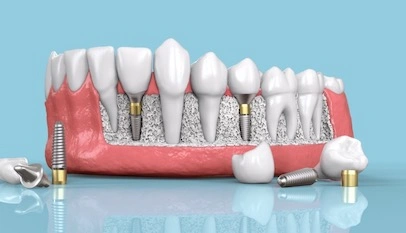
Implant restorations demand a higher standard than almost any other dental lab work. The margin for error is extremely small. Because of this, implant quality control is not just a process — it is a commitment that runs through every step of fabrication.
At Dentek Digital, we have built our entire workflow around precision. We serve dentists and dental practices across Phoenix, Scottsdale, Mesa, Chandler, and the wider Greater Phoenix area. Our team combines advanced CAD/CAM technology with skilled craftsmanship to deliver implant restorations that fit accurately and perform reliably.
In this post, we break down what true quality control looks like for implant restorations. We also explain why the digital workflow makes a meaningful difference for your patients and your practice.
Why Implant Quality Control Matters So Much
Implant restorations are permanently anchored in bone. Therefore, a poor fit is not simply uncomfortable — it can cause serious long-term problems. Bone loss, soft tissue irritation, and prosthetic failure are all possible outcomes of a poorly fabricated implant crown or bridge.
Furthermore, correcting a failed implant restoration is costly and time-consuming for everyone. The dentist, the patient, and the lab all absorb that burden. Strong quality control prevents these issues before the restoration ever leaves the lab.
The Cost of Cutting Corners
Some labs rush through the verification steps to improve turnaround time. However, speed without accuracy is not efficiency — it is a liability. A restoration that requires a remake wastes more time than a careful first pass ever would.
Additionally, patients in communities like Gilbert and Tempe expect their dental experience to be smooth and predictable. When implant restorations fit well the first time, patient confidence in their dentist grows. That trust is worth protecting.
The Digital Workflow and Its Role in Quality
The shift from traditional analog methods to digital fabrication has transformed implant quality control. CAD/CAM dentistry allows lab technicians to design restorations with a level of precision that is difficult to achieve by hand alone. Every margin, every contour, and every occlusal surface is planned digitally before a single block of material is milled.
At Dentek Digital, we were one of the earliest adopters of the digital CAD/CAM workflow in the country. As a result, our team has years of refined experience using these tools at the highest level.
Digital Scanning and Case Intake
Quality control begins the moment a case arrives. We carefully review every scan and file for accuracy before design work starts. If a scan is incomplete or unclear, we reach out to the referring practice immediately. This prevents downstream errors before they can occur.
Moreover, digital impressions eliminate many of the distortion issues associated with traditional physical impressions. This gives our technicians a cleaner, more reliable foundation to work from.
CAD Design Verification
Once the digital design is underway, our technicians check every restoration against key parameters. These include emergence profile, margin adaptation, occlusal clearance, and implant interface fit. Each of these factors plays a role in long-term success.
In addition, our design software allows us to simulate how the restoration will seat on the implant analog. This virtual verification step catches potential fit issues before milling begins. Therefore, we can correct problems at the design stage rather than after fabrication.
Key Checkpoints in Our Quality Control Process
A reliable quality control system is built on consistent checkpoints. Below are the core stages where Dentek Digital verifies accuracy throughout the implant restoration workflow.
- Case intake review: Confirm scan quality, prescribed restoration type, and implant system compatibility.
- Design review: Verify margins, contacts, occlusion, and emergence profile in the CAD environment.
- Pre-mill check: Confirm material selection and milling parameters match the case requirements.
- Post-mill inspection: Examine the milled restoration for surface quality and dimensional accuracy.
- Fit verification: Test seating on the analog model to confirm interface accuracy.
- Final visual and tactile review: Inspect contacts, surface finish, and shade before packaging.
Each checkpoint serves a specific purpose. Together, they form a complete quality system that supports consistent, predictable outcomes.
Implant System Compatibility
One of the most important quality control steps is verifying implant system compatibility. There are many implant platforms on the market. Each has specific interface requirements. Using the wrong connection data — even slightly — can compromise the fit entirely.
Our team maintains a comprehensive library of implant system specifications. Furthermore, we stay current as manufacturers update their platforms and components. This knowledge is a critical part of delivering restorations that seat properly and perform as intended.
Materials and Their Role in Implant Restoration Quality
The materials used in implant restorations directly affect their longevity and performance. Not all materials are equal, and selecting the right option for each case requires careful judgment.
For example, full-contour zirconia is commonly used for posterior implant crowns because of its strength and low wear characteristics. On the other hand, layered ceramic options may be preferred in the aesthetic zone for their natural translucency. Our technicians evaluate each case individually to recommend the most appropriate material.
Material Quality Standards
At Dentek Digital, we source high-quality milling materials from reputable suppliers. Additionally, we maintain strict controls over our milling equipment to ensure consistent output. Regular calibration and maintenance are part of our standard operating procedure.
Moreover, sintering processes for zirconia restorations follow precise time and temperature protocols. Even small deviations can affect the final material properties. Therefore, we monitor every sintering cycle carefully.
How Dentek Digital Supports Phoenix-Area Dental Practices
We work with dental practices throughout the Greater Phoenix area, including Scottsdale, Mesa, Chandler, Gilbert, and Tempe. Our goal is to function as a true partner in your implant workflow — not just a vendor. We are always available to discuss cases, review scans, and answer questions about restoration planning.
First, we listen to what you need for each case. Next, we apply our expertise to design and fabricate a restoration that meets those requirements. Then, we verify quality at every step before the case ships. Finally, we follow up to make sure the outcome met your expectations.
If you are ready to experience a higher standard of implant quality control, contact Dentek Digital to discuss your next case.
Advanced Services for Complex Implant Cases
Beyond standard implant crowns and bridges, Dentek Digital offers digital implant planning services. This allows us to support more complex cases from the earliest stages of treatment. As a result, the final restoration is planned with the prosthetic outcome in mind from the start.
Additionally, our TattooTH service provides a unique way to personalize restorations for patients. However, no matter how advanced the case, our quality control process remains consistent and thorough.
Frequently Asked Questions About Implant Quality Control
What does implant quality control involve at a dental lab?
Implant quality control covers the entire fabrication process. It includes reviewing scan data, verifying the CAD design, inspecting milled restorations, and testing fit on analog models. Every step is checked before the case ships.
How does digital technology improve implant restoration accuracy?
Digital technology removes many sources of human error that exist in analog workflows. CAD/CAM design tools allow technicians to verify fit and occlusion virtually before fabricating the restoration. As a result, accuracy improves significantly.
What should I do if an implant restoration does not fit correctly?
Contact your lab immediately and provide detailed feedback. A reputable lab will work with you to identify the cause and resolve the issue quickly. At Dentek Digital, we treat every fit concern as a priority.
How do I know my lab is using the correct implant connection data?
Ask your lab directly about their implant library and how they verify connection compatibility. A high-quality lab will have documented processes and a comprehensive database of implant system specifications.
Can Dentek Digital work with my existing digital impression system?
Yes. We accept digital scan files from most major intraoral scanners. Additionally, we can work with traditional impressions when needed. Reach out to our team to confirm compatibility with your specific system.
Partner With a Lab That Prioritizes Precision
Implant restorations represent a significant investment for your patients. They deserve a lab that treats every case with the same level of care and attention to detail. At Dentek Digital, implant quality control is not an afterthought — it is the foundation of everything we do.
We are proud to support dental practices across Phoenix, Scottsdale, Mesa, Chandler, Gilbert, Tempe, and beyond. Our digital-first approach, combined with experienced craftsmanship, gives your patients the precise, reliable results they expect.
Explore your options and send us your next implant case. Our team is ready to help you deliver outstanding outcomes for your patients every time.