
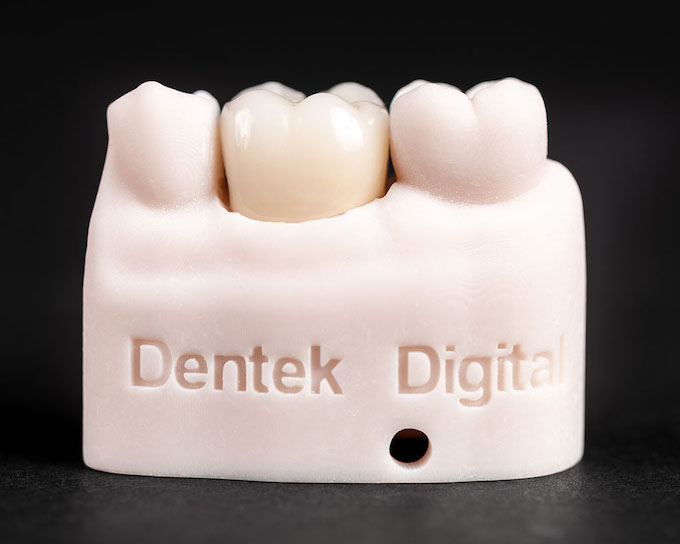
Poor denture retention is one of the most common complaints patients bring to their dentist. A denture that slips, shifts, or feels loose creates discomfort and erodes patient confidence. Therefore, solving this problem starts long before the patient ever sits in the chair.
The dental lab plays a critical role in how well a denture fits and stays in place. However, many dentists and practices may not fully understand what happens behind the scenes. This post breaks down how a modern digital dental lab improves denture retention — and why it matters for your patients.
At Dentek Digital, we work with dental professionals across Phoenix, Mesa, Scottsdale, and Chandler to fabricate removable prosthetics with the precision and fit that patients depend on. Let’s explore how today’s lab technology makes a real difference.
Why Denture Retention Is More Than Just Fit
Denture retention refers to a denture’s ability to resist dislodging forces — chewing, speaking, and everyday movement. It is not simply about the shape of the appliance. Additionally, it depends on the quality of the impression, the accuracy of the model, and the precision of fabrication.
When any one of those steps falls short, the final restoration suffers. As a result, patients experience rocking, shifting, or sore spots that lead to adjustments and remakes. On the other hand, when each step is executed with precision, the denture seats firmly and stays put.
Furthermore, retention is influenced by the relationship between the denture base and the underlying tissue. A well-adapted base maximizes contact surface area. This creates a passive seal that holds the prosthetic securely without adhesive.
The Role of the Dental Lab in Retention
Many retention problems originate at the lab — not the chair. For example, poor model articulation or incorrect occlusal design can compromise the final fit. Therefore, the lab’s workflow and technology directly affect clinical outcomes.
A digital dental lab brings tighter tolerances, more consistent workflows, and better quality control to every case. Because of this, dentists who partner with digital labs tend to see fewer remakes and adjustments. That means better outcomes for patients and a more efficient practice for the dentist.
How Digital Technology Enhances Denture Retention
The shift from traditional analog workflows to CAD/CAM dentistry has transformed what’s possible in removable prosthodontics. Digital tools allow labs to design and fabricate dentures with a level of accuracy that is difficult to achieve by hand alone.
First, digital impressions and scans eliminate distortion that can occur with traditional impression materials. Next, the lab builds a highly accurate virtual model. Then, the design team uses advanced software to optimize fit, border extension, and occlusal balance before a single piece of material is milled or printed.
Digital Design and Occlusal Accuracy
Occlusal balance — how the upper and lower dentures meet — is essential for stability. Moreover, when bite forces are uneven, the denture can rock or unseat with each chew. Digital design software allows technicians to visualize and adjust the occlusal plane with precision.
At Dentek Digital, we use advanced CAD/CAM workflows to analyze and refine occlusion before fabrication begins. As a result, the finished denture distributes forces evenly across the arch. This dramatically reduces the rocking motion that patients find so frustrating.
Milling vs. Printing: What It Means for Fit
Both milled and printed denture bases can offer excellent retention when produced correctly. However, the choice of fabrication method affects surface quality and material density. Milled PMMA, for example, produces a dense, smooth internal surface that adapts closely to tissue contours.
Meanwhile, 3D-printed dentures have advanced significantly and now offer comparable accuracy for many cases. Additionally, printed bases can be produced quickly, which is valuable for time-sensitive cases. Our team evaluates each case individually to recommend the best fabrication approach.
The Importance of Border Extension and Tissue Adaptation
The denture border is the edge that contacts the soft tissue and contributes to the peripheral seal. Therefore, correct border extension is one of the most important factors in achieving good retention. Too short, and the seal is broken. Too long, and the denture displaces soft tissue, causing pain and instability.
A skilled lab technician knows how to read the impression data and establish borders that capture maximum tissue contact without overextension. Furthermore, digital workflows allow the technician to visualize the border in three dimensions before committing to the final design.
Tissue Adaptation in the Digital Workflow
In the digital workflow, the fit surface of the denture is designed to mirror the patient’s tissue topography as closely as possible. Because of this, the denture seats uniformly across the entire basal seat. This broad, even contact maximizes the retention forces that hold the prosthetic in place.
Practices in Gilbert and Tempe that send cases to Dentek Digital benefit from this level of precision on every single case. We do not cut corners on tissue adaptation, because we know how much it matters to the patient’s daily life.
Material Selection and Its Impact on Retention
The materials used in denture fabrication affect how well the base adapts to the tissue over time. Moreover, some materials are more dimensionally stable than others, meaning they hold their shape better with repeated use. This stability is critical for long-term retention.
High-quality milled PMMA, for instance, resists warping and shrinkage better than some conventional heat-cured acrylics. As a result, the fit the patient experiences on day one remains consistent over a longer period. Additionally, premium materials tend to resist staining and odor absorption, which patients appreciate.
Choosing the Right Base Material
The right material depends on the patient’s anatomy, lifestyle, and clinical needs. For example, a patient with significant tissue undercuts may benefit from a flexible partial framework. On the other hand, a full denture patient with a flat ridge may do best with a dense, rigid milled base.
Our team at Dentek Digital works closely with dentists to understand each patient’s situation. We then recommend the material and design that will deliver the best retention outcome. Contact Dentek Digital to discuss which denture solution is right for your next case.
How Labs Communicate With Dentists to Optimize Retention
Great retention starts with great communication between the dentist and the lab. Therefore, clear case notes, accurate impressions or scans, and bite records all feed directly into the quality of the final restoration. The more information the lab has, the better the outcome.
At Dentek Digital, we encourage dentists across the Phoenix area to include detailed patient information with every case submission. Additionally, we welcome phone or email consultations before a case is sent. This upfront collaboration helps us anticipate challenges and plan accordingly.
Digital Case Submission and Feedback Loops
Digital case submission platforms streamline communication and reduce errors. For example, a dentist in Scottsdale can upload a 3D scan, bite registration, and shade map — all in one submission. As a result, our lab team receives everything needed to begin design without delays or callbacks.
Furthermore, digital records make it easy to revisit a case if adjustments are needed. The original design data is preserved, so modifications can be made precisely without starting over. This efficiency benefits both the practice and the patient.
Frequently Asked Questions About Denture Retention
What causes poor denture retention?
Poor denture retention can result from several factors. These include inaccurate impressions, incorrect border extension, uneven occlusion, or changes in the patient’s tissue over time. Additionally, low-quality materials or fabrication errors at the lab can compromise fit. A thorough clinical evaluation combined with a skilled lab partner helps identify and correct the root cause.
How does a digital lab improve denture retention compared to a traditional lab?
A digital lab uses CAD/CAM technology to design and fabricate dentures with greater precision. Therefore, digital workflows reduce the variability that can occur with hand-fabricated restorations. The result is a more consistent, well-adapted fit across each case.
Can digital dentures be adjusted after delivery?
Yes. Digital dentures can be adjusted chairside just like conventional dentures. Moreover, because the original design data is stored digitally, a remake or modification can be produced quickly if needed. This makes the process more efficient for both the dentist and the patient.
How important is occlusion to denture retention?
Occlusion is extremely important. When bite forces are balanced, the denture seats evenly and stays stable during function. On the other hand, an imbalanced bite creates tipping and rocking that disrupts the tissue seal. Digital design tools help labs optimize occlusion before the denture is ever fabricated.
How should I send a denture case to Dentek Digital?
You can submit your case digitally through our secure online platform. We accept digital scans, traditional impressions with models, and all supporting records. Our team will review your case and reach out if we have any questions. We serve dental practices throughout Phoenix, Mesa, Chandler, Tempe, Scottsdale, and Gilbert.
Partner With a Lab That Prioritizes Retention
Denture retention is not an accident. It is the result of precise impressions, accurate design, quality materials, and skilled fabrication — all working together. Therefore, the dental lab you choose is one of the most important decisions you make for your removable patients.
At Dentek Digital, we combine advanced CAD/CAM technology with experienced craftsmanship to deliver dentures that fit, function, and last. We are proud to support dentists and practices across the Greater Phoenix area with reliable, high-quality restorations.
Ready to elevate your denture outcomes? Explore your options and send us a case today. Our team is here to help you deliver the results your patients deserve.