
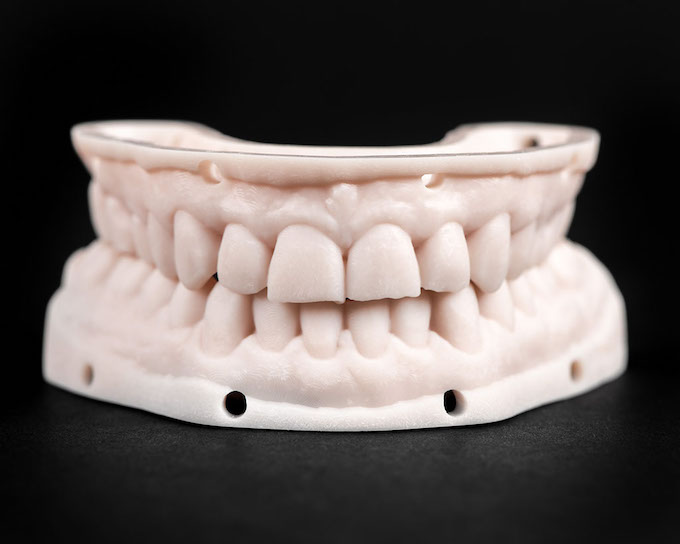
Implant restorations demand extreme precision. Even small errors in the impression or scan stage can cause serious fit problems down the line. That is why verification jigs have become one of the most important tools in modern implant dentistry.
If you are a dentist in Phoenix, Scottsdale, Mesa, or Gilbert, understanding verification jigs can help you deliver better implant outcomes for your patients. Furthermore, working with a digital dental lab that truly understands this process makes all the difference.
At Dentek Digital, we work closely with dental practices across the Greater Phoenix area. We help ensure every implant restoration is fabricated with the accuracy your patients deserve. In this post, we explain what verification jigs are, how they work, and why they matter in today’s digital workflow.
What Are Verification Jigs?
A verification jig is a custom device used to confirm the accuracy of an implant impression or digital scan. It connects multiple implant positions together in a rigid structure. This allows the clinician to verify that the recorded implant positions are accurate before fabricating the final restoration.
Think of it as a quality-check tool. Before you invest time and cost into a full implant prosthesis, the jig confirms that your working model or scan truly matches the patient’s mouth. As a result, you catch errors early, not after the restoration is already made.
Why Accuracy Matters in Implant Cases
Implants are fixed to bone. Unlike natural teeth, they cannot flex or shift to accommodate a poorly fitting restoration. Therefore, a passive fit is essential. A misfit can place harmful stress on the implants, the prosthesis, and the surrounding bone over time.
Additionally, multi-unit implant cases are especially sensitive to error. The more implants involved, the more critical it becomes to verify positions accurately. Verification jigs give clinicians and labs a reliable way to confirm everything before moving forward.
How Verification Jigs Work
The process begins at the chair. After placing implants and allowing proper healing, the dentist takes an impression or intraoral scan of the implant positions using scan bodies or impression copings. Next, the lab fabricates the verification jig from that initial record.
The jig is then returned to the clinician. The dentist seats it in the patient’s mouth. If the jig fits passively, the impression or scan was accurate. However, if the jig rocks, lifts, or does not seat fully, this signals that the original record contained distortion or error.
The Sectioning and Reconnection Method
When a jig does not fit passively, the dentist uses a technique called sectioning. First, the jig is cut apart at each implant connection. Then, each section is re-connected in the mouth using a low-shrinkage resin material. This corrects any distortion from the original impression.
The re-connected jig is then sent back to the lab. At Dentek Digital, we use this corrected record to build a highly accurate working model. From there, we fabricate the implant prosthesis using our advanced CAD/CAM dentistry workflow. The result is a restoration that fits the patient’s actual anatomy, not just the original impression.
Digital Verification Jigs and the Modern Workflow
Digital dentistry has transformed how verification jigs are made and used. Traditional jigs were built using analog impression materials and acrylic. Today, digital workflows allow labs to design and mill verification jigs directly from digital scans.
Moreover, digital jigs offer greater consistency. Milled or 3D-printed jigs eliminate the variables that come with hand-built acrylic components. This means more predictable results for dentists in Chandler, Tempe, and throughout the Phoenix metro area.
Intraoral Scanning and Verification
Many dentists now use intraoral scanners to capture implant positions. Scan bodies attach to the implants and allow the scanner to record their exact location in three-dimensional space. However, even digital scans can introduce small errors, especially in full-arch cases.
Because of this, verification remains an important step even in fully digital workflows. Some clinicians use digital verification tools that compare the scanned model to a re-scan taken after the jig is seated. This cross-check adds another layer of confidence before fabrication begins. At Dentek Digital, we support both analog and digital verification approaches to suit your preferred workflow.
When Should You Use a Verification Jig?
Not every implant case requires a verification jig. However, there are situations where using one is strongly advisable. Understanding these scenarios helps you decide when to add this step to your protocol.
- Full-arch implant cases: Cases involving four or more implants carry a higher risk of impression distortion. Verification is especially valuable here.
- Cases with wide implant spans: When implants are spread across a long arch, even minor angular discrepancies can compound. A verification jig catches these issues early.
- Patients with complex anatomy: Unusual bone positioning or significant angulation differences between implants increase the need for verification.
- High-value prostheses: For cases involving milled zirconia or full-arch implant bridges, confirming accuracy before fabrication protects both the clinician and the patient’s investment.
- Cases where previous impressions were questionable: If you had difficulty with the impression or noticed scan issues, a verification jig provides peace of mind.
In short, when the stakes are high, verification jigs are worth the extra step. Furthermore, they can actually save time overall by preventing costly remakes.
Benefits of Using Verification Jigs in Your Practice
Dentists who incorporate verification jigs into their implant protocol consistently report better clinical outcomes. Here are some of the key benefits you can expect.
Fewer Remakes and Chair-Side Adjustments
A poorly fitting implant restoration often requires significant adjustment at delivery. In some cases, the restoration must be remade entirely. Verification jigs dramatically reduce the likelihood of this outcome. As a result, your chair time decreases and your patients experience fewer appointments.
Stronger Patient Confidence
Patients who receive well-fitting implant restorations on the first delivery are more satisfied. They trust your process and are more likely to refer family and friends. Additionally, a smooth, efficient delivery experience reinforces the value of choosing your practice.
Passive Fit and Long-Term Implant Health
A passively fitting prosthesis reduces mechanical stress on the implant-bone interface. Over time, this supports better osseointegration stability and lowers the risk of mechanical complications. Therefore, using verification jigs is not just about today’s appointment. It is an investment in the long-term success of the case.
Dental practices in Phoenix, Gilbert, Scottsdale, and across the Valley are increasingly adopting verification jigs as a standard step in complex implant cases. If you are not already using them, now is a great time to explore how this process fits your workflow. Contact Dentek Digital to discuss your next implant case and learn how we can support your process from start to finish.
How Dentek Digital Supports Your Implant Cases
At Dentek Digital, we have been a leader in digital dental lab services in the Phoenix area for many years. We were among the earliest adopters of the digital CAD/CAM workflow in the country. Because of this early experience, we bring deep expertise to every implant case we handle.
We fabricate verification jigs, work with both analog and digital records, and design full-arch implant prostheses using the latest CAD/CAM technology. Our team works closely with dentists in Mesa, Chandler, Tempe, and throughout Greater Phoenix to deliver restorations with exceptional fit and quality.
Moreover, we offer advanced services such as digital implant planning to help you visualize and plan complex cases before any drilling begins. This integrated approach means your lab is a true partner in the success of your implant program.
Frequently Asked Questions About Verification Jigs
What is the purpose of a verification jig in implant dentistry?
A verification jig confirms that the recorded implant positions in your impression or scan are accurate. It ensures that the working model used to fabricate the restoration matches the patient’s actual anatomy. This step helps prevent misfitting restorations before they are made.
Do I need a verification jig for every implant case?
Not necessarily. Single-implant cases or simple two-implant cases may not require one. However, full-arch cases, cases with multiple implants, or any situation where impression accuracy is uncertain benefit greatly from verification. Your lab can help you determine when this step is appropriate.
How does a digital workflow change the verification jig process?
In a digital workflow, the lab can design and mill or print the jig directly from a scan. This removes the manual fabrication variables of traditional acrylic jigs. Additionally, digital comparison tools allow clinicians to cross-check the verified scan against the original. The core purpose, however, remains the same.
What happens if the verification jig does not fit?
If the jig does not seat passively, the clinician sections it apart at each implant and reconnects it intraorally using resin. This corrected jig is then sent to the lab to create an accurate working model. From there, the final restoration is fabricated to the corrected positions.
Can Dentek Digital fabricate verification jigs for my practice?
Yes. Dentek Digital fabricates verification jigs as part of our full implant restoration service. We work with both traditional and digital records. Our team is happy to walk you through our process and answer questions about your specific case needs.
Partner With Dentek Digital for Your Implant Restorations
Precision matters in every implant case. Verification jigs are a straightforward but powerful tool that helps protect your clinical results and your patients’ long-term outcomes. Understanding how and when to use them is an important part of delivering excellent implant care.
Dentek Digital is proud to serve dental practices across Phoenix, Scottsdale, Mesa, Gilbert, Chandler, and the entire Greater Phoenix area. We combine advanced CAD/CAM technology with experienced craftsmanship to deliver implant restorations you can count on.
Ready to take your implant workflow to the next level? Explore your options and send us a case today. Our team is ready to support your next implant restoration from first scan to final delivery.