
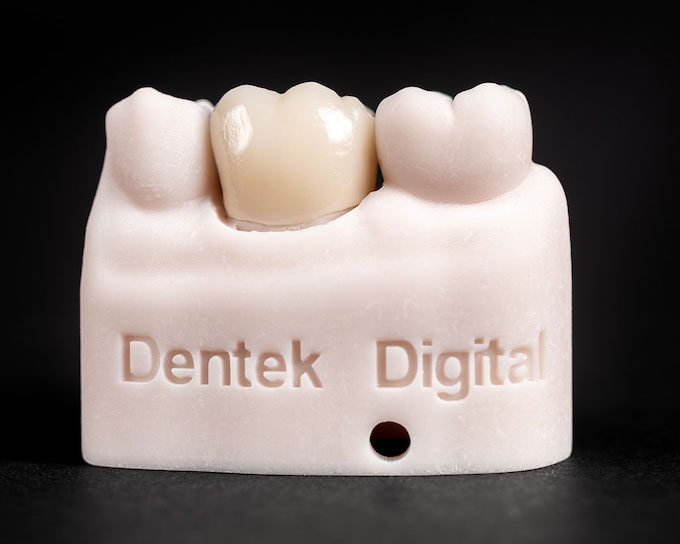
Modern implant dentistry has changed dramatically over the past decade. Implant workflows have shifted from analog, impression-based processes to fully digital systems that are faster, more precise, and more predictable. As a result, dentists across Greater Phoenix are delivering better outcomes with fewer complications.
At Dentek Digital, we were among the earliest adopters of digital CAD/CAM workflows in the country. We work closely with dental practices in Phoenix, Scottsdale, Mesa, Chandler, and Gilbert to bring these advanced processes to their patients every day.
In this post, we break down how digital implant workflows work, why they matter, and how your practice can take full advantage of them.
What Is a Digital Implant Workflow?
A digital implant workflow is an end-to-end process for planning, placing, and restoring dental implants using digital tools. It replaces traditional physical impressions and manual fabrication steps. Therefore, every stage becomes more connected and more accurate.
The process typically starts with a digital scan and ends with a precisely milled or printed restoration. Each step builds on the last. Additionally, data from one phase carries forward cleanly into the next, reducing errors along the way.
Key Components of the Digital Process
Several tools and technologies come together in a modern digital implant workflow. Most practices in the Phoenix area are already familiar with at least some of them.
- Intraoral scanners: These capture detailed 3D images of the patient’s mouth without physical impression material.
- Cone beam computed tomography (CBCT): This is a specialized 3D X-ray that maps bone volume, density, and anatomy.
- Digital implant planning software: This allows the surgeon to virtually position the implant before the procedure begins.
- CAD/CAM design and milling: Computer-aided design and milling systems fabricate the final restoration with high precision.
- Surgical guides: These are 3D-printed guides that direct the implant drill to the planned position during surgery.
Together, these tools create a seamless, data-driven process. Furthermore, they reduce chair time for patients and simplify communication between the dentist and the lab.
Why Digital Implant Workflows Outperform Traditional Methods
Traditional implant workflows relied heavily on physical impressions and manual fabrication. These methods worked, but they introduced variability at every step. On the other hand, digital workflows eliminate many of those variables from the start.
Because of this, the fit and function of the final restoration tend to be more consistent. Patients also benefit from a more comfortable experience. For example, intraoral scans are faster and far more comfortable than traditional impression trays.
Accuracy and Fit
One of the biggest advantages of digital implant workflows is accuracy. Digital scans capture fine detail that physical impressions can sometimes distort. Moreover, the data transfers directly into CAD/CAM design software without any manual interpretation.
This precision matters most at the implant-abutment interface. A well-fitting abutment and crown protect the surrounding tissue and bone over time. Therefore, better fit from the start supports long-term success.
Faster Turnaround Times
Digital workflows also move faster than traditional ones. Files transfer instantly from the dental practice to our lab. As a result, we can begin fabrication sooner and return restorations more quickly.
For busy practices in Chandler, Gilbert, or Tempe, this speed matters. It means fewer appointments for patients and a more efficient schedule for the practice. Additionally, faster restorations support better cash flow for the practice overall.
Improved Communication Between Practice and Lab
Digital files make it easy to share information clearly. Dentists can send notes, photos, and scans in a single case submission. Meanwhile, our team at Dentek Digital can review everything before fabrication begins.
This back-and-forth eliminates guesswork. If something needs clarification, we address it early. Therefore, remakes and delays become far less common in a well-run digital workflow.
Implant Planning: The Foundation of a Great Outcome
Every successful implant restoration starts with a solid plan. Digital implant planning uses CBCT data and digital scans together to map the ideal implant position. First, the surgeon views the patient’s bone structure in three dimensions. Then, they place the virtual implant where anatomy and function align best.
At Dentek Digital, we offer advanced digital implant planning services to support this process. We work with practices across the Phoenix metro area to help surgeons and restorative dentists align on the plan before treatment begins.
Restorative-Driven Implant Placement
The most effective implant planning starts with the final restoration in mind. This approach is called restorative-driven implant placement. In other words, the implant goes where the crown needs it to be, not just where the bone happens to be convenient.
This philosophy improves aesthetics, function, and long-term tissue health. Furthermore, it reduces the need for complicated prosthetic workarounds after placement. Starting with a clear digital plan makes this much easier to achieve.
Surgical Guides from Digital Plans
Once the digital plan is approved, we can fabricate a surgical guide directly from that data. The guide fits over the patient’s teeth or tissue during surgery. It directs the drill to the exact planned position and angle.
As a result, the surgeon has a physical reference for every critical measurement. This reduces risk and increases the likelihood that the final restoration fits as designed. Additionally, it gives the entire team more confidence going into surgery.
CAD/CAM Restorations for Implants
CAD/CAM dentistry is at the heart of modern implant restorations. Once the implant is placed and healed, the restoration phase begins. Digital scans replace traditional impressions, and our lab designs the crown, bridge, or hybrid prosthetic using advanced software.
We mill restorations from high-strength materials including zirconia and lithium disilicate. These materials perform well under the functional demands of implant cases. Moreover, they deliver the aesthetics that patients and dentists expect.
Single-Unit Implant Crowns
Single-unit implant crowns are among the most common restorations we fabricate. The digital workflow for these cases is clean and efficient. First, the dentist sends us a scan body reading from the intraoral scanner. Then, we design the custom abutment and crown in CAD software before milling both components.
Practices in Scottsdale and Mesa consistently report that digital implant crown cases come back with excellent fit. Because of this, they have reduced the time spent on seating appointments significantly.
Implant-Supported Bridges and Full-Arch Cases
Digital workflows shine especially in complex cases involving multiple implants. Implant-supported bridges and full-arch restorations require precise coordination across many data points. Therefore, digital tools reduce the margin for error considerably.
Full-arch cases also benefit from virtual try-in capabilities. We can model the final prosthetic digitally before fabrication begins. Additionally, this gives the patient and dentist a preview of the anticipated result.
Dentek Digital’s Role in Your Implant Cases
As a trusted digital dental lab serving Greater Phoenix, we act as a clinical partner throughout the implant restoration process. We are not simply a fabrication house. Instead, we provide planning support, case review, and technical guidance from start to finish.
Our team has deep experience with implant-supported restorations across a wide range of systems and clinical scenarios. Furthermore, we stay current with evolving technology to make sure our partners have access to the best tools available.
Whether your practice is in Phoenix, Gilbert, Tempe, or Chandler, we make it easy to collaborate digitally. Contact Dentek Digital today to explore how we can support your next implant case.
Tips for Dentists Transitioning to Digital Implant Workflows
Making the shift to fully digital implant workflows takes some planning. However, the transition is well worth the investment. Here are some practical steps to help your practice move forward.
- Start with your scanner: If you do not yet have an intraoral scanner, this is the first and most important investment.
- Choose compatible implant systems: Work with systems that your lab supports digitally, including scan body compatibility.
- Build a relationship with your lab early: Loop in your lab at the planning stage, not just at the impression stage.
- Train your team: Everyone in your practice should understand how to capture and submit digital files correctly.
- Review your first few cases closely: Use early digital cases as learning opportunities to refine your process.
Additionally, do not hesitate to lean on your lab for guidance. At Dentek Digital, we help practices through this transition regularly. We are happy to answer questions and review workflows with your team.
Frequently Asked Questions About Digital Implant Workflows
What scanners are compatible with digital implant workflows?
Most major intraoral scanners work well with digital implant workflows when used with compatible scan bodies. Popular platforms include 3Shape TRIOS, Medit, and iTero, among others. We recommend confirming scan body compatibility with your implant system before starting.
Do I need CBCT to use a digital implant workflow?
CBCT is not required for every implant case, but it is highly recommended for planning. It provides bone volume and anatomy data that intraoral scans cannot capture. Furthermore, CBCT enables surgical guide fabrication for guided implant placement.
How does Dentek Digital receive digital implant cases?
We accept digital case submissions directly from intraoral scanners and design software platforms. You can send files through our secure case submission portal. Our team reviews each case and reaches out if we need additional information before fabrication begins.
Can Dentek Digital help with full-arch implant cases?
Yes, we specialize in complex full-arch implant restorations. We offer digital planning support, surgical guide fabrication, and high-quality prosthetic design and milling. Additionally, we work with both fixed and removable full-arch solutions depending on the case.
What materials does Dentek Digital use for implant restorations?
We use high-performance dental materials including zirconia and lithium disilicate for most implant crown and bridge cases. Material selection depends on the clinical demands of each case. We are happy to discuss material options with you when you submit your case.
Ready to Upgrade Your Implant Workflow?
Digital implant workflows are no longer a future trend. They are the standard of care for modern implant dentistry. Practices across Phoenix, Scottsdale, Mesa, and Chandler are already experiencing the benefits of this approach.
At Dentek Digital, we are here to help you make the most of every implant case. Our team brings deep technical expertise, advanced technology, and a genuine commitment to your success. Moreover, we make collaboration easy regardless of where your practice is located in the Greater Phoenix area.
Explore your options and reach out to our team to discuss your next implant case. We look forward to partnering with you.