
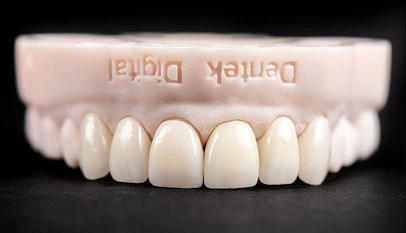
Long span zirconia bridges are one of the most technically demanding restorations in modern dentistry. They require precise planning, advanced materials, and a trusted digital workflow. When all of those elements come together, the results are exceptional.
At Dentek Digital, we design and fabricate long span zirconia bridges for dentists and dental practices across Greater Phoenix, including Scottsdale, Mesa, Chandler, and Gilbert. Our fully digital CAD/CAM workflow allows us to engineer each case for strength, fit, and esthetics.
In this post, we walk through the key considerations for designing long span zirconia bridges. Whether you are planning a posterior four-unit case or a full-arch restoration, these principles will help you get better outcomes for your patients.
What Makes Long Span Zirconia Bridges Different?
A long span bridge replaces multiple missing teeth across a wider arch segment. Therefore, the forces it must handle are significantly greater than those on a single unit or short span case. Understanding these demands is essential before any design begins.
Zirconia is an excellent material for long span cases. It offers high flexural strength and outstanding durability. However, the design must account for the unique stresses a long span introduces.
Increased Occlusal Load
Longer bridges carry more occlusal load across a greater span. Because of this, the connector size between pontics and retainers becomes critically important. Undersized connectors are a leading cause of long span bridge failure.
At Dentek Digital, we use CAD software to optimize connector dimensions on every case. Additionally, we review occlusal contact points carefully to distribute forces evenly. This step protects both the restoration and the supporting dentition.
Pontic Design Considerations
Pontic design affects both the function and the cleanability of the bridge. For long span cases, we typically recommend an ovate or modified ridge lap pontic. These shapes provide natural tissue contact without trapping debris.
Furthermore, the substructure thickness beneath each pontic must be sufficient to resist flexion. We engineer each pontic with this in mind from the very start of the design phase.
Choosing the Right Zirconia for the Case
Not all zirconia materials perform the same way. Modern zirconia comes in a range of translucency and strength profiles. Selecting the correct grade is one of the most important decisions in long span bridge design.
For posterior long span bridges, we generally favor high-strength zirconia with lower translucency. These materials offer the best resistance to fracture under heavy chewing loads. On the other hand, anterior long span cases may call for a more translucent zirconia to meet esthetic demands.
Multilayer Zirconia Options
Multilayer zirconia discs offer a gradient of translucency from the incisal to the cervical zone. Moreover, they allow us to achieve natural-looking esthetics without sacrificing structural integrity. This makes them a strong choice for anterior-to-posterior long span cases.
However, the design orientation within the disc matters significantly. Our team mills each restoration with precise attention to how the layers align with the final restoration. This ensures the esthetic gradient falls exactly where it should.
High-Strength vs. High-Translucency Zirconia
High-strength zirconia typically contains a higher yttria content in its early generations. As a result, it delivers superior flexural strength but reduced light transmission. High-translucency zirconia looks more natural but may not be ideal for every long span posterior case.
Our team at Dentek Digital will help you select the right material grade for each clinical situation. We factor in the span length, opposing dentition, occlusal forces, and patient esthetics goals together.
If you have questions about material selection for an upcoming case, contact Dentek Digital and we will walk you through the options.
The CAD/CAM Design Workflow for Long Span Bridges
CAD/CAM dentistry has transformed how dental labs approach complex restorations. Digital design tools give technicians precise control over every aspect of the restoration. Long span bridges especially benefit from this level of accuracy.
At Dentek Digital, our workflow begins with a high-resolution digital scan. We then import that scan into our design software and begin engineering the restoration from the ground up. Every dimension, contour, and contact point is planned digitally before milling begins.
Digital Scanning and Case Setup
A clean, complete digital scan is the foundation of every successful long span case. Therefore, we encourage our dental partners to capture full-arch scans with clear margin definition. Additionally, opposing arch and bite registration scans give us everything we need to design accurate occlusion.
We work with scans from all major intraoral scanner systems. Our team reviews each file upon receipt and contacts the practice if we need additional information. This proactive communication helps us avoid delays and keeps your cases on schedule.
Designing Connectors and Framework
Connector size is one of the most critical variables in long span bridge design. Specifically, posterior connectors must meet minimum cross-sectional area thresholds to resist fracture. Our software allows us to measure and adjust connector dimensions with precision during the design phase.
Furthermore, we design the framework profile to support even stress distribution across the entire span. This includes contouring the intaglio surface for proper tissue support and hygiene access. Every element is reviewed before the file goes to the mill.
Milling, Sintering, and Finishing
Once the design is approved, we mill the restoration from a pre-shaded or monolithic zirconia disc. Next, the milled restoration goes through a carefully controlled sintering process. Sintering transforms the soft-milled zirconia into its final, hardened state.
After sintering, our technicians perform final finishing, staining, and glazing as needed. Meanwhile, quality control checks are completed at each stage of production. This process ensures that every long span zirconia bridge leaving our lab meets our highest standards.
Clinical Tips for Dentists Preparing Long Span Cases
The success of a long span zirconia bridge depends on clinical preparation as much as lab design. First, abutment preparation must provide adequate retention and resistance form. Additionally, margin placement should be clear, consistent, and accessible for scanning.
Here are a few practical tips for preparing long span bridge cases:
- Ensure adequate reduction: Zirconia requires a minimum occlusal reduction to achieve proper strength and esthetics. Follow the material-specific guidelines for the zirconia grade being used.
- Keep margins clean and well-defined: Poorly defined margins are one of the most common causes of remakes. Take extra care with tissue management before scanning.
- Capture a full-arch scan: A full-arch scan gives the lab more context for designing natural-looking occlusion. Partial scans can limit our ability to optimize the case.
- Communicate span and tooth numbers clearly: Clearly indicate the abutment teeth and pontic positions on your case submission form. This prevents misunderstandings and speeds up production.
- Share occlusal concerns upfront: If the patient has parafunction or bruxism, note it on the case form. We will design accordingly to add durability where it counts most.
Dental practices in Scottsdale, Mesa, Chandler, and Gilbert regularly send us complex long span cases. Our team is experienced in supporting a wide range of clinical scenarios.
Why Phoenix-Area Dentists Trust Dentek Digital
Dentek Digital is recognized as a national leader in digital dentistry. We were one of the earliest dental labs in the country to adopt a fully digital CAD/CAM workflow. Furthermore, our commitment to quality has made us a trusted partner for dental practices throughout Greater Phoenix.
We combine rapidly evolving technology with skilled lab craftsmanship. As a result, the restorations we deliver are precise, reliable, and consistently high quality. Our team understands the demands that Phoenix-area dentists face, and we build our services around supporting their success.
Additionally, we offer fast turnaround without sacrificing quality. Our digital workflow allows us to process cases efficiently and communicate proactively with our dental partners. From simple single units to complex long span zirconia bridges, we handle every case with the same care.
Ready to send your next long span case? Explore your options and send us a case today through our easy online submission process.
Frequently Asked Questions About Long Span Zirconia Bridges
How many units can a zirconia bridge span?
Zirconia bridges can span multiple units across a wide arch segment. However, the exact number depends on the clinical situation, abutment health, and occlusal load. Our team evaluates each case individually to recommend the best design approach.
What zirconia material is best for a long span posterior bridge?
For posterior long span cases, high-strength zirconia is generally preferred. It offers the flexural strength needed to resist heavy occlusal forces. We will help you choose the best material grade based on your specific case requirements.
How should connectors be sized for long span zirconia bridges?
Connector cross-sectional area is critical for long span bridges. Posterior connectors require larger dimensions than anterior ones. Our CAD software measures and optimizes connector size during the design phase to reduce fracture risk.
Can long span zirconia bridges be made without metal?
Yes. Monolithic or full-contour zirconia bridges are entirely metal-free. They offer excellent strength and esthetics without a metal substructure. This makes them a popular choice for patients and practices seeking metal-free restorations.
How do I send a long span bridge case to Dentek Digital?
You can submit your case digitally through our online case submission system. Simply upload your scans and case details, and our team will review and follow up promptly. We accept files from all major intraoral scanner platforms.
Partner with Dentek Digital for Your Next Long Span Case
Designing long span zirconia bridges requires expertise, precision, and the right digital tools. At Dentek Digital, we bring all three together on every case we fabricate. Our Greater Phoenix dental partners trust us to deliver restorations that perform and last.
From Scottsdale to Gilbert, dentists across the Valley rely on our fully digital workflow for their most demanding cases. We are here to support your practice and your patients with the highest quality restorations available today.
Take the next step and contact Dentek Digital to discuss your long span zirconia bridge case. Our team is ready to help you plan, design, and fabricate a restoration your patients will love.