
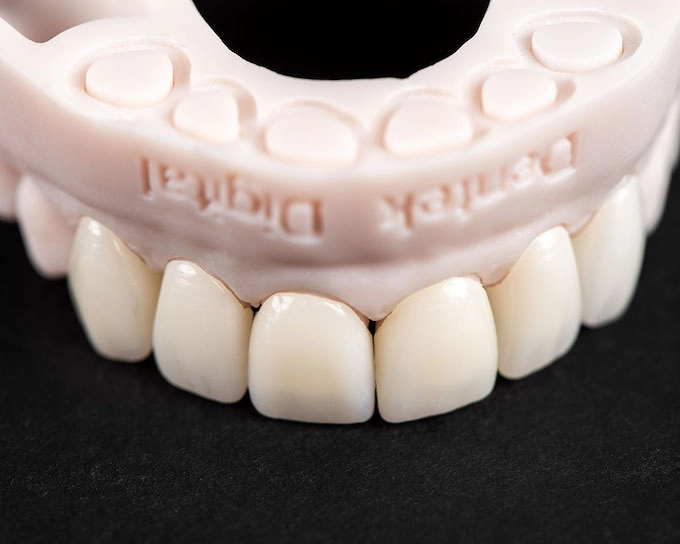
Choosing the right crown material is one of the most important clinical decisions you make. For decades, porcelain-fused-to-metal (PFM) crowns were the gold standard. Today, however, zirconia has changed the conversation entirely. Understanding zirconia vs PFM restorations helps you deliver better outcomes for your patients every time.
Dentists across the Greater Phoenix area — from Scottsdale to Chandler — are making the switch. Zirconia offers strength, aesthetics, and biocompatibility that PFMs simply cannot match in many situations. Therefore, knowing when to choose one over the other is a skill every modern practice needs.
At Dentek Digital, we fabricate both zirconia and PFM restorations using advanced CAD/CAM dentistry workflows. We help Phoenix-area dentists select the right material for every clinical scenario. This guide breaks down exactly when zirconia is the smarter choice.
What Are PFM Restorations?
PFM stands for porcelain-fused-to-metal. These crowns feature a metal substructure covered with a layer of tooth-colored porcelain. For many years, they were the most widely prescribed crown type in dentistry.
PFMs offer reliable strength and decent aesthetics. However, they come with known limitations. The metal margin can show as a dark line near the gumline over time. Additionally, the porcelain layer is prone to chipping under heavy occlusal load.
Despite these drawbacks, PFMs still have a place in modern dentistry. They remain a solid option in certain clinical situations. However, zirconia now outperforms them in most categories.
What Makes Zirconia Different?
Zirconia is a high-strength ceramic material. It is milled from solid blocks using CAD/CAM technology, which ensures precise fit and consistent quality. As a result, zirconia restorations are remarkably strong and highly accurate.
Modern zirconia comes in several types. High-translucency zirconia mimics the natural look of enamel. High-strength zirconia is ideal for posterior cases and heavy grinders. Furthermore, layered zirconia combines aesthetics with added durability.
Because of this variety, zirconia works across a wide range of clinical scenarios. It adapts to both anterior and posterior needs. That flexibility is a major reason dentists in Mesa, Gilbert, and Tempe are moving toward zirconia-first workflows.
Strength and Durability
Zirconia is significantly stronger than porcelain. It does not chip or fracture the way PFM porcelain does. Therefore, it performs exceptionally well in high-stress areas like molars and posterior bridges.
PFM porcelain, on the other hand, can fracture under bruxing or parafunctional habits. Once the porcelain chips, it exposes the metal substructure. This creates both an aesthetic and functional problem that requires replacement.
Zirconia handles these forces with ease. It is one of the strongest dental materials available today. For patients with heavy occlusion, zirconia is almost always the better choice.
Aesthetics and Natural Appearance
PFMs offer acceptable aesthetics, but they have clear limits. The opaque metal core blocks light transmission. As a result, PFM crowns often look flat or artificial compared to natural teeth.
High-translucency zirconia, however, allows light to pass through similarly to enamel. This creates a lifelike, natural appearance. For anterior restorations in Scottsdale or any cosmetically focused practice, this matters enormously.
Additionally, zirconia does not produce the dark gingival margin that PFMs sometimes show. This keeps the soft tissue appearance clean and natural over the long term. Patients and clinicians both appreciate this outcome.
When to Choose Zirconia Over PFM
There are several clear clinical indicators that point toward zirconia. Knowing these signals makes material selection faster and more confident. Here are the most common scenarios where zirconia wins.
Posterior Crowns and Bridges
For posterior single crowns and multi-unit bridges, zirconia is often the first choice. It handles occlusal forces better than PFM. Moreover, it does not require a metal substructure, which simplifies the fabrication process.
Monolithic zirconia — meaning it is milled from a single solid block — is especially effective in the posterior. It eliminates the risk of porcelain delamination entirely. Therefore, it is ideal for patients with heavy bite forces or bruxism.
Dentists in Mesa and Chandler frequently request monolithic zirconia for posterior cases. The combination of strength, fit, and reliability makes it an easy recommendation. Contact the Dentek Digital team to discuss your posterior case needs.
Patients with Metal Allergies or Sensitivities
Some patients are sensitive or allergic to the metals used in PFM substructures. Zirconia is completely metal-free. Because of this, it is the safest option for patients with known metal sensitivities.
Biocompatibility is a growing concern among dental patients. Many patients today actively research their treatment options. Offering a metal-free solution supports patient trust and practice reputation.
Zirconia integrates well with gingival tissue. It does not cause inflammation or adverse reactions in most patients. This makes it a reliable choice for patients with sensitive health histories.
Anterior Esthetic Cases
For anterior restorations where natural appearance is the priority, high-translucency zirconia delivers outstanding results. It mimics the depth and luminosity of natural enamel. Therefore, it is especially well-suited for cosmetically driven cases.
PFMs in the anterior zone can look bulky or opaque. The metal margin also becomes more visible as gums naturally recede over time. Zirconia avoids both of these problems entirely.
Practices focused on smile design in Scottsdale or Tempe will find zirconia a much stronger option. It supports beautiful, long-lasting anterior results. Additionally, it photographs better in smile documentation — a growing priority for patients.
Implant Restorations
Zirconia is also an excellent choice for implant-supported crowns and bridges. It bonds well to titanium abutments and handles the unique load distribution of implant restorations. Furthermore, its strength prevents fracture under the point-loading forces that implants can generate.
PFMs over implants carry the same porcelain chipping risk as tooth-supported cases. Zirconia eliminates that concern. For implant cases in the Phoenix area, zirconia is increasingly the preferred material.
When PFM Still Makes Sense
PFM restorations are not obsolete. There are still cases where they are appropriate. Understanding both sides of the zirconia vs PFM debate makes you a more versatile clinician.
- Limited interocclusal space: PFMs can sometimes be fabricated with a thinner profile when vertical space is very limited.
- Certain posterior bridges: In specific multi-unit posterior cases, PFM frameworks offer reliable support.
- Insurance or cost considerations: Some insurance plans cover PFMs more favorably, which may influence patient decisions.
- Patient preference: Occasionally, patients specifically request PFM based on past experience or personal preference.
Even in these scenarios, it is worth discussing zirconia alternatives with your patient. Modern zirconia options have evolved to address many historic limitations. Therefore, the conversation is always worth having.
How CAD/CAM Technology Elevates Zirconia Quality
The quality of a zirconia restoration depends heavily on the technology used to fabricate it. CAD/CAM milling delivers exceptional precision and consistency. At Dentek Digital, we use advanced digital workflows to mill every restoration to tight tolerances.
Our process begins with a digital scan of your case. We then design the restoration in specialized software and mill it from premium zirconia blocks. Finally, we finish and characterize each piece to match your patient’s natural dentition.
This workflow eliminates many of the human errors associated with traditional lab techniques. As a result, fit, occlusion, and margins are consistently accurate. Dentists across Phoenix, Gilbert, and Mesa trust this process for predictable results every time.
Why Digital Labs Outperform Traditional Labs for Zirconia
Traditional wax-and-cast methods are not compatible with zirconia fabrication. Zirconia requires milling, which demands digital technology. Therefore, only labs with true CAD/CAM capabilities can produce high-quality zirconia restorations.
Dentek Digital was among the earliest adopters of digital dental workflows in the country. We have refined our zirconia fabrication process over many years. This depth of experience translates directly into better restorations for your patients.
Additionally, our digital workflows make communication faster and more accurate. You can send digital scans directly to our team. We review each case carefully before fabrication begins.
Frequently Asked Questions: Zirconia vs PFM
Is zirconia stronger than PFM?
Yes. Zirconia is significantly stronger than the porcelain layer used in PFM crowns. It is especially resistant to fracture and chipping under heavy occlusal load. For posterior cases, zirconia is almost always the stronger choice.
Does zirconia look natural?
Modern high-translucency zirconia closely mimics the appearance of natural enamel. It transmits light similarly to tooth structure. As a result, it looks far more natural than traditional PFM crowns in most cases.
Can zirconia be used for posterior bridges?
Absolutely. Zirconia is one of the most popular materials for posterior bridges. Its strength makes it ideal for multi-unit cases. Additionally, monolithic zirconia bridges eliminate the porcelain chipping risk entirely.
Is zirconia a good choice for implant crowns?
Yes. Zirconia is well-suited for implant-supported restorations. It is biocompatible, strong, and bonds reliably to implant abutments. Many implant clinicians now prefer zirconia over PFM for implant cases.
How do I send a zirconia case to Dentek Digital?
Sending us a case is straightforward. You can submit digital scans or traditional impressions. Our team reviews every case and communicates with you throughout the process. Contact Dentek Digital to get started with your next zirconia case today.
Partner with Dentek Digital for Your Zirconia Restorations
The shift from PFM to zirconia is well underway across Greater Phoenix. Practices in Chandler, Tempe, Scottsdale, and Mesa are embracing zirconia for its strength, beauty, and long-term reliability. Moreover, patients are increasingly asking for metal-free options.
Dentek Digital is your local partner for high-quality zirconia restorations. We combine advanced CAD/CAM technology with years of hands-on expertise. As a result, every restoration we deliver meets the highest standards of fit, function, and aesthetics.
Whether you are evaluating your first zirconia case or expanding your digital workflow, we are here to help. Our team works closely with dentists across the Greater Phoenix area to support better patient outcomes. Explore your options and contact Dentek Digital to send us your next case.